How to Identify Signs Your Transmission Needs Repairs and What to Do Next
In the complex world of automotive maintenance, understanding the signs that your transmission needs repairs is crucial for preserving your vehicle's performance and longevity. According to Johnathan Miller, a seasoned expert in transmission repairs with over 20 years of experience, "Most drivers overlook the subtle warning signs, but addressing them early can save you considerable time and money." Recognizing these early indicators can help prevent more severe issues down the road, ensuring not only your vehicle's reliability but also your safety on the road.
Transmission repairs can often feel overwhelming for drivers who may not know what to look for. Symptoms like unusual noises, slipping gears, or illuminated warning lights on your dashboard are often indications that professional attention is required. Knowing how to identify these signs can empower you to act promptly, leading to more efficient repairs and a smoother driving experience.
As we delve into the critical aspects of identifying transmission issues, we will explore the common warning signs and provide actionable steps you can take when you suspect that your vehicle’s transmission may be in need of repair. Whether you're a seasoned driver or new to car maintenance, staying informed will help ensure you're prepared to tackle any transmission-related challenges that arise.
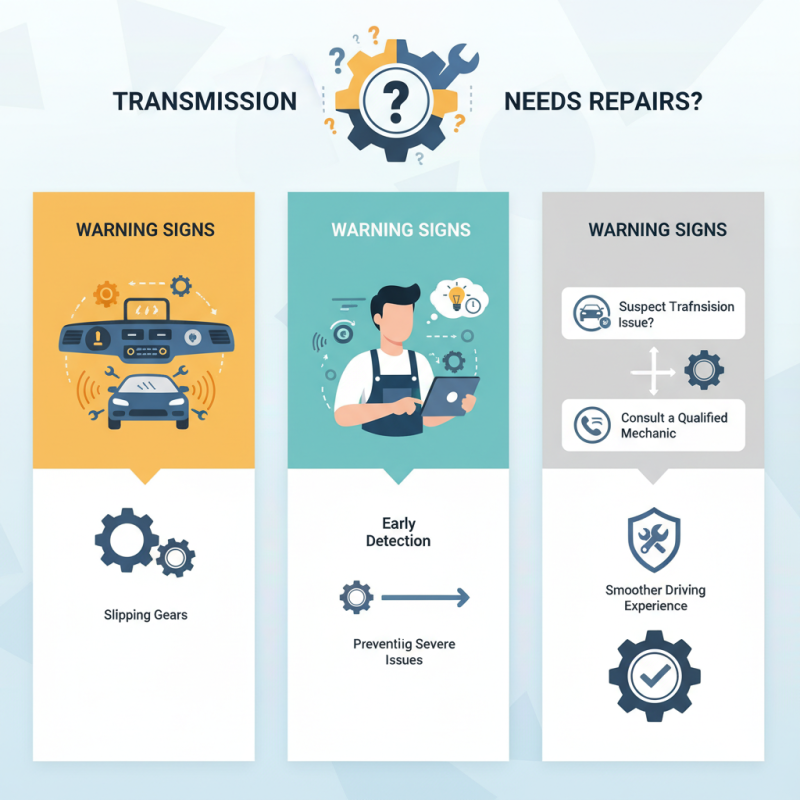
Common Symptoms of Transmission Issues That Drivers Should Watch For
When it comes to maintaining your vehicle, being aware of the signs that your
transmission
is in need of repairs can save you time and money. Transmission problems can manifest in several ways,
and recognizing these symptoms early is crucial. According to the
Automotive Research Institute, approximately
40% of drivers experience
transmission-related issues at some point during vehicle ownership. Common signs include
unusual noises like grinding or whining, slipping gears, or a delay in acceleration when
shifting from park to drive. These symptoms can indicate problems with internal components
or fluid levels, thus requiring a prompt inspection.
Another critical sign to watch for is fluid leaks, which can often be identified by puddles or
spots under your vehicle. Transmission fluid is typically
red or brown and has a distinct smell.
The U.S. Department of Transportation estimates that nearly
10% of all vehicles have low transmission fluid levels,
which can lead to severe damage if not addressed. Additionally, you may notice
dashboard warning lights illuminating, particularly the
check engine light. Ignoring these indicators can escalate
minor issues into significant repairs, leading to costly breakdowns. Being proactive about these
symptoms is essential for the longevity of your vehicle's transmission system.
Understanding the Importance of Timely Transmission Repairs
Timely transmission repairs are crucial for maintaining the performance and safety of a vehicle. According to the Automotive Service Association, nearly 20% of all vehicle breakdowns are related to transmission issues, highlighting the importance of addressing potential problems early. When drivers begin to notice signs of transmission trouble, such as slippage, unusual noises, or erratic shifting, it’s essential not to dismiss these warnings. Ignoring these symptoms can lead to more severe damage and significantly higher repair costs.
In fact, a report from the National Automotive Dealers Association indicates that delaying transmission repairs can boost repair expenditures by as much as 50% over time. Regular maintenance and monitoring can prevent these escalating costs, ensuring that vehicles run smoothly and efficiently. Understanding the signs of transmission wear and being proactive about repairs can save drivers both time and money while ensuring their vehicle remains safe on the road. Regular check-ups and fluid changes are vital, as these measures can greatly extend the life of the transmission and enhance overall vehicle reliability.
How to Identify Signs Your Transmission Needs Repairs and What to Do Next - Understanding the Importance of Timely Transmission Repairs
| Signs of Transmission Issues |
Description |
What to Do Next |
| Slipping Gears |
The vehicle unexpectedly changes gears, losing power. |
Consult a mechanic for diagnostic testing immediately. |
| Delayed Engagement |
There is a noticeable delay when switching from park to drive. |
Have the transmission fluid levels checked and topped off if necessary. |
| Unusual Noises |
Grinding or shaking noises when changing gears. |
Schedule an appointment for a thorough inspection. |
| Warning Light |
Transmission warning light is illuminated on the dashboard. |
Stop driving and have the vehicle checked as soon as possible. |
| Fluid Leaks |
Puddles of red or brown fluid under the vehicle indicate a leak. |
Identify the source of the leak and repair it promptly. |
Steps to Diagnose Your Vehicle’s Transmission Problems
When diagnosing transmission problems, the first step is to observe any noticeable changes in your vehicle’s performance. Common signs include slipping gears, unusual noises, fluid leaks, and warning lights on your dashboard. According to industry reports, approximately 25% of all vehicle problems are related to transmission issues, underscoring the importance of early detection and assessment. If you notice a persistent burning smell or feel a delay when shifting gears, it is imperative to take action promptly to prevent more extensive damage.
Next, checking the transmission fluid level and condition is crucial. Low or dirty fluid can lead to inefficient gear operation and ultimately result in costly repairs. Experts recommend inspecting the fluid regularly; clean transmission fluid should be bright red and not have any burnt odors. If the fluid appears dark or has a burnt scent, it indicates the need for a fluid change, which can improve overall performance. Utilizing diagnostic tools can also help pinpoint specific issues; they can read trouble codes that indicate transmission malfunctions.
Tips: Always ensure your vehicle is on a level surface when checking transmission fluid. When carrying out diagnostics, consult a professional mechanic if you're uncertain about any signs, as they can provide specialized knowledge and necessary repairs. Regular maintenance, including fluid replacements every 30,000 to 60,000 miles, can significantly extend the life of your transmission system.
Signs Your Transmission Needs Repairs
This bar chart illustrates the common signs that indicate your vehicle's transmission may need repairs. Each bar represents the percentage frequency of reported symptoms experienced by drivers.
When to Consult a Professional for Transmission Services
When it comes to vehicle maintenance, recognizing when to consult a professional for transmission services is crucial. According to the Automotive Service Association, nearly 30% of drivers report experiencing issues with their vehicle's transmission at some point in their lives. Common signs such as slipping gears, unusual noises, or delays in acceleration are often indicators that professional assessment is necessary. Ignoring these symptoms can lead to more severe damage and significantly higher repair costs, with transmissions averaging between $1,200 and $4,000 for a rebuild or replacement, as reported by AAA.
When you suspect transmission problems, consulting a professional is critical. Experts typically advise bringing your vehicle in for inspection if you notice fluid leaks, a burnt smell, or the check engine light illuminating. The National Institute for Automotive Service Excellence emphasizes the importance of timely intervention, as unresolved transmission issues can deteriorate other vehicle systems, compromising overall safety. Ensuring that a certified technician evaluates the symptoms can lead to effective solutions, extending the lifespan of your transmission and preventing further complications.
Preventive Measures to Extend the Life of Your Transmission
Taking proactive steps to maintain your transmission can significantly extend its lifespan and improve your vehicle’s overall performance. Regular fluid checks and changes are crucial; the transmission fluid acts as a lubricant, a coolant, and a hydraulic fluid that helps in smooth gear transitions. Make it a habit to inspect the fluid level and color. If the fluid is dark or has a burnt smell, it’s time for a change. Additionally, adhering to the manufacturer’s recommended maintenance schedule can help prevent significant problems before they arise.
Another essential preventive measure is being mindful of your driving habits. Avoiding aggressive driving, such as sudden starts or stops, can reduce unnecessary strain on your transmission. If you're towing heavy loads, ensure that your vehicle is equipped to handle the weight, as overloading can lead to transmission overheating. Lastly, keep an eye out for unusual sounds or warning lights on your dashboard, as these can be early indicators of potential transmission issues. By staying vigilant and performing routine checks, you can help ensure that your transmission remains in optimal condition for years to come.