2026 Best Tote Shuttle Systems for Global Buyers?
For global buyers, selecting a Tote Shuttle system in 2026 requires more than comparing speed figures. Warehouse conditions vary across regions, industries, and operating shifts. A solution designed for fast-moving apparel may struggle with heavy grocery totes. The best choice depends on tote size, load weight, aisle length, order profiles, and future expansion.
This guide examines practical factors behind reliable shuttle performance. These include storage density, shuttle speed, lift coordination, conveyor interfaces, software integration, and maintenance access. It also considers installation quality, operator training, spare-parts availability, and local technical support. A well-designed system should move totes smoothly, reduce walking distances, and maintain stable output during peak periods. Small details matter. Sensor placement, barcode readability, and handover timing can affect an entire order process.
Global buyers should also review supplier experience and evidence from comparable installations. Site visits, acceptance testing, and clear performance definitions can expose weaknesses before payment and commissioning. Published throughput numbers may look impressive, but they often depend on ideal tote conditions and carefully balanced workflows. Promises need testing. Energy use, fire protection, workplace safety, software updates, and regional service coverage deserve equal attention. No single Tote Shuttle solution fits every warehouse, and even a strong design may require adjustment after real operations begin. This comparison aims to support a more informed decision, while recognizing that reliable automation comes from measured data, practical engineering, and continuous review.
Define Tote Shuttle AS/RS: Shuttle Cars, Lifts, Racks, Bins, and WCS
2026 Best Tote Shuttle Systems for Global Buyers?
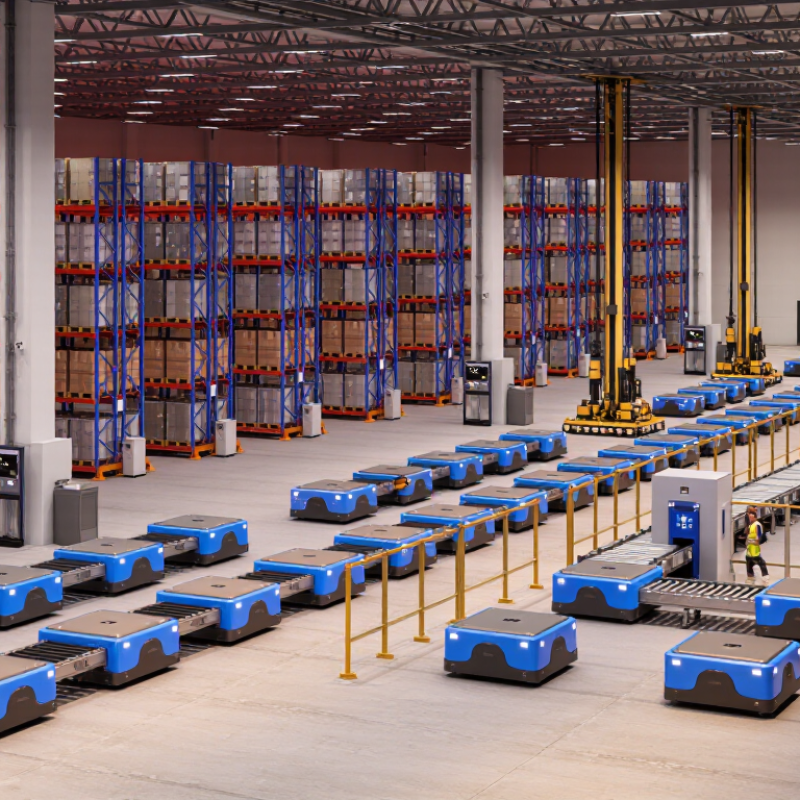
A tote shuttle AS/RS stores and retrieves plastic bins inside dense rack structures. Each level uses a shuttle car to move totes horizontally. Lifts transfer totes between levels and conveyor interfaces. Racks provide the storage grid, while bins carry products through the system. The warehouse control system, or WCS, coordinates these movements with software commands and sensor feedback.
In practical installations, shuttle cars need accurate positioning and steady battery performance. Lifts must handle changing tote weights without excessive vibration. Racks require strong beams, clear tolerances, and safe access for maintenance. Bins should resist impact, dust, and repeated scanning. A reliable WCS also manages inventory locations, order priorities, alarms, and communication with warehouse software. Small delays can spread quickly. This part is often underestimated.
Tips: Test real totes, not only drawings. Measure cycle times with full and empty bins. Check lift noise near workstations. Ask for fault-recovery demonstrations. Confirm local electrical, fire, and machine-safety requirements before purchase. A pilot zone can reveal weak assumptions early. It may feel slower, but it protects the wider investment.
Global buyers should compare throughput, temperature limits, service response, spare-part access, and operator training. Request documented test results and clear acceptance criteria. Some designs look efficient on paper but struggle with irregular tote loading. That deserves honest review.ไทยฟรี
Measure Performance: 600–1,000+ Tote Moves per Hour and Storage Density
Tote shuttle selection in 2026 should begin with measured throughput, not a headline. Published systems can reach 600–1,000+ tote moves per hour under controlled conditions. Ask whether one move means one tote, one cycle, or a dual-command cycle. That definition changes the business case. The 2024 MHI Annual Industry Report found that 55% of supply chain leaders planned to increase technology investment within two years. Buyers still need comparable test conditions.
Storage density must be audited beside throughput. Measure usable cubic volume, not gross rack volume. A 600 mm tote may fit efficiently in a drawing, yet aisle clearances, lift gaps, fire equipment, and maintenance access reduce real capacity. Deloitte’s 2024 Smart Manufacturing and Operations Survey reported that 62% of executives viewed smart manufacturing as a high priority. That priority should include practical space calculations. More bins do not always mean better storage.
During acceptance testing, request mixed-SKU orders, replenishment tasks, and peak-hour recovery. Record tote moves, waiting time, energy use, and blocked locations. Test with actual tote weights. Real orders are uneven. A perfect simulation deserves suspicion. In my experience, a system achieving 1,000 moves per hour may deliver less when totes arrive randomly or operators pause for exceptions. Compare sustained performance over several hours, then calculate density after conveyors, service aisles, and safety zones are included.
Match System Design to 20–50 kg Loads, Tote Sizes, and SKU Velocity
2026 Best Tote Shuttle Systems for Global Buyers
Selecting a tote shuttle system starts with the real load, not the catalog capacity. For 20–50 kg totes, buyers should check dynamic load ratings, acceleration, braking, and rack deflection. A tote filled with metal parts behaves differently from one holding soft packaged goods. Small differences matter.
Tote dimensions also control storage density. Measure external length, width, height, rim strength, and base flatness. A system may handle the weight but reject a warped tote. Mixed tote sizes can reduce usable locations and complicate sensor settings. SKU velocity adds another design layer. Fast-moving products need short travel paths, multiple access points, and replenishment space near picking stations. Slow items may suit deeper storage. Do not optimize every location for maximum density.
Tips: Test the heaviest tote first. Simulate peak order waves. Keep clearance for labels, hands, and maintenance tools. Ask for cycle data under full load, not empty-tote demonstrations.
Global buyers should also review voltage requirements, spare-part availability, safety guarding, and local technician training. A technically strong system can underperform when support arrives slowly. Consider dust, temperature, floor tolerance, and future SKU changes. It is tempting to choose one standard tote size, yet product diversity may make that decision restrictive. Pilot testing is worthwhile, though the pilot must reflect real cartons, real operators, and realistic replenishment delays.waswo
2026 Best Tote Shuttle Systems for Global Buyers
Match system design to tote dimensions, payload, and SKU velocity. The chart compares calculated tote volume with practical payload design points for common industrial tote footprints.
How to read it: Smaller 400 × 300 mm totes suit dense SKU profiles and frequent presentation cycles, while larger 600 × 400 mm and 800 × 600 mm totes provide more storage volume for heavier or slower-moving items. High-SKU-velocity operations typically require more shuttle lanes, optimized buffer capacity, and shorter transfer cycles.
Verify Safety and Compliance: EN 528, ISO 3691-5, and CE Requirements
For global tote shuttle buyers in 2026, safety verification must begin with the machine’s actual function.
EN 528 addresses the safety of stacker cranes and storage and retrieval equipment. It can guide risk controls around travel zones, lifting devices, guarding, access doors, and emergency stops. ISO 3691-5 is relevant when the system includes driverless industrial trucks or mobile platforms. Its requirements cover stability, braking, control systems, protective devices, and operating environments.
CE compliance needs more than a label.
The technical file should include a risk assessment, circuit validation, test records, instructions, and the correct Declaration of Conformity. The Machinery Directive remains important during the current transition, while Regulation (EU) 2023/1230 will apply from January 20, 2027. Check the installation date carefully. This detail is often missed.
The International Federation of Robotics reported 541,302 industrial robots installed worldwide in 2023, showing how quickly automated equipment is entering operations. MHI’s 2024 Annual Industry Report also identified robotics and automation as major investment priorities for supply-chain companies. However, market growth does not prove compliance. Ask for measured stopping distances, safety PLC evidence, load tests, and fault-response records. Test with real tote weights and damaged containers. A clean factory demonstration can hide practical weaknesses. That is where buyers need more skepticism.
Compare Global Buying Value: TCO, Uptime, Integration, and 5–10-Year ROI
For global buyers, the best tote shuttle system is not always the fastest option. Total cost of ownership includes equipment, software, installation, training, energy, spare parts, and service travel. A system running 20 hours daily may justify a higher purchase price if it reduces labor pressure and order delays. However, quoted savings can look different after customs duties, local wages, and regional maintenance costs.
Uptime deserves practical testing. Ask for performance records from warehouses handling similar tote sizes, peak volumes, and temperature conditions. Review recovery procedures when a shuttle, sensor, or conveyor stops. A five-minute fault is manageable. Repeated two-hour outages are expensive. Integration also matters. Confirm communication with the warehouse control system, warehouse management system, barcode readers, and safety equipment. Interfaces that require heavy customization may create hidden costs later.
Tips: Request a five-year and ten-year cash-flow model. Include battery replacement, software updates, operator training, and emergency support. Visit an operating site if possible. Watch the system during replenishment, not only during a staged demonstration. Leave room for uncertainty; demand forecasts are often imperfect. A slightly lower automation rate may deliver stronger ROI if it simplifies maintenance and keeps operations stable. Performance assumptions should be written clearly before contracts are signed.
2026 Best Tote Shuttle Systems for Global Buyers? – Compare Global Buying Value: TCO, Uptime, Integration, and 5–10-Year ROI
Indicative 2026 planning benchmarks for comparable tote-shuttle system configurations. Values are non-branded market ranges and should be validated through site-specific engineering, local labor rates, duty rules, and supplier quotations.
| System configuration | Typical application | Practical throughput
(order lines/hour) | Tote capacity
(positions) | Storage density
(vs. shelving) | Expected mechanical
availability | Integration complexity
(1–5) | Indicative installed cost
(USD million) | Annual service & software
(% of CAPEX) | 10-year TCO
(USD million) | Estimated payback
(years) | 5–10-year ROI
(indicative) |
| Compact single-deep tote shuttle | Fast-moving SKU picking; medium-volume e-commerce and retail replenishment | 600–1,200 | 5,000–30,000 | 1.7–2.4× | 98.0–99.5% | 3 / 5 | $1.8–4.5 | 4–7% | $2.7–7.1 | 3.5–5.0 | 45–105% |
| Multi-level tote shuttle with workstation picking | High-SKU operations requiring scalable goods-to-person fulfillment | 900–2,000 | 15,000–80,000 | 2.2–3.5× | 97.5–99.5% | 4 / 5 | $3.5–9.0 | 5–8% | $5.4–14.6 | 3.0–4.8 | 60–135% |
| Deep-lane tote shuttle | High-density reserve storage with lower SKU velocity | 400–1,000 | 20,000–120,000 | 2.8–4.2× | 97.0–99.0% | 4 / 5 | $3.0–8.0 | 5–8% | $4.7–13.0 | 3.8–5.8 | 40–100% |
| Tote shuttle combined with conveyor and sortation | Large-scale omnichannel fulfillment and multi-zone order consolidation | 1,500–3,500 | 30,000–150,000 | 2.0–3.2× | 97.0–99.2% | 5 / 5 | $6.0–15.0 | 6–9% | $9.7–24.8 | 3.2–5.5 | 50–125% |
| Mobile robot tote-to-person system | Phased automation, variable layouts, and facilities needing flexible expansion | 300–1,200 | 5,000–60,000 | 1.4–2.3× | 96.0–99.0% | 3 / 5 | $1.5–6.0 | 5–10% | $2.4–10.2 | 3.0–5.5 | 35–115% |
Benchmark assumptions and interpretation
- Throughput is shown as practical order lines per hour at approximately 70–85% sustained utilization, not theoretical peak performance.
- Mechanical availability refers to planned operating availability after normal preventive maintenance; it is not the same as order fulfillment service level.
- Installed cost includes automation equipment, controls, standard safety systems, installation, commissioning, and basic software integration. Building work, taxes, land, financing, and major utility upgrades are excluded.
- Ten-year TCO includes indicative capital cost, service and software, spare parts, energy, and planned modernization allowance. Local currency movement and import duties can materially change the result.
- ROI is an indicative cumulative return based on labor reduction, space avoidance, throughput value, and reduced handling damage, less TCO. A site-specific business case is required before procurement.
- Integration complexity: 1 = relatively simple WMS/WES interface and limited material-flow equipment; 5 = multi-system orchestration, sortation, high availability requirements, and complex exception handling.

