ClickCease

2026 Top Scooter Sport Bike Models for Global Buyers

The 2026 Scooter Sport Bike market is entering a more demanding phase. Buyers now want sharp handling, daily comfort, efficient engines, and dependable technology. Styling alone is no longer enough. The International Energy Agency’s Global EV Outlook 2024 identifies electric two- and three-wheelers as a major part of global electric mobility. Its findings support stronger interest in low-emission urban transport. ACEM registration reports also show continuing demand for powered two-wheelers across Europe, although national results vary considerably.

Real roads remain the test. A promising Scooter Sport Bike must handle wet streets, narrow parking spaces, rough surfaces, and long commutes. It should also offer predictable braking, stable suspension, clear instruments, and accessible servicing. Michele Colaninno, chairman and CEO of Piaggio Group, has described the scooter as “a democratic vehicle.” That idea still matters. Performance should serve more riders, not only experienced enthusiasts. The best models may combine sporty acceleration with an easy riding position and practical storage.

Some forecasts feel too smooth. Consumer budgets, charging access, battery replacement costs, and local regulations can quickly change buyer decisions. Reports from McKinsey and Deloitte highlight broader electrification and mobility trends, but market adoption will not develop equally everywhere. This guide compares leading 2026 models through a practical lens. It considers power delivery, range, safety equipment, comfort, ownership support, and real-world value. The ranking is not perfect. No single scooter suits every city, rider, or climate. That limitation deserves attention before any purchase.
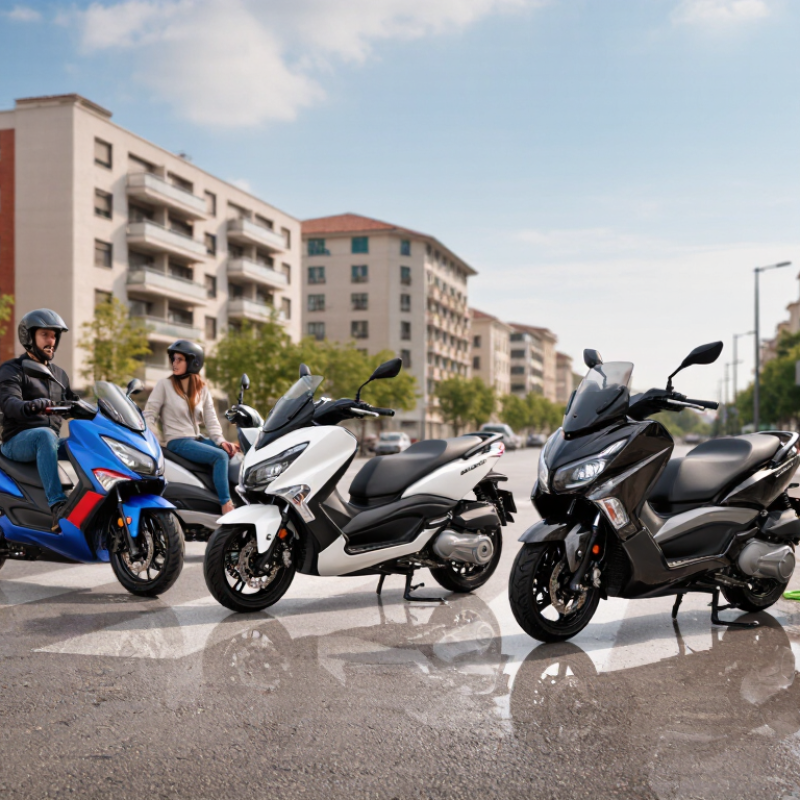
2026 Top Scooter Sport Bike Models for Global Buyers

What Defines a 2026 Sport Scooter for International Buyers

A 2026 sport scooter for international buyers is more than a fast-looking commuter. It should combine responsive handling, stable braking, practical storage, and dependable daily range. IEA’s Global EV Outlook identifies electric two- and three-wheelers as the most electrified road-transport segment. That finding raises expectations for efficient motors and usable charging systems.

Real-world performance matters more than brochure numbers. A 2026 model should remain predictable on wet streets, steep ramps, and uneven urban roads. Buyers should examine braking hardware, tire dimensions, suspension travel, lighting, and rider-assistance settings. The World Health Organization links safer vehicle design with reduced road-injury risk, although technology cannot replace responsible riding. It is not magic.

International suitability also depends on compliance and support. UNECE type-approval principles, local lighting rules, charging standards, and battery transport requirements can differ between markets. A scooter with a removable battery may suit apartment living, while a fixed pack may improve weather protection. Published range figures often assume gentle speeds and mild temperatures. They can disappoint in traffic, winter, or hilly cities. That weakness deserves honest testing.

Professional buyers should request independent braking tests, battery warranty terms, spare-parts availability, and software-support timelines. Deloitte’s Global Automotive Consumer Study shows that consumers continue to weigh technology against price and trust. For a 2026 sport scooter, transparent specifications may matter more than aggressive styling. The best choice is not necessarily the quickest model. It is the one that remains controllable, repairable, and legally usable across the buyer’s daily routes.

Key Performance and Design Features to Compare

2026 Top Scooter Sport Bike Models for Global Buyers

When comparing 2026 scooter sport bike models, look beyond engine size and top speed. Real performance starts with usable acceleration in city traffic, especially between 30 and 80 km/h. Check tested braking distance, not only advertised brake hardware. Dual-channel anti-lock braking, progressive suspension, and grippy tires can matter more than extra horsepower on wet streets. Ask for verified measurements from independent road tests or official technical documents.

Ride comfort deserves equal attention. A firm seat may feel sporty for twenty minutes, then punish the lower back during a long commute. Compare handlebar reach, footboard space, wind protection, and the weight felt during parking. A low center of gravity helps when reversing beside a crowded curb. It matters daily. Storage should fit a full-face helmet, rain gloves, and a compact lock. Some designs look aggressive but sacrifice useful under-seat space.

Design details also reveal engineering priorities. LED lighting, a clear display, adjustable controls, and strong daytime visibility improve practical safety. However, complex touchscreens can distract riders and increase repair costs. I prefer simple switches after testing scooters in heavy rain, though personal preference can distort judgment. Check local emissions rules, licensing limits, charging or fuel access, warranty terms, and service coverage before comparing prices. A beautiful specification sheet is not enough. Test the riding position yourself. Feedback from real roads remains imperfect, but it exposes weaknesses that showroom floors hide.

2026 Top Scooter Sport Bike Models for Global Buyers - Key Performance and Design Features to Compare

Representative Model Class Powertrain Typical Peak Power Approx. Top Speed Typical Fuel or Energy Range Transmission Braking and Safety Wheel and Tyre Setup Seat Height Under-Seat Storage Key Sport-Design Features Best Use Case
Urban Sport 125 125 cc, liquid-cooled or air-cooled, single-cylinder petrol engine 9–12 kW 95–110 km/h 2.0–2.8 L/100 km; approximately 220–320 km per tank Automatic CVT with centrifugal clutch Front disc and rear disc or drum; single-channel or dual-channel ABS depending on market 12–14 inch alloy wheels; sport-oriented tubeless tyres 760–790 mm Usually one full-face helmet or equivalent cargo volume Sharp front fairing, LED lighting, compact bodywork, digital instrument panel and low operating weight City commuting, learner-friendly riding and dense urban traffic
Urban Sport 150–160 150–160 cc, liquid-cooled, single-cylinder petrol engine 12–15 kW 105–125 km/h 2.2–2.9 L/100 km; approximately 220–330 km per tank Automatic CVT with belt final drive Dual-channel ABS is common on higher-specification versions; disc brakes front and rear 13–14 inch alloy wheels; wider rear tyre than typical 125 cc versions 765–800 mm One full-face helmet plus small personal items on many designs Sporty LED light signature, aerodynamic side panels, smartphone connectivity and selectable riding displays Daily commuting with stronger acceleration and occasional suburban travel
Sport Touring 250 230–250 cc, liquid-cooled, single-cylinder petrol engine 18–25 kW 125–145 km/h 2.8–3.6 L/100 km; approximately 230–330 km per tank Automatic CVT with automatic centrifugal clutch Dual-channel ABS, front and rear disc brakes, traction control on selected configurations 14–15 inch wheels; touring-biased sport tyres 775–810 mm Typically one full-face helmet with additional storage space Integrated wind protection, wider floor area, dual LED headlights, adjustable rear suspension and practical fairing storage Mixed city and highway riding, short-distance touring and two-up use
Performance Sport 300–350 300–350 cc, liquid-cooled, single-cylinder petrol engine 22–30 kW 135–160 km/h 3.2–4.2 L/100 km; approximately 220–320 km per tank Automatic CVT; some designs use electronically managed throttle response Dual-channel ABS, traction control and large front disc; parking brake commonly integrated 14–15 inch alloy wheels; performance-oriented radial or bias-belted tyres 780–820 mm Usually one full-face helmet and riding accessories Longer wheelbase, rigid frame, aggressive front fairing, split LED lamps, electronically adjustable displays and improved high-speed stability High-speed commuting, urban expressways and weekend sport touring
Maxi Sport 400–500 400–500 cc, liquid-cooled, single-cylinder or parallel-twin petrol engine 30–40 kW 150–180 km/h 4.0–5.2 L/100 km; approximately 230–350 km per tank Automatic CVT; belt-driven rear transmission Dual-channel ABS, traction control, twin front discs and stronger suspension hardware 15–16 inch wheels; wide touring-sport tyres 790–830 mm Large compartment often suitable for two full-face helmets Full fairing, electrically adjustable windscreen on some versions, cruise control on selected configurations, dual front lamps and reinforced chassis Motorway travel, long-distance touring and frequent two-up riding
Electric Performance Scooter Liquid-cooled or air-cooled electric motor with a high-voltage lithium-ion battery 15–45 kW peak, depending on battery and motor configuration 110–140 km/h Approximately 120–250 km claimed urban range; real range varies with speed, temperature, load and riding mode Single-speed reduction drive with electronic torque control Regenerative braking, hydraulic disc brakes and dual-channel ABS on performance-oriented versions 14–15 inch alloy wheels; low-rolling-resistance or sport tyres 770–820 mm Storage varies widely because the battery occupies chassis space; commonly one small helmet or riding gear Silent acceleration, selectable riding modes, connected diagnostics, smartphone key functions and regenerative braking adjustment Low-emission urban travel, short highway routes and buyers with convenient charging access

Comparison note: The figures are representative ranges for current production scooter classes and common 2026-market configurations, not specifications for a particular brand or company. Actual performance, equipment, range, dimensions and homologation requirements vary by country, trim level, rider load, road conditions and testing method.

Leading 2026 Sport Scooter Models by Market Segment

2026 Top Scooter Sport Bike Models for Global Buyers

The 2026 sport scooter market is splitting into clear buyer segments. Urban commuters want quick acceleration, low weight, and under-seat storage. Premium riders expect stronger brakes, adjustable suspension, and stable highway performance. The International Energy Agency’s Global EV Outlook 2024 identifies electric two- and three-wheelers as the largest electric-vehicle segment by sales. China and Southeast Asia generate much of that demand.

Urban models should prioritize traffic control and daily comfort. A practical specification includes 14-inch wheels, dual-channel ABS, LED lighting, and a real-world range above 120 kilometers. Electric versions also need predictable charging times. IMARC Group’s electric scooter market outlook indicates high-single-digit annual growth through the decade. However, market definitions vary. Some reports include low-speed products, making comparisons imperfect.

Premium sport scooters serve longer commutes and weekend touring. Buyers should examine wind protection, seat support, tire availability, and service coverage before choosing performance figures. European mobility research repeatedly links two-wheeler adoption with congested cities and rising operating costs. That trend favors efficient models with moderate power, not excessive speed. A strong 2026 design may still disappoint if its battery loses range in cold weather or its storage cannot fit a full-face helmet. Real use matters more than showroom numbers.

2026 Top Scooter Sport Bike Models for Global Buyers

Leading 2026 sport scooter segments compared by representative engine displacement and typical wet weight.

The comparison uses established global scooter classes: urban 125cc, entry sport 150cc, mid-size maxi 300cc, performance maxi 400cc, and premium performance 560cc. Weight figures represent typical production-model ranges within each segment and exclude luggage or accessories.

Global Safety, Emissions, and Licensing Considerations

2026 Top Scooter Sport Bike Models for Global Buyers

Global buyers should treat safety rules as a buying filter, not a final paperwork task. A sporty scooter may look identical across markets, yet its brakes, lighting, mirrors, and speed settings can differ. Check the vehicle identification number, tire markings, daytime lighting, and passenger equipment before payment. Small details matter.

Emissions requirements also vary by country, city, and engine type. Fuel models may require certified exhaust systems, evaporative controls, or periodic testing. Electric models avoid tailpipe emissions, but battery transport, charging safety, and recycling rules still deserve attention. Ask for the official conformity document, not only a sales brochure. Numbers can be incomplete.

Licensing categories are often confusing. Some regions classify scooters by engine size, rated power, maximum speed, or transmission design. A car licence may not cover a faster model. Confirm the required motorcycle endorsement, minimum age, insurance, registration, and helmet standard with the local transport authority. Do this before importing the vehicle.

During inspection, test both brakes gently on a quiet, legal road. Check that the steering returns smoothly and that the suspension shows no oil marks. I would also inspect cold-start behavior, because warm engines can hide faults. My own checklist is not perfect; local rules change, and online advice can age quickly. Keep written confirmation from authorities and qualified technicians.

How to Choose the Right Sport Scooter for Your Region

2026 Top Scooter Sport Bike Models for Global Buyers

Choosing the right sport scooter starts with regional conditions, not showroom speed. The International Energy Agency reported that electric two- and three-wheelers represented over half of global electric vehicle sales in 2023. This signals strong demand, but local charging access remains uneven. In dense cities, select a model with predictable range, compact dimensions, and easy battery servicing. In hotter regions, test performance after prolonged riding. Heat can reduce battery efficiency and shorten component life.

Road quality matters more than glossy specifications. Larger wheels, stronger suspension, and reliable braking improve control on broken pavement. The World Health Organization’s Global Status Report on Road Safety highlights the serious risks faced by powered two-wheelers, so verified braking systems and standard safety equipment deserve priority.

Check whether local workshops can diagnose electronic faults. Parts availability may matter more than peak power.

Regional weather changes the decision.

Frequent rain requires stable tires, sealed connectors, and clear lighting. Cold climates demand careful range testing, because low temperatures can reduce usable battery capacity. A practical comparison should include insurance, charging time, service distance, and replacement-part costs. This method is not perfect. Rider weight, traffic, and hills can distort laboratory figures. Independent road tests are useful, but one short test cannot represent every season. Choose evidence that matches your daily route.