ClickCease

Why Choose a Wafer Type Butterfly Valve?

Choosing the right valve can influence plant safety, maintenance time, and long-term operating costs. A wafer type butterfly valve deserves attention because it fits between pipeline flanges without separate flange ends. Its compact body saves space around pumps, tanks, and crowded process lines.

“Valve selection should begin with the service conditions, not the catalogue picture,” says Robert W. Zappe, author of Valve Selection Handbook. That principle remains practical. Engineers should examine pressure, temperature, fluid composition, flow direction, and cycling frequency before approving a design. A wafer type butterfly valve may perform efficiently in water treatment, HVAC, fire protection, and many industrial applications. However, it is not automatically suitable for every demanding service.

Small details matter. An operator may notice a stiff handle before a failure becomes obvious. A maintenance technician may find damaged seals after repeated thermal cycling. These details reveal actual operating conditions better than a product brochure. The valve’s disc, seat, shaft, and body material must match the medium and the pipeline environment. Installation also matters. Poor flange alignment can increase stress and reduce sealing reliability.

There is no perfect choice.

The wafer design usually offers a lower installation profile and reduced material use. Its limitations deserve equal attention. Removing the valve from a line may require careful support, especially in larger systems. Some applications may need a lug-style or double-offset design instead. This guide examines the practical reasons to choose a wafer type butterfly valve, while acknowledging where its apparent simplicity can become a weakness. That balanced view supports safer specifications and more dependable purchasing decisions.
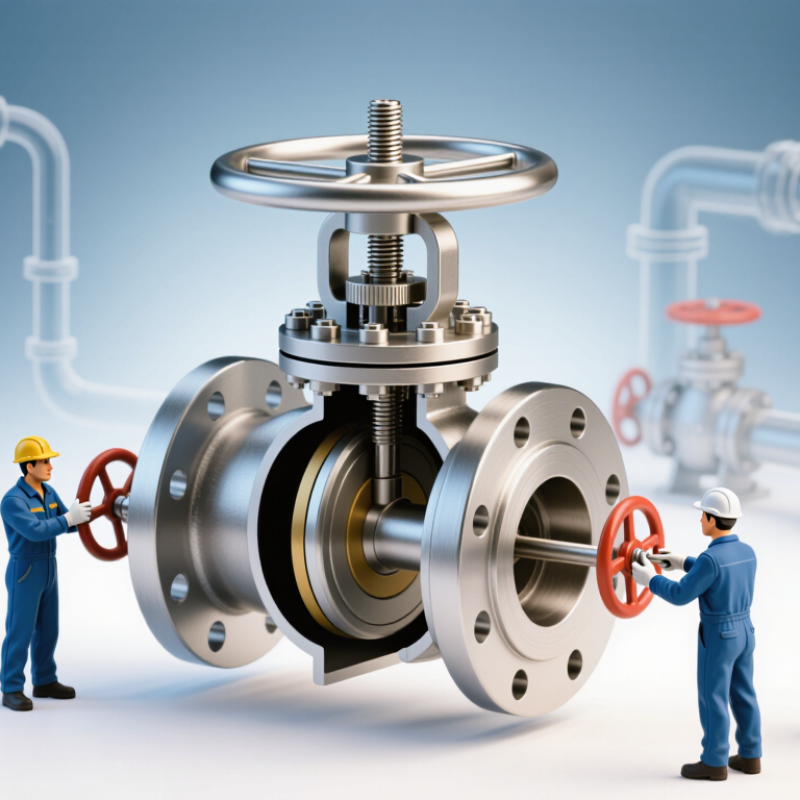
Why Choose a Wafer Type Butterfly Valve?

What Is a Wafer Type Butterfly Valve?

Why Choose a Wafer Type Butterfly Valve?

A wafer type butterfly valve fits between two pipe flanges. Bolts pass through the surrounding flange pair. The valve body does not have separate flanges. This compact design reduces weight, installation space, and material use. Inside, a circular disc rotates around a stem. A quarter turn usually moves it from fully open to fully closed. It is a practical choice for water, air, cooling systems, and compatible low-pressure fluids.

According to the 2024 MarketsandMarkets Industrial Valves Market report, the sector may grow from about 78 billion dollars in 2024 to 99 billion dollars by 2029. That growth reflects continuing demand for efficient flow control. Wafer valves support this need with relatively low purchase and maintenance costs. Their short face-to-face length also helps during replacement work. Field technicians should still check pipe alignment carefully. Small errors can damage the seat.

Performance depends on more than valve size. Pressure, temperature, fluid chemistry, and operating frequency all affect material selection. The 2024 United Nations World Water Development Report notes that agriculture uses roughly 70 percent of global freshwater withdrawals. Reliable isolation therefore matters in treatment and irrigation networks. A wafer valve can work well there, but it is not universal. Some systems require a tighter shutoff, stronger support, or bidirectional flow protection. Standards such as ISO 5752 and API 609 help engineers verify dimensions and design suitability. Even then, site conditions deserve a second look.

How Does a Wafer Type Butterfly Valve Work?

A wafer type butterfly valve works through a circular disc mounted on a central stem. When the stem turns, the disc rotates inside the pipe. A quarter-turn usually moves it from fully open to fully closed. In the open position, the disc aligns with the flow, reducing resistance. Turning it across the passage blocks the line. The valve sits between two pipe flanges, and long bolts hold the assembly in place. Its compact body saves space, but it normally depends on the connected flanges for support.

Tips: Check pipe alignment before tightening the bolts. Even slight distortion can make the disc rub against the seat. Confirm the flow direction from the installation data. Move the handle slowly when pressure changes are possible. Fast closure may create a pressure surge. Inspect the stem, seat, and flange faces during maintenance. Do not assume the valve is sealed because the handle feels firm. That assumption causes trouble.

The disc does not usually provide precise throttling like a dedicated control valve. It can regulate flow, but unstable conditions may cause vibration, noise, or seat wear. Selection depends on fluid, temperature, pressure, pipe size, and required shutoff performance. In real installations, operators sometimes focus on size and overlook cycling frequency. That is a weak decision. The operating principle is simple, but reliable service requires accurate alignment and suitable maintenance.

Key Advantages of Wafer Type Butterfly Valves

Why Choose a Wafer Type Butterfly Valve?

Key Advantages of Wafer Type Butterfly Valves

Wafer type butterfly valves fit between two pipe flanges, making them compact and practical for tight equipment rooms. Their short face-to-face length reduces pipe weight and often simplifies support design. Installation can also require fewer materials than longer valve arrangements.

They operate with a quarter-turn motion. A handle, gearbox, or actuator can open or close the disc quickly. This action supports efficient isolation during pump maintenance, filter cleaning, and emergency shutdown procedures. The lightweight disc creates relatively low flow resistance when fully open. In water, HVAC, and general process systems, that can help control energy use.

They are not perfect.

A wafer valve depends heavily on correct flange alignment and bolt tightening. During field inspections, uneven compression can distort the liner and cause leakage. Technicians should check the pipe centerline, gasket requirements, disc clearance, and torque sequence before operation. Material selection also matters because temperature, pressure, and fluid chemistry affect seal life.

These valves usually perform well for isolation and moderate throttling. However, continuous throttling may accelerate disc and seat wear, especially with abrasive fluids. A project specification should confirm pressure class, body material, seat material, actuator torque, and inspection requirements. Small valves may operate manually, while larger units often need geared or powered actuation. A few minutes spent checking clearance can prevent expensive rework.

Why Choose a Wafer Type Butterfly Valve?

Wafer type butterfly valves are widely selected for their compact face-to-face length, low weight, quarter-turn operation, and efficient flow control. The chart uses a comparative engineering index from 1 to 5, where 5 represents a stronger relative advantage. Actual performance depends on valve size, pressure class, materials, seat design, and service conditions.

Applications and Suitable Operating Conditions

Why Choose a Wafer Type Butterfly Valve?

A wafer type butterfly valve fits between two flanges, creating a compact and economical flow-control solution. Its light body reduces pipe loading and simplifies installation in tight plant rooms. These valves suit water treatment, HVAC systems, irrigation lines, compressed air, and many general industrial services. They work well where quick isolation matters. A quarter-turn actuator can close the disc rapidly, but rapid closure may create pressure surges.

Operating conditions must guide the selection. Check pressure, temperature, media compatibility, flange standards, and cycling frequency before ordering. Clean water is usually forgiving, while abrasive slurries can wear the disc and seat quickly. Corrosive fluids require carefully matched lining and metal materials. Extended throttling may cause vibration, noise, or cavitation. The valve also needs enough clearance for the disc to rotate fully. A common field lesson is simple: pipe diameter alone does not define the correct valve. I have seen otherwise suitable installations fail because vacuum service was overlooked. That detail deserves more attention.

Tips: Confirm the valve’s pressure rating at the actual temperature. Inspect the seat material against the fluid chemistry. Keep the disc clear of nearby welds and pipe supports. Test the actuator before commissioning. If the line carries solids, review settling risks and cleaning access. Selection is rarely perfect on the first review, so record operating changes and reassess the valve during maintenance.

Why Choose a Wafer Type Butterfly Valve? - Applications and Suitable Operating Conditions

Evaluation Dimension Wafer Butterfly Valve Characteristics Suitable Applications Recommended Operating Conditions Important Selection Notes
Connection Design A compact valve installed between two flanges. The valve body is generally not designed to provide independent end restraint. Water distribution, HVAC systems, fire-water lines, irrigation, and general industrial piping. Use with correctly aligned and supported flanges that match the valve’s drilling and pressure class. Verify flange compatibility, face-to-face dimensions, bolt access, and installation clearances before ordering.
Space and Weight Usually lighter and shorter than many comparable full-bodied valve designs, reducing installation space and handling requirements. Equipment rooms, utility skids, packaged systems, pump stations, and retrofit projects with limited space. Particularly useful where pipe supports, lifting capacity, or available face-to-face length is limited. The disc may extend beyond the valve body when open; check internal pipe diameter and nearby fittings.
Flow Control The disc rotates through approximately 90 degrees, providing quick shutoff and moderate throttling capability. Isolation service, pump discharge lines, cooling-water circuits, and low-to-moderate precision flow regulation. Best for on/off duty or controlled modulation where the pressure drop and cavitation risk are acceptable. For precise control across a wide range, evaluate a characterized disc or consider a control valve designed for that duty.
Pressure Rating Available pressure ratings vary by body style, materials, seat design, size, and applicable standard. Low- and medium-pressure liquid, gas, and utility services within the valve’s certified rating. Operate only within the documented pressure-temperature envelope; account for differential pressure during opening. Do not select by nominal pipe size alone. Confirm the pressure class, test standard, and maximum allowable working pressure.
Temperature Range Temperature capability is mainly determined by the seat, liner, disc, stem, and body materials. Ambient-temperature water, treated water, air, selected chemicals, and other compatible fluids. Common elastomer-seated designs are generally suited to moderate temperatures; higher temperatures require suitable resilient or metal seating. Check continuous and transient temperatures, not just normal operating temperature. Pressure capacity often decreases as temperature rises.
Fluid Compatibility Can be configured with different body, disc, stem, and seat materials for specific media. Clean water, seawater with suitable materials, air, wastewater, and selected corrosive or abrasive services. Select materials according to chemical concentration, fluid velocity, solids content, and corrosion potential. Confirm compatibility with the full wetted assembly. Abrasive solids may accelerate seat and disc wear.
Leakage Performance Resilient-seated designs can provide tight shutoff when the seat is correctly selected and installed. Isolation of water, air, cooling systems, process utilities, and other compatible services. Use within the specified pressure direction, temperature range, and leakage class. A wafer design may not be suitable for every dead-end application. Confirm whether downstream piping or a separate flange-retaining arrangement is required.
Actuation Can be operated manually or fitted with electric, pneumatic, or hydraulic actuation. Remote isolation, automated process lines, water treatment, building services, and emergency shutoff systems. Select actuator torque using maximum differential pressure, breakaway torque, cycling frequency, and safety factor. Allow for fail-open, fail-closed, or fail-in-place requirements and verify the actuator’s environmental protection rating.
Maintenance and Lifecycle Cost Simple quarter-turn operation and compact construction can reduce installation, maintenance, and replacement effort. Large-diameter pipelines, utility networks, water infrastructure, and systems requiring frequent isolation. Best where routine inspection, accessible actuation, and periodic functional testing can be provided. Inspect seat condition, stem area, flange bolts, actuator settings, and signs of corrosion or abnormal operating torque.
Applications Requiring Caution Not universally suitable for severe throttling, high-velocity abrasive flow, extreme temperatures, or very high-pressure service. Use alternatives or specially engineered configurations for steam, severe slurry, erosive media, high-cycle control, or critical emission service. Require a documented engineering review covering velocity, cavitation, noise, vibration, thermal expansion, and shutoff torque. The final selection should be based on applicable piping codes, fluid properties, safety requirements, and verified manufacturer data.

How to Select and Install the Right Model

Why Choose a Wafer Type Butterfly Valve?

A wafer type butterfly valve fits between two flanges, making it compact and economical. Its short face-to-face length helps in crowded pipe systems. The design also reduces material use and installation weight. However, selection must follow the actual service conditions, not only the pipe diameter.

Check the medium, operating temperature, pressure rating, and flow direction. Choose the disc and seat materials for chemical compatibility. For clean water, resilient seats may be suitable. Hot, abrasive, or corrosive media often require different materials. Confirm the valve’s pressure class and flange standard before ordering. A manual handle suits smaller lines, while larger valves may need a gearbox or actuator. I have seen installations fail because the actuator was selected too quickly. The valve operated, but not reliably.

Tips: Measure the pipe and flange spacing carefully. Clean both flange faces before installation. Keep the disc slightly open during insertion. Align the valve without forcing it into place. Tighten bolts in a cross pattern, using the manufacturer’s recommended torque. Check that the disc clears the pipe interior before full tightening. Then cycle the valve slowly and inspect for leakage. A small alignment error can damage the seat. It is easy to miss during a rushed installation.