ClickCease

Who Are the Best Inflatable Float Tube Suppliers in China?

Finding the best Inflatable Float Tube suppliers in China takes more than comparing product photos and quoted prices. A tube may look sturdy online, yet details such as seam construction, valve fit, fabric thickness, and repair options matter in actual use. Small details count.

This guide explains how to assess suppliers using evidence buyers can request and verify. Look for clear product specifications, consistent sample quality, documented inspection steps, and realistic production timelines. Ask how buoyancy and load limits are established, and whether instructions match the finished product. A polished catalog is not proof. Samples and direct answers offer better clues, though they cannot remove every risk.

Supplier suitability also depends on the intended market, order size, customization needs, and communication during production. Compare quotes carefully; a lower price may reflect different materials or services. Request photos of relevant production stages, confirm packaging details, and review the terms for defects and replacements. No single checklist fits every project. That is worth remembering.

Rather than naming a supplier as universally “best,” the article focuses on practical comparison criteria and questions to ask before placing an order. The goal is a more informed shortlist, not a promise of perfect results. Even careful checks can miss something, so buyers should keep their expectations realistic and record key decisions in writing.
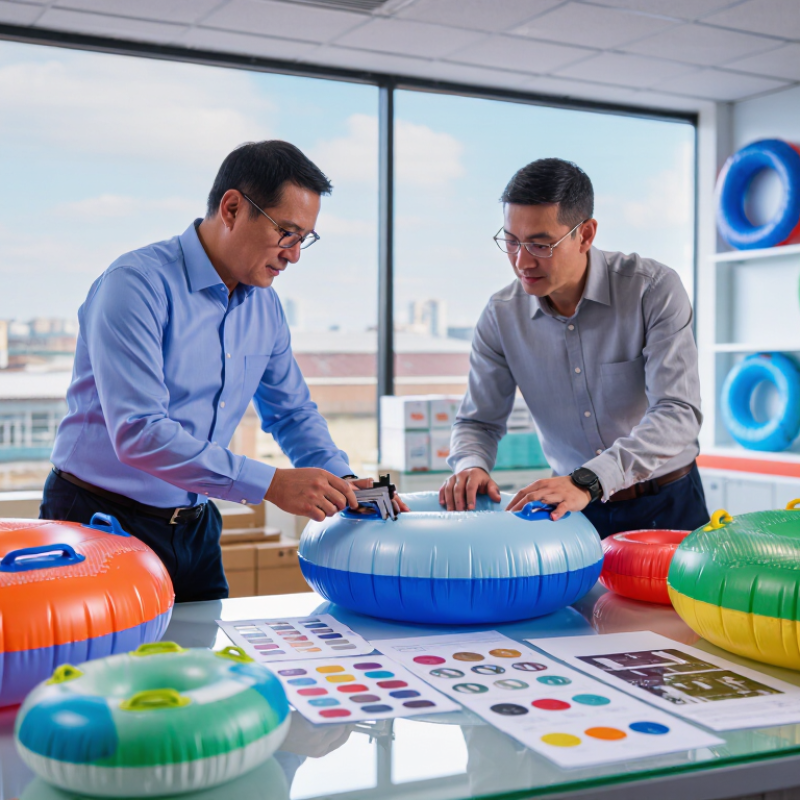
Who Are the Best Inflatable Float Tube Suppliers in China?

What Inflatable Float Tubes Are and How They Are Used

An inflatable float tube is a compact, single-person craft designed for quiet movement on the water. Most models have an air-filled body, a raised seat, and storage pockets for tackle. Some include rod holders and foot fins, which help anglers turn or move slowly without a motor. After deflation, the tube fits into a car trunk more easily than a rigid boat. It is commonly used on calm lakes and sheltered ponds, where anglers can approach shallow edges with less disturbance. Keep expectations realistic: it is not built for fast currents or rough water.

The U.S. Fish and Wildlife Service’s 2022 National Survey estimated that 39.9 million Americans aged 16 and older went fishing that year. That figure describes fishing participation, not float-tube use, but it shows the broad recreation setting these products serve. In practice, users should check seams, valves, and inflation pressure before launching, then wear a properly fitted personal flotation device. Wind can push a low-profile tube farther than expected. A small hand pump and a dry bag are useful, though they do not solve every problem. A tube’s comfort also depends on seat height and legroom, details that product photos can make hard to judge.

Inflatable Float Tubes: What They Are and How They’re Used

An inflatable float tube is a buoyant ring-shaped craft commonly used for fishing on calm lakes and ponds. The chart compares the theoretical water displacement of three example ring geometries; it does not represent a product’s rated load capacity.

Example outer and inner diameters are shown in centimeters. Displacement is estimated from the volume of a torus and assumes the tube is fully submerged. Actual safe capacity depends on the product’s design and manufacturer rating.

How China’s Inflatable Float Tube Supply Market Is Organized

China’s inflatable float tube market is organized as a network of material vendors, component makers, and assembly factories. Many suppliers operate in coastal manufacturing regions, where access to PVC fabric, valves, pumps, and packaging is relatively convenient. Some factories cut and weld the tubes in-house. Others focus on assembly and rely on outside workshops for printing or accessories. It varies.

Suppliers generally serve different needs. A trading-oriented supplier may coordinate several workshops and offer a broad product range, while a factory may provide closer control over materials and production steps. Buyers often request custom colors, handles, seat designs, or packaging. These changes can affect tooling, sample timing, and minimum order quantities. The division is useful, but not always neat: one supplier may handle design and assembly while outsourcing parts of production.

For a practical assessment, ask who makes the tube, who checks the seams, and where final inspection happens. Review a physical sample for smooth welds, evenly placed valves, and consistent fabric thickness. Request written specifications and test records for the intended use. Paperwork alone is not enough. A clear production trail and realistic answers about defects, rework, and delivery changes offer stronger evidence of a supplier’s capability.

What Makes a Float Tube Supplier Reliable

A reliable float tube supplier can explain how each model is tested, not just send polished sample photos.

Ask for documented checks on seam strength, valve leakage, buoyancy, and load capacity. Reports should identify the test method, sample size, date, and production batch. Useful details matter: a pressure gauge reading, a timed leak test, and photos of seam failures tell more than “quality checked.” Small things count.

Certification helps, but it is not a guarantee. The ISO Survey of Certifications has recorded more than one million ISO 9001 certificates worldwide in recent editions. That scale makes certification a useful screening signal, not proof that a factory controls every float tube batch.

Ask how incoming fabric is checked, how defects are logged, and whether corrective actions are verified. Request traceability from material lot to finished carton. Then compare the records with a pre-shipment inspection.

Delivery history deserves the same scrutiny as product testing.

Ask for actual production lead-time data across several orders, including delays and rework, rather than a best-case promise. A capable supplier should explain what happens when a weld fails or a valve leaks.

Listen for specific steps, owners, and retest records. Vague answers are a warning. Even a good audit can miss a weak shift or rushed batch; that is worth admitting.

How to Compare Inflatable Float Tube Suppliers in China

When comparing inflatable float tube suppliers in China, ask for a specification sheet before requesting a price. Check fabric composition, thickness, coating, seam method, valve type, and rated load. A sample should feel consistent across panels, not just sturdy on the showroom floor. Small details matter. Ask how the factory tests air retention, weld strength, and repeated inflation, and request dated test records for the same construction you plan to order.

Market context helps, but it cannot verify a factory. Grand View Research’s 2024 inflatable boat market report estimates the broader market at about USD 1.3 billion in 2023; this figure is not specific to fishing float tubes. Use it as context, not proof of a supplier’s capability. Compare suppliers using the same checklist: sample results, quality-control steps, production lead time, packaging, and response speed. Ask to see how defects are recorded and handled. A quick video of seam inspection can help, though it is not a substitute for independent testing.

For a practical check, inflate a sample overnight, inspect seams with soapy water, and record any pressure loss. Repeat after folding and packing it. I would not trust one flawless sample alone; production batches can vary, and that is easy to overlook. Request a pre-shipment inspection plan, clear tolerances, and written agreement on replacement terms. Then compare total landed cost, not just the unit price.

Who Are the Best Inflatable Float Tube Suppliers in China? - How to Compare Inflatable Float Tube Suppliers in China

Comparison Dimension Weight What a Strong Supplier Should Provide Evidence to Request Warning Signs
Product safety and design 20% Clear intended-use guidance, stated capacity limits, stable construction, and accessible inflation and deflation instructions. Product drawings, user instructions, capacity rationale, and test reports relevant to the destination market and intended use. Unsubstantiated safety claims, missing instructions, or capacity figures with no supporting explanation.
Materials and construction 18% Specific material descriptions, consistent material thickness specifications, secure seams, suitable valves, and a defined repair approach. Material specification sheet, seam-construction details, valve information, sample inspection, and repair-kit contents. Vague descriptions such as “premium PVC” without specifications, or unwillingness to identify construction methods.
Quality control 17% Documented incoming-material, in-process, and final inspection procedures, including checks for leaks and visible defects. Quality-control checklist, inspection records for a sample order, defect-handling procedure, and pre-shipment inspection terms. Only verbal assurances, no inspection records, or unclear responsibility for defective units.
Compliance and documentation 15% Accurate, product-specific documentation and willingness to clarify which requirements apply to the product and destination. Reports and certificates that can be checked for product scope, issuing organization, date, and applicable market requirements. Certificates for unrelated products, unverifiable documents, or promises of universal compliance without details.
Customization capability 10% Clearly defined options for dimensions, colors, graphics, accessories, packaging, and sample approval. Written specification, artwork proof, sample process, tooling or setup charges, and confirmation of change-control procedures. Unclear customization limits, no approval sample, or differences between approved artwork and production specifications.
Production and delivery planning 8% A written production schedule with defined milestones and communication about shipping terms and delivery assumptions. Order timeline, production status updates, packing details, and a quotation identifying the shipping term and destination basis. Guaranteed delivery dates without stated assumptions, or quotations that omit important logistics costs.
Order terms and after-sales support 7% Transparent payment, sample, warranty, spare-parts, complaint, and replacement terms agreed before production. Pro forma invoice, written warranty policy, claims process, and response-time expectations. Important terms left to verbal discussion or no defined process for handling product issues.
Supplier verification and communication 5% Consistent company and factory details, knowledgeable answers, and a verifiable manufacturing or sourcing arrangement. Business registration details, factory or production-capability evidence, references where available, and a video or in-person audit. Inconsistent business information, evasive answers, or refusal to clarify whether the supplier is a manufacturer or trading company.

Use the weights as a comparison framework, not as verified ratings of individual suppliers. Confirm specifications, test evidence, order terms, and delivery estimates directly with each supplier before purchasing.

How to Verify a Supplier Before Placing an Order

When comparing inflatable float tube suppliers in China, treat a polished catalog as a starting point, not proof. Ask for the factory’s legal business details, production address, and recent inspection records. Then request a sample made with the same PVC thickness, seams, valves, and handles as the quoted product. Check it on a firm floor: look for uneven welds, pinholes, and valves that leak after inflation. Ask for a written inspection checklist and a dated production sample. Ask for proof.

ISO’s 2022 Survey reported 1,265,216 ISO 9001 certificates worldwide. That figure shows how common quality-system certification is, but a certificate alone cannot verify a float tube’s construction or performance. Confirm the certificate number and scope with its issuer, then request product-specific test reports from an independent laboratory. Reports should identify the tested model, material, methods, and results—not just display a generic logo. I still find document checks easy to rush. Compare the report’s model and material against your sample and purchase specification. Before paying a deposit, agree on acceptable defects, packaging details, and what happens if inspection fails. Keep the records together. A supplier’s clear, specific answers are more useful than broad promises.