Best Water Pump Casing Types for Optimal Performance?
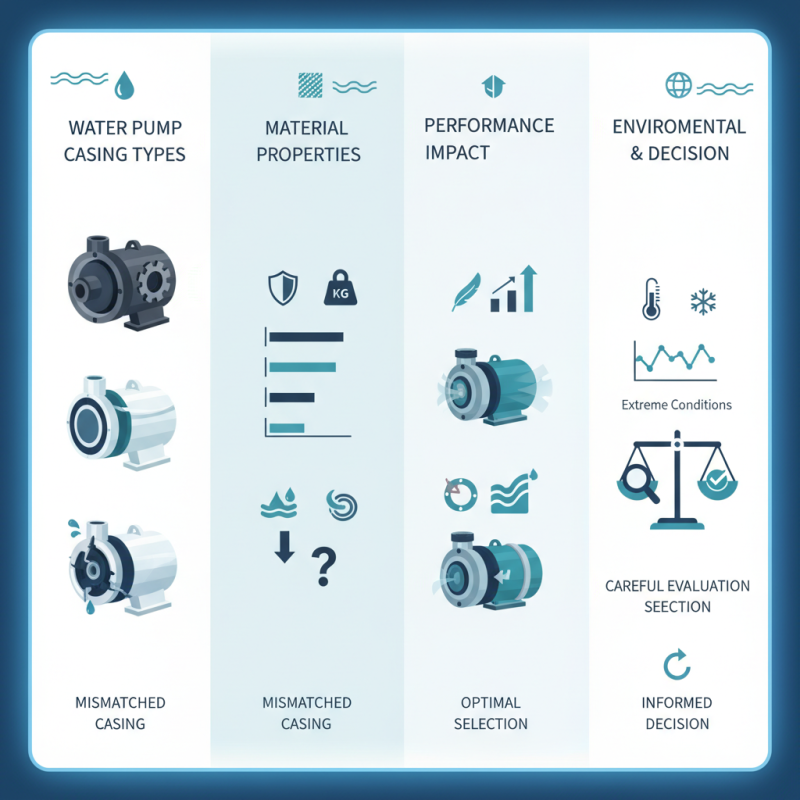
Choosing the right water pump casing is crucial for efficiency. Different materials and designs impact the performance significantly. Understanding these options helps in making informed decisions.
water pump casings come in various types. Each type has unique properties suited for different applications. For instance, cast iron is durable but heavy. Plastics offer lightweight solutions but may lack strength. It's essential to weigh the pros and cons of each material.
Optimal performance relies on selecting the appropriate casing. Misjudgments can lead to issues like leaks or inefficiencies. Consideration of environmental factors is also key. Not all casings perform equally in extreme conditions. Make careful evaluations before finalizing a decision.
Types of Water Pump Casings and Their Role in Efficiency
Water pump casings play a critical role in the efficiency of pump systems. Selecting the right type can significantly enhance performance. According to a report from the Hydraulic Institute, over 30% of energy loss in pumping systems is linked to casing design. The material and shape directly affect the flow characteristics. For example, cast iron is common for its durability, while stainless steel is favored for corrosive fluids.
The geometry of a casing influences fluid dynamics. Optimized casings can reduce turbulence and improve flow rates by 15% or more. However, manufacturers sometimes focus on cost over efficiency. This can lead to suboptimal designs that waste energy. A study by the American Society of Mechanical Engineers indicated that engineers often overlook the impact of casing modifications.
Effective cooling and heat dissipation are also crucial. A poorly designed casing can lead to overheating, reducing the pump's lifespan. It’s essential to evaluate both thermal and hydraulic performance. Many pumps fail to achieve ideal efficiency rates due to generic designs. Investing in tailored casings may yield higher efficiency and longer operational life.
Material Selection for Water Pump Casings: Aluminum vs. Cast Iron
When considering water pump casings, material choice significantly impacts performance. Aluminum and cast iron are two prevalent options, each with distinct advantages. Aluminum casings weigh less, which can ease installation. This lightweight property often translates to lower shipping costs. However, aluminum can be more prone to corrosion, especially in harsh environments. A study by the American Society of Mechanical Engineers (ASME) indicates that aluminum can suffer a 20% reduction in lifespan under certain conditions.
On the other hand, cast iron casings are known for their durability. They excel in high-load applications due to their strength. Cast iron's resistance to wear and tear makes it a popular choice for heavy-duty pumps. According to a report by the Hydraulic Institute, the lifespan of cast iron casings can be up to 50% longer than aluminum in similar conditions. However, the material is heavier and can increase installation complexity.
Choosing the right casing material requires careful consideration. Trade-offs exist between weight, durability, and cost. Engineers often find themselves weighing these factors against specific project needs. Balancing performance with practical constraints is not always straightforward. Understanding these materials will guide in making informed decisions for optimal performance.
Impact of Casing Design on Water Pump Performance and Lifespan
The design of water pump casings plays a crucial role in performance and lifespan. A well-designed casing improves efficiency by minimizing turbulence within the pump. It can significantly reduce energy consumption, ultimately lowering operational costs. Conversely, a poor design may lead to increased wear and tear. Over time, inefficiencies can cause unexpected breakdowns.
Material selection also impacts performance. Common options include stainless steel and plastic, each with its pros and cons. While stainless steel is more durable, plastic may offer better corrosion resistance in some environments. These choices can affect not only function but also the maintenance frequency. Frequent checks for wear can be costly and time-consuming, prompting reevaluation of the initial design choices.
Casing shapes matter too. A streamlined design facilitates better fluid flow, reducing pressure drops. However, less attention to this detail can lead to issues, like cavitation. Cavitation can cause severe damage, affecting both pump efficiency and lifespan. Choosing the right casing design requires careful consideration and sometimes a trial-and-error process. This can result in troubling inefficiencies if not addressed early on.
Performance Metrics: How Casing Types Affect Flow Rate and Pressure
The choice of water pump casing types significantly influences performance metrics like flow rate and pressure. Different materials and designs create distinct hydraulic characteristics. For instance, a well-designed casing can enhance flow efficiency by up to 20%, according to a 2021 industry report. In contrast, poorly designed casings can lead to pressure drops of 15% or more, resulting in reduced system performance.
Materials play a crucial role in this context. Plastic casings are lightweight and resistant to corrosion. However, they often cannot withstand high pressures. Metal casings offer strength but can be more expensive and heavier. A startling 30% of operators reported issues with corrosion affecting performance in metallic casings, highlighting the need for careful material selection. Choosing the wrong type can lead to inefficiencies and increased maintenance costs.
The design of the casing also matters. A straight, streamlined design yields better flow compared to a convoluted one. Research indicates that efficient casing designs can reduce energy consumption by approximately 10-15%. Yet, many systems still operate on outdated models, leading to sub-optimal performance. It’s evident that while improvements in casing design exist, many industries lag in adopting these advancements.
Maintenance Considerations for Different Water Pump Casing Materials
Choosing the right water pump casing material is crucial for performance and longevity. Common materials include cast iron, stainless steel, and plastic. Each has unique maintenance requirements. Cast iron casings are strong, but they need regular painting to prevent rust. In contrast, stainless steel is resistant to corrosion but can be prone to pitting if not adequately maintained.
A recent study indicated that proper maintenance can improve the lifespan of pump casings by up to 30%. Cleaning the casing regularly helps remove sediments that can accumulate and cause damage. Ensure that seals are intact; leaks can lead to performance drops.
Tip: Always check the manufacturer's guidelines for specific maintenance schedules. Regular inspections can save costs in the long run. It is not uncommon for users to overlook minor damages, which can escalate if ignored. Evaluate your pump regularly and address issues quickly.