ClickCease

Best Polymer Tape Casting Machine Manufacturers in China

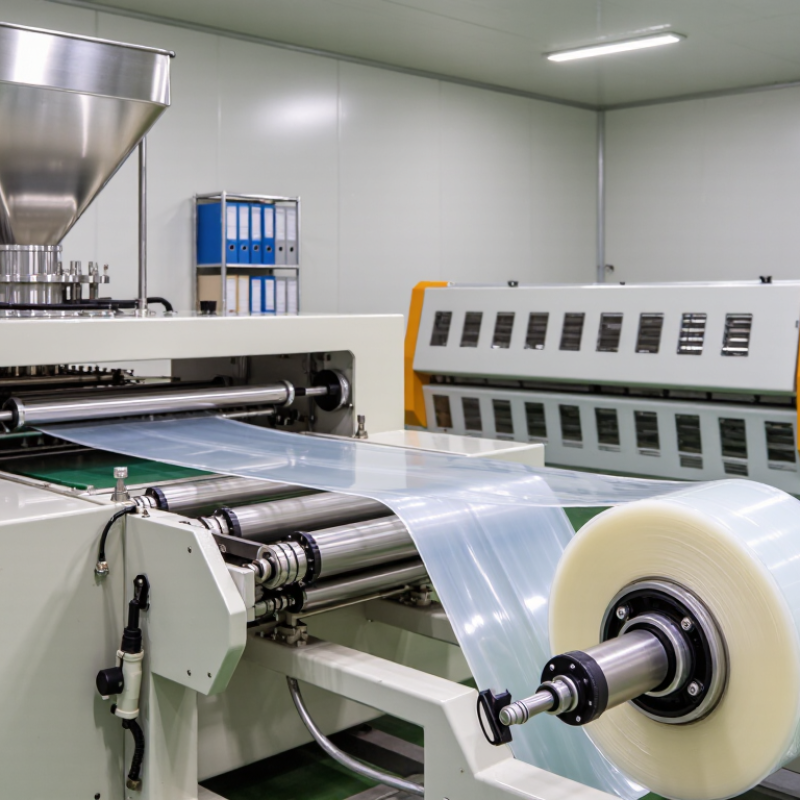
A Polymer Tape Casting Machine turns a prepared polymer slurry into a thin, continuous sheet. Its main components may include a feed system, casting head, moving carrier, drying section, and winding unit. Small differences matter. A narrow gap can influence thickness, while slurry viscosity and drying conditions affect surface quality. The right setup depends on the material, target dimensions, production volume, and downstream process—not simply the machine’s listed speed.

China has a broad industrial equipment sector, but manufacturers vary in design experience, customization, documentation, and technical support. This guide introduces factors to consider when comparing Polymer Tape Casting Machine manufacturers in China. It focuses on practical questions: Can the supplier explain how it controls coating thickness? Can it discuss suitable drying conditions for your material? Are trial runs, sample evaluation, and installation support available? Specific answers are more useful than general promises. Ask for relevant project details, while recognizing that results from one material may not transfer directly to another.

A polished brochure is not proof of process capability. Request drawings, operating ranges, and clear information about included components. Where possible, review a sample produced under conditions close to your own. The comparison also deserves a little caution: public product pages may leave important details unclear, and not every supplier will fit every application. A careful shortlist can help buyers identify equipment partners whose capabilities match their technical needs and production plans.
Best Polymer Tape Casting Machine Manufacturers in China

Polymer Tape Casting Basics: Typical Green-Tape Thickness of 10–500 μm

In polymer tape casting, 10–500 μm usually refers to the dried green tape, not the wet slurry gap. This broad engineering range covers thin flexible films and thicker sheets designed for later handling or processing. Mistler and Twiname’s technical reference, Tape Casting: Theory and Practice (2000), describes how slurry properties, blade gap, and drying conditions influence tape formation. The stated range is useful for planning, but it is not a universal specification. Polymer type, solids loading, and shrinkage can shift the final thickness.

At the thin end, small changes in coating conditions can create visible variation across a roll. At 10–50 μm, check thickness at several positions, not just the center. For thicker tapes, trapped air or uneven drying may leave pinholes, curled edges, or a tacky surface. A blade gap alone cannot predict the finished thickness; test dried samples and record the measurement method. This is easy to overlook.

Tips: Set a target thickness and tolerance before machine trials. Measure dry tape with a calibrated gauge, and note temperature and humidity. Keep one sample from each trial. It may reveal a problem that a single reading misses.

Machine Specifications: Compare Casting Speeds of 0.1–10 m/min

When comparing polymer tape casting machines in China, check how the stated 0.1–10 m/min speed range performs under real production conditions. At 0.1 m/min, slower movement can support careful coating and process adjustments, especially during material trials. It also means lower output. At 10 m/min, throughput rises, but drying capacity, web tension, and winding control must keep pace. Speed alone can mislead.

Ask for specifications at several operating speeds, not only the maximum. Useful details include casting width, wet-film thickness range, speed stability, and dryer length. A thicker wet layer may need more drying time, so the line may not maintain its top speed for every formulation. Check whether speed is adjustable in small increments. That matters when tuning a coating, even if it sounds minor.

Request a trial using a representative polymer mixture and target thickness. Observe whether the film stays even across the web and whether edges curl during winding. Record line speed, temperature, and thickness together; otherwise, comparisons are weak. Supplier data should identify test conditions and tolerances. If those details are missing, ask again. The answer may still leave some uncertainty, so confirm performance with a sample run before specifying a production line.

Leading Chinese Manufacturers: Assess Web Width, Drying, and Automation

When evaluating polymer tape casting machine manufacturers in China, match the stated web width to your actual production needs. Ask for the usable coating width, not just the frame width, and check how much edge trim the process requires. A wider machine is not automatically better; it may increase material waste and commissioning demands. Request a trial using your polymer slurry and substrate. Measure the dried tape at several points across its width.

Drying performance depends on more than oven length. Ask how many temperature zones are available, how airflow is controlled, and whether operators can adjust residence time. Temperature readings should be checked across the web, since uneven heat can cause curling, cracks, or inconsistent thickness. Heat matters. Published line-speed figures need context: confirm the material, wet-film thickness, and drying conditions used during testing.

Automation can support stable tension, repeatable coating gaps, and recipe-based settings. Check whether alarms identify practical problems, such as web drift or a temperature deviation, rather than simply displaying an error code. Ask to review production records and changeover steps. This part is easy to overlook. Too many automated settings can complicate troubleshooting if operators receive little training, so assess the controls with the people who will run the line each day.

Best Polymer Tape Casting Machine Manufacturers in China - Leading Chinese Manufacturers: Assess Web Width, Drying, and Automation

Technical comparison framework for evaluating suppliers. Machine specifications are model- and process-specific; request written, configuration-matched data rather than treating generic figures as supplier claims.

Assessment Dimension Unit or Data Format What to Compare Evidence to Request
Usable web width mm Maximum processable substrate width and usable coating width. Coating width may be narrower than the web because of edge margins and trimming. Machine drawing showing web path, coating width, edge margins, and any trim allowance.
Line speed m/min Compare stable production speed under the specified material, coating, and drying conditions—not only the machine’s maximum mechanical speed. Guaranteed speed range and a test report identifying the substrate, coating formulation, wet laydown, and drying settings used.
Coating method Method and configuration Confirm the applicator type, such as slot-die, knife, or comma-bar coating, is suitable for the formulation, substrate, and required coating profile. Applicator specification, compatible viscosity range, adjustment range, and sample coating results.
Coating thickness or coat weight µm, g/m², or both Establish whether the quoted value refers to wet or dry thickness. For coat weight, clarify the measurement method and the target uniformity across the web. Specified operating range, cross-web uniformity data, measurement method, and samples from a representative production trial.
Drying oven configuration Number of zones; oven length in m Compare usable heated length, zone arrangement, airflow design, and temperature-control range. Suitability depends on the material and coating process. Oven layout, zone-by-zone temperature settings, airflow details, and a documented drying trial at the proposed line speed.
Drying performance Residual solvent or moisture; test method Set an agreed product-specific endpoint. Oven temperature alone does not establish that a coating is adequately dried. Test method, measured results, operating conditions, and any applicable product acceptance limits.
Web tension control N or N/m; control zones Check whether tension is controlled through unwinding, coating, drying, and rewinding, and whether the range suits the substrate’s strength and stretch. Tension range, sensor and control description, zone layout, and trial data using the intended substrate.
Unwind and rewind capacity Roll diameter in mm; core size in mm Confirm the maximum roll diameter, supported core sizes, roll weight, and winding mode fit the production format. Mechanical drawings and rated limits for both unwind and rewind stations.
Web guiding and alignment Configuration and correction range Review edge- or line-guiding equipment, sensor placement, and its compatibility with the intended substrate and web path. Guiding-system specification, layout, and demonstration with the specified substrate.
Automation and recipe control Functions and control-system details Compare recipe storage, coordinated speed and tension control, alarm history, operator access levels, and production data recording. Control-system description, sample recipe, alarm list, and demonstration of the functions included in the quotation.
Solvent handling and exhaust Airflow in m³/h; solvent and safety details For solvent-based processes, review exhaust design, solvent handling, monitoring needs, and compliance obligations for the installation location. Process-specific ventilation design, risk documentation, and confirmation of applicable local code requirements by qualified parties.
Inspection and quality monitoring Available inspection functions Check options for detecting coating defects, monitoring web breaks, and recording quality data. Confirm which functions are standard and which are optional. Equipment list, defect-detection capabilities, sample reports, and a clear scope of supply.
Utilities and operating requirements kW, voltage, compressed air, exhaust, and other stated units Compare connected electrical load and required plant services against the factory’s available capacity. Utility schedule for the quoted configuration, including operating conditions and any exclusions.
Acceptance testing and support Test protocol; service terms Define measurable acceptance criteria for speed, coating quality, drying endpoint, and continuous operation before purchase. Factory and site acceptance-test plans, commissioning scope, training details, spare-parts list, and warranty terms.

Comparison note: Request the same substrate, coating formulation, target coat weight, and acceptance criteria from each supplier. This makes quoted web width, speed, and drying performance more directly comparable.

Performance Verification: Check Thickness Uniformity and Line Stability

Best Polymer Tape Casting Machine Manufacturers in China

Performance Verification: Check Thickness Uniformity and Line Stability

When evaluating polymer tape casting equipment, check thickness uniformity during a sustained run, not just a brief demonstration. Use a calibrated gauge to measure samples across the web: left edge, center, and right edge. Repeat measurements at regular intervals, such as every 20 minutes, and record the readings beside line speed and operating conditions. This simple log can reveal drift that one attractive sample hides. Looks convincing. But verify it.

Line stability matters just as much. Watch the web as it passes the casting head and through the winding section. Note flutter, wrinkles, edge movement, and sudden tension changes; these may affect both thickness readings and finished rolls. Ask the manufacturer to run the intended polymer and target speed, then compare results across a longer trial. A stable display is not enough if the material keeps wandering. Check whether operators can adjust temperature, gap, and tension in measured steps, and whether settings remain repeatable after a stop and restart. No trial is perfect. Record limitations, including ambient conditions and material variation, before judging performance.

Best Polymer Tape Casting Machine Manufacturers in China

Performance Verification: Check Thickness Uniformity and Line Stability

Illustrative sample measurements from a hypothetical 10-minute verification run: thickness stays close to a 100 μm target while line speed remains near 5.0 m/min. These values are for demonstration only and are not manufacturer-specific test results.

Manufacturer Selection: Match Machine Capacity to Material and Output Needs

When comparing polymer tape casting machines, match the usable operating range to your material, not just the advertised maximum speed. Capacity is not speed. A viscous ceramic-polymer slurry may need steady feeding and a slower web, while a thinner formulation can run faster but demand tighter thickness control. Ask manufacturers for trial data using a similar viscosity, coating width, and target thickness.

Check the complete line. The casting head, pump, web-tension system, and dryer must work together at your planned output. For example, a 300-millimeter-wide film running at a modest speed may still require substantial drying time if the coating is thick. Confirm the machine can maintain stable temperature and web alignment across the full width. Small details matter. Uneven edges or a fluctuating coating gap can create scrap even when nominal capacity looks sufficient.

Estimate output using realistic shift hours, changeovers, cleaning, and quality checks. A spreadsheet estimate can look precise and still miss delays between batches; I would treat it as a starting point, not a promise. Request a material trial and measure thickness variation, surface defects, drying consistency, and usable yield. A machine that runs slightly below its maximum may be the better fit if it produces repeatable tape with room for future adjustments.