ClickCease

Why Choose a Reliable Skin Analyzer Distributor?

Why Choose a Reliable Skin Analyzer Distributor?

The skin analysis market is expanding with professional beauty clinics and dermatology practices. Grand View Research reports continued growth in aesthetic devices through 2030. Fortune Business Insights also identifies digital diagnostics as a developing segment in professional skincare. These reports reveal an important reality: demand is rising, but product quality is not always consistent.

A reliable Skin Analyzer Distributor provides more than equipment. It should offer documented specifications, calibration guidance, software training, and responsive technical support. Imagine a clinic comparing two clients under identical lighting. One device produces stable images and measurable results. The other changes readings after a minor angle adjustment. That difference affects consultation quality and customer trust.

Dr. Howard Murad, dermatologist and skincare researcher, has said, “The skin is a reflection of what’s happening inside the body.” His point supports careful observation, not careless promises. A distributor must help professionals interpret data responsibly. It should explain limitations, privacy practices, warranty terms, and regulatory requirements clearly.

Trust matters.

A dependable supplier also verifies camera resolution, lighting consistency, moisture sensors, and reporting functions before delivery. Independent demonstrations and service records are useful evidence. Still, no analyzer replaces clinical judgment. That is where many purchasing decisions become imperfect. Buyers may focus on attractive screens while overlooking software updates or after-sales support. A reliable partner makes those weaknesses visible before installation. This practical transparency builds long-term value, safer recommendations, and stronger professional credibility.
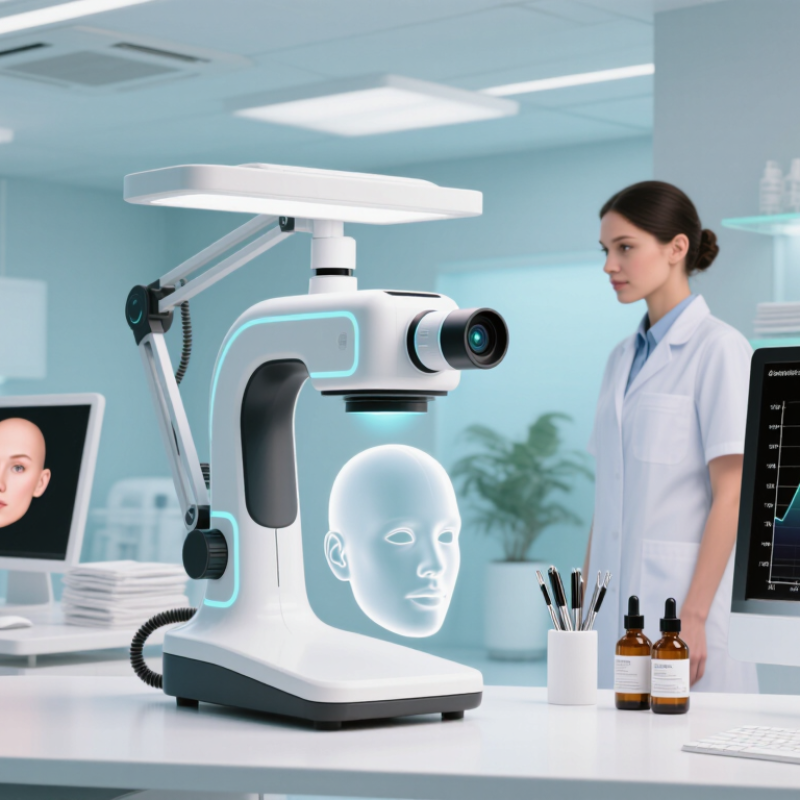
Why Choose a Reliable Skin Analyzer Distributor?

What Is a Reliable Skin Analyzer Distributor?

A reliable skin analyzer distributor is more than a sales channel. It verifies measurement accuracy, software updates, operator training, and after-sales support. According to the World Health Organization, at least 1.8 billion people live with a skin condition at any given time. That scale increases the cost of unclear readings and poor guidance. Proof comes first. A dependable distributor should explain the device’s intended use, measurement limits, data protection process, and service response time. It should also provide traceable documents, user manuals, calibration records, and transparent warranty terms.

Look for practical evidence, not impressive promises. Grand View Research reported that the broader global dermatology devices market reached approximately USD 4.9 billion in 2022, showing strong demand for professional equipment. Growth alone does not prove quality. Ask whether staff can demonstrate repeatability on the same skin area under controlled lighting. Request training records and sample reports. An independent calibration record matters more than a polished showroom. Software integration should be tested before purchase. Privacy procedures should be explained clearly. A distributor may offer fast delivery, yet slow technical support later. That risk is easy to overlook. Some distributors also confuse visual analysis with medical diagnosis, which can create unrealistic expectations. A reliable partner states this boundary plainly and updates its guidance when evidence changes. Mistakes still happen. The real test is whether the distributor documents them, corrects them, and learns from them.

Which Standards Define Distributor Reliability?

A reliable skin analyzer distributor is defined by evidence, not polished promises. ISO’s 2023 Survey recorded more than 37,000 ISO 13485 certificates worldwide. However, certification alone does not prove a distributor’s competence. It mainly shows that a quality management system exists. Ask for current certificates, scope details, batch records, and documented complaint procedures. A dependable distributor should also explain calibration intervals, software updates, spare-part storage, and response times. These details matter when a device produces inconsistent images in a busy clinic.

Data protection is another reliability standard. Skin analyzers may process facial images, treatment notes, and identifying information. IBM’s Cost of a Data Breach Report 2024 placed the average healthcare breach cost at 9.77 million US dollars. That figure makes vague privacy promises difficult to accept. Distributors should provide encryption information, access controls, retention policies, and clear data-processing agreements. They should also support applicable requirements, such as the EU General Data Protection Regulation or local medical-device rules.

Practical testing reveals more than brochures. Request a live demonstration using different skin tones, lighting conditions, and repeated scans. Check whether the distributor records measurement uncertainty and explains limitations honestly. Some sales teams avoid discussing false readings. That is a warning sign. Look for trained technicians, documented installation, user education, and a reachable service desk. Reliability is imperfect, but transparent records make problems visible before they become clinical or financial risks.

Why Choose a Reliable Skin Analyzer Distributor? - Which Standards Define Distributor Reliability?

Reliability Dimension Relevant Standard or Requirement What It Demonstrates Evidence to Request Suggested Assessment
Quality Management ISO 9001:2015 quality management system The distributor maintains documented processes for purchasing, storage, delivery, customer support, corrective actions, and continual improvement. A current certificate, certification scope, issuing certification body, and certificate validity dates. High value
Medical-Device Distribution Controls ISO 13485:2016, when the distributor operates within a medical-device quality system or is included in the applicable supply-chain scope Greater control over traceability, complaint handling, regulatory records, storage, and distribution activities for medical devices. Certificate scope, documented distribution responsibilities, complaint procedure, and traceability records. Context-dependent
Regulatory Authorization Applicable market regulations, such as the EU Medical Device Regulation (EU) 2017/745 or local device rules The distributor understands whether a skin analyzer is a regulated medical device, cosmetic-use instrument, or general wellness product in the target market. Device classification, declaration or registration documents, authorized economic-operator details, and market-specific compliance records. Essential
Electrical and Product Safety Applicable safety and electromagnetic-compatibility requirements; IEC 60601-1 may apply to qualifying medical electrical equipment The supplied equipment has been assessed against the safety requirements relevant to its intended use and product category. Test reports, declarations of conformity, user instructions, and model-specific compliance documentation. Essential
Calibration and Measurement Control ISO 17025-accredited calibration laboratories, where calibration is required for the instrument or reference equipment Measurement-related services are supported by technically competent laboratories with traceable calibration practices. Recent calibration certificate, calibration interval, measurement uncertainty, reference standards, and laboratory accreditation scope. High value
Data Privacy and Cybersecurity Applicable privacy laws, including the GDPR where personal data is processed in the European Economic Area; ISO/IEC 27001 can support information-security governance The distributor and software ecosystem address consent, access control, data retention, security incidents, and secure handling of skin images or user records. Privacy policy, data-processing terms, hosting location, user-access controls, backup policy, and security incident process. Essential
Technical Training Documented competency and product-training procedures aligned with the device’s intended use Personnel can install, demonstrate, troubleshoot, and explain measurement limitations without making unsupported diagnostic claims. Trainer qualifications, completed training records, installation checklist, user manuals, and escalation contacts. Essential
After-Sales Service Written service-level commitments and documented corrective-action procedures Customers have defined channels and response expectations for repairs, software issues, replacement parts, complaints, and field problems. Warranty terms, response-time commitments, spare-parts policy, service records, and anonymized complaint-resolution examples. Essential
Supply Continuity Documented inventory, order-management, business-continuity, and change-notification processes The distributor can reduce delays caused by stock shortages, discontinued components, logistics disruptions, or software changes. Typical lead-time range, stock policy, end-of-life notification process, alternative-part controls, and continuity plan. High value
Transparent Claims Evidence-based marketing and clear separation between measurement information, cosmetic assessment, and medical diagnosis Product recommendations are less likely to misrepresent accuracy, clinical capability, intended use, or expected outcomes. Performance specifications, validation information, limitations, intended-use statement, and examples of customer-facing materials. Essential

Note: The applicable standard depends on the product’s intended purpose, classification, software functions, electrical design, and target market. Certifications should always be checked for scope, model coverage, issuing body, and validity.

How Do Distributors Ensure Device Quality and Accuracy?

A reliable skin analyzer distributor does more than ship a device. They verify how accurately it measures moisture, oil, pores, pigmentation, and skin texture. This process should include factory inspection, calibration records, and sample testing under controlled conditions. Small details matter. Uneven lighting can change an image result.

Experienced distributors often test analyzers with reference materials before delivery. They may compare readings from the same skin area several times. Consistent results are essential. They also check image clarity, sensor performance, software stability, and data storage. A distributor should explain these checks clearly, not hide behind technical language.

Accuracy also depends on the operator. Reliable suppliers provide practical training for cleaning the lens, positioning the client, and controlling room light. They should offer written procedures and responsive technical support. Skin tones, hydration levels, and environmental conditions can affect readings. No analyzer is perfect. I have seen operators trust a single scan too quickly. Repeating the measurement can reveal an unexpected variation. Good distributors acknowledge this limitation and teach users how to interpret results carefully. They maintain service records, provide traceable documentation, and review recurring faults instead of blaming the user. That level of accountability helps clinics make safer, more informed decisions.

What Services Should a Professional Distributor Provide?

A professional skin analyzer distributor does more than ship equipment. They understand how the device fits into daily clinic work. Before recommending a model, they should ask about consultation rooms, staff skills, treatment goals, and expected patient volume. A short live demonstration can reveal practical details, such as image capture time, lighting needs, and report readability. These details matter.

Reliable distributors provide installation, calibration, and structured training. Staff should learn how to prepare the skin, position the client, and explain images without exaggerating results. Clear operating guidelines reduce inconsistent readings between different users. Training should include data protection, secure storage, and appropriate access controls. These responsibilities require practical knowledge, not only sales experience.

After installation, support should remain available. A professional team can provide troubleshooting, software updates, maintenance reminders, and replacement parts. Response times should be stated clearly in writing. Warranty terms should also explain exclusions and service procedures. Ask for sample reports and references from comparable clinics. Real experience is useful evidence.

No system is perfect. Lighting, hydration, makeup, and operator technique can influence results. A trustworthy distributor admits these limits and helps users document them. They should avoid promising diagnosis or guaranteed treatment outcomes. I would also question distributors who rush a purchase or avoid technical questions. Good support feels measurable, patient, and transparent. Sometimes, the best service is an honest warning before installation.

Why Choose a Reliable Skin Analyzer Distributor?

A professional distributor should support the complete product lifecycle, from technical consultation and installation to training, documentation, calibration, and after-sales service.

The chart uses a transparent five-point purchasing-priority scale: 1 means limited importance and 5 means essential importance. Reliable distributors score highly by providing technical guidance, compliant documentation, user training, dependable delivery, and responsive after-sales support.

How Can Buyers Evaluate and Select the Right Distributor?

Selecting a skin analyzer distributor requires more than comparing prices and product photos. Grand View Research valued the global skincare devices market at approximately USD 21 billion in 2023. This growth attracts capable suppliers, but also inexperienced intermediaries. Buyers should verify authorization, technical training, warranty terms, and post-sale response times. Ask for documented service cases, not only testimonials.

Request calibration records, software update policies, and sample reports from real testing environments. A reliable distributor should explain lighting conditions, sensor limits, and possible measurement errors. It should also provide clear instructions for data protection and user access. ISO 13485 is a useful quality reference, although certification alone does not prove excellent local support. Check the certificate scope and issuing body. Small details matter.

Compare at least three distributors using the same scorecard. Include delivery reliability, spare-part availability, training hours, return procedures, and total ownership cost. The WHO’s Global Medical Device Nomenclature guidance emphasizes consistent device identification, which can help buyers check technical documentation. A polished demo can still mislead. I would request a live demonstration under ordinary clinic lighting. Results may vary. That variation deserves an honest explanation, not a perfect-looking chart. Some buyers focus too heavily on initial discounts and underestimate downtime. That is a common mistake worth revisiting.