Auto Repair Shop In Plainfield, IL

Choosing an Ac-Dc Converter for global sourcing is more than comparing price and output voltage. A reliable decision begins with the real operating environment. Will the unit face 90–264 VAC input, unstable grids, 50 Hz, or 60 Hz? That detail matters.
A sourcing team should examine output power, efficiency, standby consumption, ripple, inrush current, leakage current, and thermal performance. A converter rated at 100 watts may still fail inside a sealed enclosure. Heat has nowhere to escape. Measure it.
EMI behavior also deserves attention. Henry Ott, a respected EMC engineer, wrote, “The best way to solve EMC problems is to prevent them in the first place.” His principle remains practical for power-supply selection. Ask suppliers for test reports, conducted-emission data, protection details, and clear derating curves. Do not rely on attractive datasheets alone.
Global procurement adds other risks. Check factory experience, sample consistency, component traceability, warranty terms, production capacity, and documentation quality. Confirm that the selected Ac-Dc Converter supports the required regional safety and electromagnetic-compatibility requirements. Those requirements can differ by market and product category.
A small prototype can expose large problems. Listen for audible noise. Touch the enclosure carefully after extended operation. Review startup behavior at low and high input voltage. These simple observations are useful, although they are not a substitute for accredited testing.
No checklist is perfect. Supplier claims can be incomplete, and laboratory results may not represent your final enclosure. The better approach combines engineering review, independent verification, and cautious commercial judgment. A lower purchase price may become expensive after redesigns, delays, or field failures. Reliability is sourced, tested, and continuously questioned.
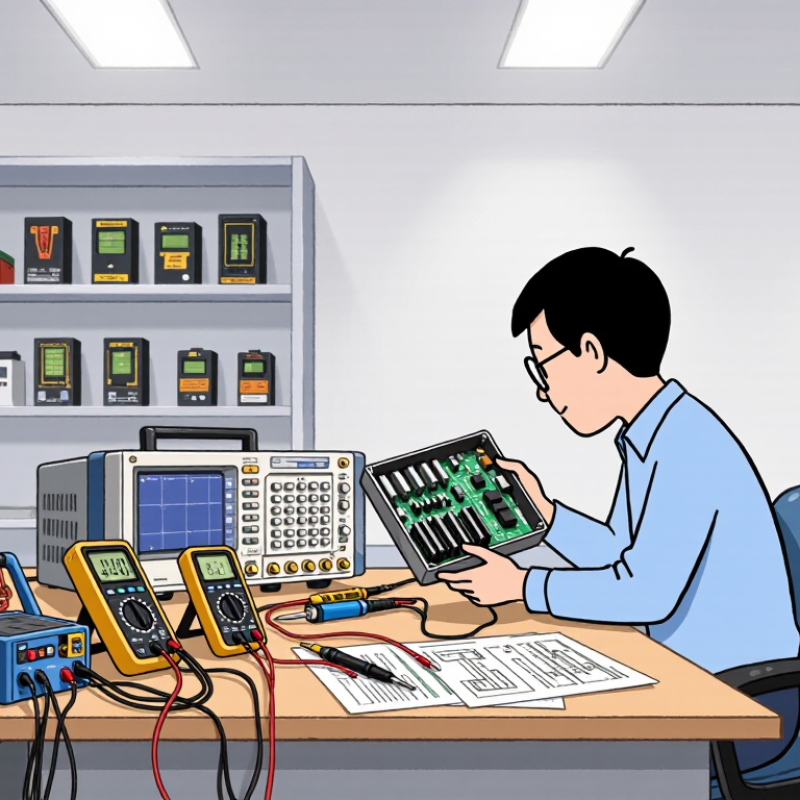
How to Choose an AC DC Converter for Global Sourcing?
Define the Power and Performance Requirements
Start with the equipment’s actual input conditions. Record the expected AC voltage range, frequency, and installation environment. A converter rated for nominal voltage alone may fail during brownouts or unstable supply conditions. Define the required DC output voltage and load current carefully. Then calculate power using voltage multiplied by current.
Do not size the converter exactly to the calculated wattage. Allow practical headroom for startup surges, motor movement, and future changes. A 60-watt load may need an 80-watt converter, depending on its behavior. Check peak power, continuous power, and overload duration separately. Short peaks can expose weak designs.
Performance requirements deserve equal attention. Examine efficiency, voltage regulation, ripple, standby consumption, and operating temperature. In a warm cabinet, heat can reduce service life quickly. Confirm the derating curve rather than trusting one headline specification. I have seen clean spreadsheets hide poor airflow assumptions. That mistake is easy to repeat.
Request test samples from several suppliers and measure them under real loads. Use a programmable source when possible. Check output stability during low input voltage and sudden load changes. Verify protection functions, insulation requirements, and documentation before bulk purchasing. Datasheets help, but hands-on testing reveals the uncomfortable details.
Use the following engineering and sourcing checklist to compare AC-DC converter requirements across international markets. Values are typical design targets and should be verified against the final application, applicable standards, and the supplier's test reports.
| Requirement Dimension | Recommended Specification Range | Why It Matters | Global Sourcing Checkpoint | Typical Acceptance Evidence |
|---|---|---|---|---|
| AC Input Voltage | 90–264 VAC, 47–63 Hz for universal-input products | Supports common single-phase mains systems, including nominal 100 V, 120 V, 220 V, 230 V, and 240 V regions. | Confirm whether the converter requires a fixed input range or automatically detects the line voltage. | Input-range test record, operating manual, and nameplate marking. |
| Output Voltage | 5 V, 12 V, 15 V, 24 V, or 48 VDC, according to the load | The output voltage must match the equipment's rated input and remain within its permitted tolerance. | Specify nominal voltage, adjustment range, polarity, connector type, and allowable voltage tolerance. | Output-voltage measurement under minimum, nominal, and maximum input conditions. |
| Rated Output Power | Application load × 1.20–1.30 minimum design margin | A 20–30% reserve helps accommodate startup demand, component aging, ambient-temperature derating, and load variation. | Calculate continuous power and peak power separately; do not size only from the average operating load. | Load profile, rated-power curve, and thermal derating graph. |
| Maximum Output Current | Output power ÷ output voltage, with additional transient capacity where required | Insufficient current capacity can cause voltage drop, overheating, protection trips, or unstable system startup. | Check continuous current, peak current duration, inrush behavior, and current-limit recovery mode. | Constant-current load test and startup test with the actual or simulated load. |
| Efficiency | Typically 85–95%, depending on topology, power level, and load | Higher efficiency reduces energy consumption, heat generation, enclosure size, and cooling requirements. | Request efficiency at 10%, 25%, 50%, 75%, and 100% load rather than relying only on a single maximum value. | Efficiency curve, input-power measurement method, and standby-power data. |
| No-Load and Standby Power | As low as practical; target below 0.5 W for many low-power external applications | Low standby consumption supports energy regulations and reduces long-term operating cost. | Identify the destination-market limits and clarify whether the limit applies to the adapter, end product, or complete system. | No-load power test at the relevant nominal input voltages. |
| Output Regulation | Typically ±1–3% for regulated DC outputs | Stable voltage protects sensitive electronics and prevents performance changes as the input or load varies. | Define separate line regulation and load regulation limits when the application is voltage-sensitive. | Measurements at minimum and maximum input voltage and from minimum to maximum rated load. |
| Output Ripple and Noise | Typically 50–200 mV peak-to-peak, depending on output voltage and bandwidth | Excessive ripple may interfere with sensors, communications, audio circuits, displays, and precision electronics. | Specify the measurement bandwidth, probe method, cable length, and whether capacitive loading is included. | Oscilloscope waveform and test-condition report. |
| Isolation | Galvanic isolation between AC input and DC output where safety or system architecture requires it | Isolation helps reduce electric-shock risk and prevents unwanted ground-current paths between connected equipment. | Define insulation type, working voltage, creepage, clearance, and required dielectric withstand level. | Hi-pot test, insulation-resistance test, and construction review. |
| Protection Functions | Short-Circuit Overcurrent Overvoltage Overtemperature | Protection reduces the risk of fire, component damage, and repeated field failures. | Confirm the protection mode: hiccup, latch-off, constant-current, or automatic restart. | Fault-condition test results and recovery behavior after the fault is removed. |
| Operating Temperature | Commonly 0 to 40°C for full rating; wider ranges may be available with derating | Temperature affects component life, output power, efficiency, and long-term reliability. | Match the converter's rated ambient temperature to the enclosure, installation location, and local climate. | Thermal test report, derating curve, and maximum case-temperature specification. |
| Cooling Method | Natural convection for low and medium power; forced air for higher thermal loads | Cooling requirements influence noise, maintenance, enclosure design, and total system cost. | Specify airflow direction, fan lifetime if applicable, ventilation clearance, and installation orientation. | Thermal performance test in the intended mounting position. |
| Input Inrush Current | Controlled to protect fuses, switches, relays, and upstream power systems | High inrush can trip circuit protection or shorten the life of input components during repeated startup. | Check cold-start and warm-start conditions, especially when several converters are powered simultaneously. | Inrush-current waveform and test data at the applicable input voltage. |
| EMI and EMC Performance | Designed for applicable conducted and radiated-emission limits | Electromagnetic interference can disrupt nearby equipment and cause failures during final system compliance testing. | Review the complete system configuration, cable arrangement, grounding method, and required market standards. | EMI pre-scan or accredited laboratory report using defined test conditions. |
| Safety and Market Access | Electrical Safety EMC RoHS Material Compliance | Regulatory requirements determine whether the product can legally be imported, sold, or integrated in the destination market. | Identify the destination countries early and verify the exact product variant, markings, documentation, and scope of each report. | Declaration of conformity, test reports, technical file, labels, and material declarations. |
| Mechanical Integration | Defined enclosure, mounting, connector, and cable dimensions | Mechanical incompatibility can create assembly delays, added tooling, or unsafe cable stress. | Confirm dimensions, mounting holes, connector locking, cable gauge, bend radius, and ingress-protection needs. | Dimensioned drawing, 3D model, sample inspection, and cable pull test where applicable. |
| Reliability Target | Based on duty cycle, ambient temperature, load profile, and required service life | Reliability depends on the complete operating environment rather than on a single headline lifetime figure. | Ask for component-temperature data, life-test conditions, failure-rate assumptions, and warranty terms. | Reliability calculation, burn-in results, life-test summary, and production quality records. |
| Sourcing and Supply Continuity | Documented specification, repeatable production, and defined change control | Stable supply is essential when the converter is integrated into a long-life product or shipped to multiple regions. | Review minimum order quantity, lead time, approved component list, end-of-life notification, and second-source options. | Golden sample, inspection standard, change-notification process, and production traceability. |
