How to Choose Plastic Pouch Bags for Your Business
Choosing Plastic Pouch Bags is a product decision, not merely a packaging purchase. The right pouch should protect what you sell, run reliably on your filling line, and make sense for customers handling it at home. Small details matter. A zipper that feels stiff, a seal that wrinkles, or a pouch that will not stand upright can affect the experience.
The Flexible Packaging Association’s 2023 State of the U.S. Flexible Packaging Industry report puts U.S. flexible packaging sales at $42.9 billion in 2022. That figure describes the wider category, not pouch bags alone, but it shows how established flexible formats are in the market. Packaging educator Walter Soroka describes packaging as “the science, art, and technology of enclosing or protecting products for distribution, storage, sale, and use,” in Fundamentals of Packaging Technology. For a business, that means comparing practical needs: product weight, moisture and oxygen sensitivity, required shelf life, closure type, print area, and compatibility with filling equipment. A pouch that works beautifully for dry snacks may be unsuitable for a product needing stronger barrier protection.
There is no universal winner. Ask suppliers for material specifications, seal-test results, and samples filled with your actual product. Test them on your own line, too. That step is easy to skip, and sometimes the first sample looks better than the thousandth pouch. Consider shipping damage, storage conditions, and disposal options alongside appearance and unit cost. This guide will help you weigh those trade-offs and choose Plastic Pouch Bags with evidence, rather than relying on a polished product photo.
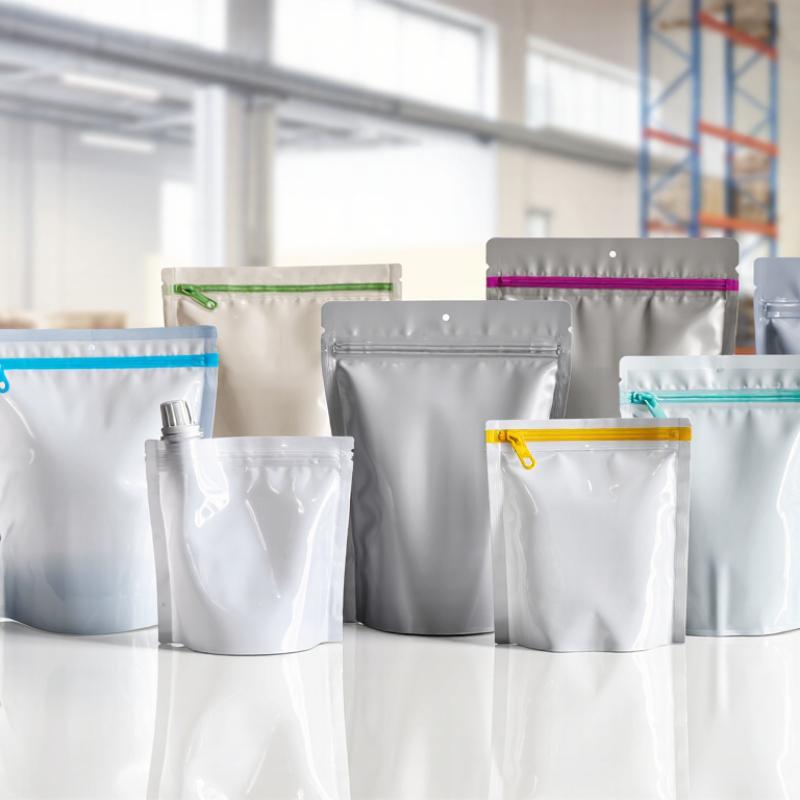
Define Product, Fill Weight, and Protection Needs Before Choosing a Pouch
A pouch should fit the product, not just the shelf. Start with its form and handling needs. Fine powders can collect in zipper tracks, while sharp snack pieces may stress corners. Oily foods can leave residue across the seal area. These details affect filling and closure, so observe the product during a normal packing run.
Record the net fill weight, then check the product’s bulk and shape. Weight alone is not enough. A 500-gram product may need a wider pouch if it is bulky or settles unevenly. Leave room above the fill for a clean seal, but avoid excess headspace that makes the pack look underfilled. Measure filled samples after settling; the result may differ from a pouch filled by hand.
Choose protection based on the product’s actual risks. Moisture-sensitive goods may need a stronger moisture barrier; products affected by oxygen or light may need other material layers. Do not assume the thickest pouch is best. It can add cost and may still fail if the seal is weak. Test samples with your product, filling equipment, and expected storage conditions. Check seals for wrinkles, leaks, and product caught in the closure. Small details matter. I would revisit the choice after a few production runs, since early tests can miss real handling problems.
Compare Stand-Up, Flat, and Gusseted Formats by Capacity and Shelf Use
Choosing a pouch starts with the product’s volume and how shoppers will see it. Stand-up pouches use a bottom gusset to form a stable base, making them useful for shelves where packages need to face forward. They can hold products such as dried fruit, coffee, or small pet treats. Leave enough headspace for filling and sealing; a pouch that looks roomy in a sample may be awkward when packed.
Flat pouches have no expanding base, so they suit slim products, small portions, and samples. They take up little storage space and can hang from a display hook when fitted with a hanging hole. Capacity is limited, though, and bulky contents may make the package look strained. That detail is easy to miss when reviewing an empty bag.
Side-gusseted bags expand along their sides, giving products more room without creating a broad front panel. They can work well for larger quantities of dry goods, especially when stored upright in cartons or displayed in rows. Their filled shape depends on the product’s weight and how evenly it settles. Test a filled pouch on the actual shelf. A mock-up can be misleading. Check its footprint, opening width, and shelf stability before choosing a format.
How to Choose Plastic Pouch Bags for Your Business
Compare stand-up, flat, and gusseted formats by representative capacity range and shelf use.
Stand-up pouches display upright on shelves; flat pouches suit compact, lightweight products; and gusseted pouches expand to hold larger or bulkier fills. Capacity ranges are representative, not guaranteed: actual usable volume depends on pouch dimensions, seal area, and product density.
Set Barrier Targets with OTR (cm³/m²·day) and WVTR (g/m²·day) Ratings
When choosing plastic pouch bags, set barrier targets before comparing prices. OTR measures oxygen transmission; WVTR measures water-vapor transmission. Lower values generally mean stronger protection, but test conditions matter. ASTM D3985 measures OTR, while ASTM F1249 measures WVTR. These methods help make supplier figures comparable. Ask for the test temperature, humidity, film thickness, and conditioning details.
Published packaging-film data sheets commonly place 12-micron PET near 100–150 cm³/m²·day OTR and 15–20 g/m²·day WVTR, though values vary by construction and test conditions. Treat these as reference points, not guarantees. A moisture-sensitive powder may need a tighter WVTR target; an aroma-sensitive snack may need a tighter OTR target. A low number can still be the wrong number. Test the finished pouch, including seals, since weak seams can undermine film performance.
Tips: Request recent test reports using ASTM D3985 and F1249, with units and conditions shown. Compare samples under your actual storage climate, then check product quality over time. Don’t over-specify by habit; extra barrier layers can raise cost and complicate recycling. And be honest about uncertainty: one short trial may not reflect a full season of temperature swings.
How to Choose Plastic Pouch Bags for Your Business - Set Barrier Targets with OTR (cm³/m²·day) and WVTR (g/m²·day) Ratings
Use the suggested limits below as starting specifications for comparing pouch materials. Lower OTR means less oxygen transmission; lower WVTR means less water-vapor transmission.
Example Barrier Targets for Pouch Selection | Product or Requirement | Suggested Maximum OTR
(cm³/m²·day) | Suggested Maximum WVTR
(g/m²·day) | Typical Application Examples | Selection Notes |
| Basic barrier | 100 | 10 | Products with modest sensitivity to oxygen or moisture, such as some short-shelf-life dry goods | A practical starting point when the product and distribution conditions do not require extended protection. |
| Moderate barrier | 10 | 5 | Crackers, dry snacks, and products that can lose crispness or flavor during storage | Consider the product’s fat content, target shelf life, and exposure to warm or humid conditions. |
| High barrier | 1 | 1 | Nuts, coffee, powdered foods, and other products sensitive to oxygen, moisture, or aroma loss | Compare barrier performance together with seal quality and resistance to handling damage. |
| Very high barrier | 0.1 | 0.1 | Highly sensitive products or applications requiring particularly strong oxygen and moisture protection | May require a high-barrier laminate. Confirm achievable limits with testing on the actual pouch structure. |
| Fresh produce or products that need gas exchange | Set by product trials | Set by product trials | Fresh fruits and vegetables that respire after packing | A very low OTR is not automatically desirable. Select permeability based on respiration rate, pack size, temperature, and shelf-life trials. |
Important: These are example procurement targets, not guaranteed performance values for a particular film or finished pouch. For meaningful comparisons, specify test conditions—for example, OTR at 23°C and 0% relative humidity, and WVTR at 38°C and 90% relative humidity—and confirm the method and conditions with the supplier. Actual results depend on material structure, thickness, humidity, processing, seals, and package damage; test the finished pouch when possible.
Specify Film Gauge in Microns and Validate Seals with ASTM F88
A pouch specification should state film gauge in microns, not just “light” or “heavy.” Microns describe thickness, but they do not predict package performance on their own. A 90-micron laminate may behave differently from a 90-micron single-layer film because structure and materials matter. Write down the full construction, target thickness, and acceptable tolerance. Then check samples from more than one production run. Small differences matter.
Seal strength needs a measurable check. ASTM F88/F88M provides a method for measuring the force required to separate a flexible-material seal. Agree on specimen width, test setup, and reporting units before comparing results. Keep the method consistent across samples. Otherwise, numbers can look precise while hiding differences in preparation. The test result is not a universal pass-or-fail limit; your team must define acceptance criteria for the product and its use.
Ask the supplier for recent test data and confirm that the tested pouch matches the proposed film and sealing process. Record seal temperature, pressure, and dwell time during trials, since a change in any one can affect results. A strong reading is useful, but it does not guarantee every seal is uniform. That is worth checking again. A few samples may miss variation across a full run, so retain samples and review them when process settings change.
Confirm Food-Contact Rules and Recycling Claims Before Placing Orders
How to Choose Plastic Pouch Bags for Your Business
Confirm Food-Contact Rules and Recycling Claims Before Placing Orders
A pouch that looks suitable may not be cleared for your product’s contact conditions. For US sales, check applicable FDA food-contact requirements, including relevant provisions in 21 CFR Parts 174–179. Ask suppliers for documentation covering the complete pouch structure, including film, inks, and adhesives. Match it to the food type, contact time, and filling temperature. Small details matter.
Recycling claims need equal scrutiny. The OECD’s 2022 Global Plastics Outlook estimated that only 9% of plastic waste worldwide was recycled in 2019. That figure covers plastic waste broadly, not pouches alone. A pouch may be technically recyclable but lack collection and processing options where your customers live. Ask which facilities accept that exact material and whether the claim applies locally. Reality is messier.
For US marketing, the FTC Green Guides say an unqualified recyclable claim generally requires access to recycling facilities for at least 60% of consumers or communities where the product is sold. Request evidence for any claim printed on the pouch, and check it against local programs. I would still review the test method and construction details; a tidy certificate can leave gaps. Before ordering, get written confirmation of food-contact suitability and recycling-claim support.

