Auto Repair Shop In Plainfield, IL
Choosing a Hydraulic Piling Rig in 2026 starts with the ground, not the brochure. Soil layers, groundwater, access limits, and nearby structures shape what the machine must do. A rig suited to dense gravel may struggle in soft, variable ground. Small urban sites also demand a different balance than open infrastructure projects. Details matter. Define pile type, diameter, installation depth, daily production target, and working space before comparing models. Then match those needs to torque, crowd force, mast height, and available attachments. Ask suppliers for performance evidence from comparable ground conditions, rather than relying on a headline capacity alone.
Transport width, operating weight, setup time, and power requirements can affect a project as much as drilling performance. Check whether the rig can reach the work area and operate within its real clearance limits. Also assess operator visibility, emergency controls, maintenance access, and the availability of replacement parts. A low purchase price may hide costly delays. Request service details and a clear breakdown of included equipment. For 2026, compare current specifications and confirm them directly with the manufacturer or dealer; product details can change. If possible, review a demonstration or speak with operators who have used the same configuration. No machine is perfect for every site. Even a careful shortlist can miss a practical constraint, so keep the project team involved as decisions develop. This guide outlines the questions that make a selection more informed, while recognizing that final suitability depends on verified site conditions.
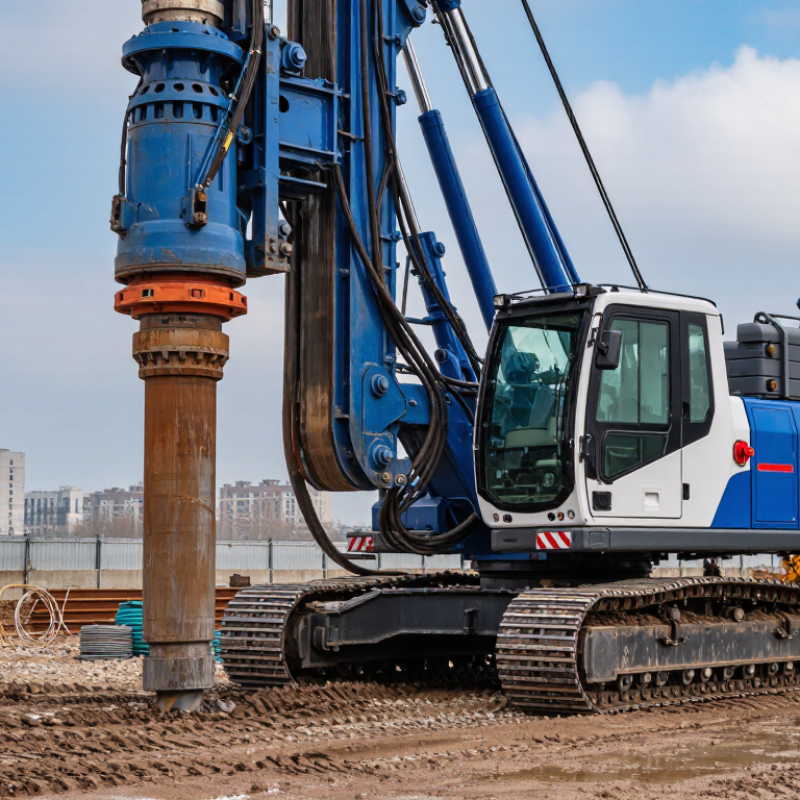
Before choosing a hydraulic piling rig, define the pile type, diameter, depth, and expected daily output. Then compare those needs with the rig’s working range, torque, crowd force, and available mast height. Small clues matter. A site with low overhead clearance may need a compact configuration, while restricted access can make transport width and setup space decisive.
Ground conditions deserve equal attention. Review borelogs or test-pit records for soil layers, groundwater, and obstructions; a few metres of dense gravel can change the required drilling method. Soft clay, loose fill, and rock place different demands on tooling and rig capacity. If records are limited, arrange additional ground investigation rather than relying on a nearby site’s results. That assumption can be costly. Also check slope, bearing capacity, and the space needed to position support equipment. In urban areas, nearby structures and vibration limits may affect the work sequence or method. A planning detail that is easy to miss is spoil handling: confirm where excavated material can be stored and how trucks will reach it. Conditions rarely match drawings perfectly, so leave room to adjust the plan.
A hydraulic piling rig should be selected around the pile design, not just its maximum torque. Start with the required pile method, diameter, depth, and reinforcement plan. A rotary rig may suit large bored piles, while a continuous-flight-auger setup can be more practical where uninterrupted drilling matters. Soil conditions change the choice: dense gravel, stiff clay, and loose saturated ground place different demands on the tooling and rig.
Match hydraulic capacity to the work the rig must perform throughout the cycle. Check torque and crowd force for penetration, then confirm pullback capacity for extracting the tool or casing. Hydraulic pressure and flow also need to support the selected attachment without slowing other functions. Peak figures mislead. Ask for performance data at the working range, not only at maximum output. Confirm that the mast, kelly bar, auger, or casing system fits the specified pile dimensions.
Site access matters, too. A rig with ample capacity may still be a poor fit on a narrow platform or under overhead obstructions. Compare operating weight, transport dimensions, setup space, and ground-bearing requirements with the actual site plan. A detail easy to overlook is the duty cycle: repeated deep piles can expose cooling or hydraulic limitations that a short test does not. Recheck the design assumptions with the geotechnical information and the rig’s operating charts; early estimates are not always right.
| Rig Type | Typical Pile Design | Indicative Working Range | Hydraulic / Performance Data to Check | Key Selection Considerations |
|---|---|---|---|---|
| Compact rotary drilling rig | Small-diameter bored piles, micropiles, and restricted-access foundations. | Commonly about 300–800 mm pile diameter and 10–25 m drilling depth, depending on tooling and ground conditions. | Rotary-head torque, rotary speed, crowd force, mast stroke, and available hydraulic flow at working pressure. | Check transport dimensions, headroom, access width, and whether the rig can maintain the required torque at the intended drilling speed. |
| Standard rotary piling rig | Bored cast-in-place piles for building, transport, and general infrastructure projects. | Often configured for approximately 600–1,500 mm diameter piles and depths around 20–50 m, subject to ground and rig setup. | Rotary torque, crowd and pullback forces, Kelly-bar length and section, winch capacity, and hydraulic cooling capacity. | Match torque and crowd force to the design diameter, socket or obstruction requirements, casing method, and planned drilling tools. |
| Heavy-duty rotary piling rig | Large-diameter, deep bored piles and piles requiring hard-ground drilling or substantial casing operations. | May be configured for roughly 1,200–3,000 mm or larger diameters and depths exceeding 50 m; actual limits are model- and tooling-dependent. | Maximum and continuous rotary torque, crowd force, winch line pull, Kelly-bar capacity, and duty-cycle limits. | Confirm the rig’s rated performance for the complete tool string and depth—not only its peak torque or headline maximum diameter. |
| Continuous flight auger (CFA) rig | Cast-in-place CFA piles where concrete is pumped through the hollow auger during withdrawal. | Commonly around 400–1,200 mm diameter and 15–30 m depth, with project-specific variations. | Auger-drive torque, crowd and extraction force, concrete-pump pressure and flow, and depth and concrete-volume monitoring. | Check that the pump and monitoring system can sustain the specified concrete delivery rate during controlled auger withdrawal. |
| Hydraulic press-in piling rig | Sheet piles and selected precast or steel sections installed by static pressing, often where vibration and noise need to be limited. | Capacity is specified by pressing force and compatible pile section; force requirements depend strongly on soil resistance and installation method. | Rated pressing and clamping force, hydraulic pressure and flow, reaction or anchoring system, and pile-section compatibility. | Assess reaction-system requirements, extraction capability, access, and the maximum force needed to meet the installation plan. |
| Selection note: The ranges above are indicative planning bands, not guaranteed machine limits. Compare manufacturer-rated performance curves and confirm the required torque, force, flow, pressure, tooling, pile dimensions, depth, and ground conditions for the specific project. Hydraulic pressure alone does not determine usable torque or force. | ||||
When choosing a hydraulic piling rig, compare drilling performance with the ground conditions and the work planned. Torque and crowd force matter, but they do not tell the whole story. Ask for production data from similar soil, pile diameters, and drilling depths. A high torque rating looks impressive, yet it cannot guarantee faster installation in dense gravel or mixed ground. Small details matter.
Mobility can shape daily output just as much as drilling power. Check transport dimensions, machine weight, track width, and setup time. On a compact urban site, a rig that turns within a narrow access lane may save hours. On softer ground, track pressure and ground-bearing conditions deserve close attention. Access can decide. A specification sheet cannot show every muddy turn or overhead obstruction, so verify the route and working platform before delivery.
Compare the rig’s reach and mast configuration with the actual pile layout, not an idealized plan. Measure gate openings, nearby structures, and clearance beneath cables or branches. Ask operators how quickly the machine can reposition between piles, and whether tools can be changed without awkward handling. One common mistake is to prioritize peak drilling figures over site logistics. I would challenge that assumption: a slightly slower rig may complete more piles when it moves easily and spends less time waiting. The trade-off is not always obvious, and a site visit can reveal constraints that drawings miss.
Compare drilling performance, mobility, and site access before selecting a rig class.
Use this relative planning score to guide early comparisons: larger rigs generally offer greater drilling capacity, while compact rigs are usually easier to transport and maneuver in restricted spaces. Scores are illustrative, not measured specifications; confirm each rig’s rated capacity, transport dimensions, ground pressure, and site requirements with its manufacturer.
A hydraulic piling rig should be judged by more than its rated force. Check emergency stops, guarded pinch points, clear sightlines, stable access steps, and interlocks that prevent unsafe movement. Ask operators to demonstrate shutdown and hose-failure procedures; a feature that is hard to reach may not help under pressure. The U.S. Bureau of Labor Statistics recorded 1,075 fatal work injuries in construction in 2023. This sector-wide figure is not specific to piling rigs, but it underlines why safety checks matter.
Maintenance shapes both uptime and ownership cost. Review service intervals, access to filters and hydraulic connections, parts availability, and the quality of maintenance records. Inspect a used rig for hose abrasion, leaks, loose fittings, and uneven wear around the leader. Estimate fuel, scheduled servicing, repairs, transport, and resale value over the planned working life. The U.S. Department of Energy’s Federal Energy Management Program advises comparing purchase, operating, maintenance, and replacement costs in lifecycle analysis. Actual costs still depend heavily on ground conditions and utilization. I would treat any single “cost per hour” estimate cautiously.
Tips: Ask for service logs and a sample inspection checklist. Price common wear parts before buying. Test controls on site, not only in a brochure. A neat spreadsheet helps, but it cannot reveal every weak connection.
Choosing a hydraulic piling rig in 2026 means checking how its specifications match your ground conditions and planned piles. Compare rated torque, crowd force, mast height, stroke, and compatible pile dimensions. Ask whether quoted figures are continuous ratings or short-term peaks. That difference matters during a long shift. Small details matter. Confirm the carrier’s load capacity and transport dimensions, too. A rig that looks suitable on paper may need costly site changes.
Check the documents, not just the brochure. Request current conformity records, inspection reports, operating manuals, and evidence that the machine meets safety, emissions, and noise requirements applicable at your project location. Requirements vary by jurisdiction, so verify them with the relevant authority or a qualified safety professional. Check pressure ratings on hydraulic components and look for clear maintenance intervals. I would not assume a certificate covers every attachment; that is an easy detail to overlook.
Supplier support affects uptime after delivery. Ask who handles commissioning, operator training, troubleshooting, and warranty claims, and how quickly common wear parts can be supplied. Get response times and exclusions in writing. A practical test is to ask how the supplier would diagnose overheating during continuous piling. The answer should be specific, not reassuring alone. Even a careful comparison can miss something; record open questions before signing.
Plainfield, 60585, 60544, 60586, Naperville, 60564, Bolingbrook, 60490, 60440, Romeoville, 60446, Will, Kendall, DuPage, Counties. Our auto repair shop in Plainfield, IL, has been serving the local area plus all surrounding Chicagoland since 1978.
• Computer Diagnostic • Brake Shop • Engine Replacement • Transmission Rebuild • Clutch Replacement • Differential Rebuild • Suspension Shop • Steering • Shocks & Struts • Heating & Cooling • Electrical • Exhaust Shop • Catalytic Converter Replacement • Alignment • Domestic & Foreign Vehicle Service • Auto Repair In Plainfield, IL • Auto Repair Shops Near Me • Towing Service Near Me