Top 10 304 Stainless Steel Cookware Suppliers Worldwide
Selecting reliable suppliers for 304 Stainless Steel Cookware requires more than comparing prices or polished factory photographs. Buyers must examine material certificates, forming methods, weld quality, handle attachment, surface finishing, and after-sales support. A saucepan may look flawless online, yet show uneven heating or weak rivets after repeated use. Practical verification matters.
Industry data provides useful context. The International Stainless Steel Forum reported approximately 58.4 million tonnes of global crude stainless steel production in 2023, showing the scale and competitiveness of the stainless steel supply chain. Its sustainability research also emphasizes recycling, durability, and resource efficiency. These factors matter because well-made cookware can remain in service for many years. Grand View Research’s cookware market analysis identifies material selection, product innovation, distribution reach, and household demand as important market drivers. However, market size alone cannot prove supplier reliability.
This guide examines ten worldwide suppliers through a buyer-focused lens. It considers manufacturing experience, production capacity, quality-control systems, customization capability, export performance, and documented compliance. Relevant evidence may include ISO 9001 certification, food-contact test reports, alloy composition records, and factory audit results. Not every supplier publishes complete information. That is a weakness worth noting. A confident sales presentation is not independent proof. Buyers should request samples, inspect the inner cooking surface, and test lid fit, weight balance, and heat response. Small details often reveal large differences. The ranking is therefore practical, not absolute, and regional suitability may change the final decision.
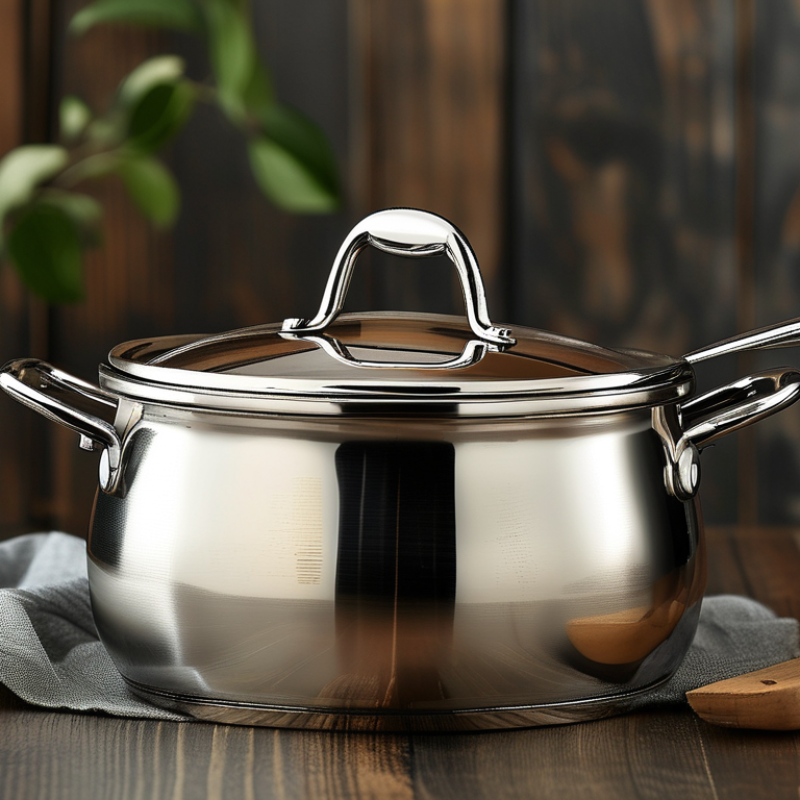
How the Top 10 Stainless Steel Cookware Suppliers Were Selected
How the Top 10 Stainless Steel Cookware Suppliers Were Selected
The selection began with material verification, not advertising claims. Each supplier had to provide evidence that its cookware used food-grade 304 stainless steel. We reviewed mill certificates, alloy reports, and production records where available. Surface quality mattered too. Inspectors checked for uneven polishing, sharp rims, deep scratches, and loose handles. Small details often reveal larger manufacturing weaknesses.
Practical performance shaped the evaluation. We compared heat distribution, base construction, lid fit, handle stability, and resistance to staining after repeated cooking cycles. Supplier experience was also considered, including years in production, export history, quality-control procedures, and response times. Reliable suppliers explained their testing methods clearly. They also offered traceable batch information and consistent product specifications. Certifications supported the assessment, but documents alone were never enough.
Evidence was weighted against real buyer feedback and independent product observations. We looked for repeated comments about warping, discoloration, delivery damage, and after-sales support. A supplier could lose its position through inconsistent quality, even with attractive pricing. The process is not perfect. Public information can be incomplete, and factory conditions may change. For that reason, the list reflects available evidence at the time of review, not a permanent judgment.
304 Stainless Steel Standards in Professional Cookware Manufacturing
304 stainless steel is a common specification in professional cookware, but the number alone proves little. ASTM A240/A240M defines 304 as a chromium-nickel stainless steel grade for pressure and general applications. EN 10088-2 provides comparable European requirements for chemical composition and corrosion performance. Buyers should request mill certificates, not rely on polished surfaces.
World Stainless reported about 58.4 million tonnes of global crude stainless steel production in 2023. This scale supports stable sourcing, yet cookware quality still depends on processing. Manufacturers should verify nickel and chromium content with material certificates or X-ray fluorescence testing. Deep drawing can thin a pan wall. Welding can also create heat-tinted areas that need proper cleaning and passivation.
Surface finish matters in daily kitchens. A smooth interior reduces food residue and simplifies sanitation, especially around rivets and welds. NSF/ANSI 51 is often used as a food-equipment benchmark, although certification does not replace grade verification. I have seen attractive cookware fail inspection because its documentation was incomplete. That mistake is easy to repeat. Supplier assessments should include batch traceability, dimensional checks, corrosion testing, and cleaning instructions. 304 performs well, but it is not immune to salt, chlorides, or poor maintenance.
Supplier Profiles Across Major Global Production Regions
A reliable Top 10 list of 304 stainless steel cookware suppliers should reflect regional strengths, not only export volume. The profiles cover major production areas, including East Asia, South Asia, Southeast Asia, Europe, and North America. Each supplier is assessed through practical factors: steel grade verification, factory experience, forming capability, quality controls, and export consistency. Buyers should request mill certificates, sample pans, and recent inspection records before placing large orders.
East Asian suppliers often provide advanced stamping lines, induction-compatible bases, and high-volume production. South Asian manufacturers may offer strong hand-finishing skills, especially for riveted handles and polished surfaces. Southeast Asian factories can support flexible quantities and competitive labor costs. European suppliers typically emphasize traceability, precise welding, and strict process documentation. North American producers often focus on commercial-grade durability, replacement parts, and responsive technical service. Details matter. A pan’s wall thickness, base flatness, and handle alignment affect daily use.
These profiles are useful, but not perfect. A clean showroom can hide inconsistent batch control. A low price may exclude testing, packaging, or after-sales support. I would compare at least three samples from different production lots. Ask about food-contact documentation and factory audits. Claims should be checked, not admired. Supplier performance can change after a new subcontractor, material source, or production manager enters the process.
Product Ranges, Manufacturing Strengths, and Market Positions
Top 10 304 Stainless Steel Cookware Suppliers Worldwide
The leading suppliers serve different cooking needs, from compact saucepans to commercial stockpots. Their ranges often include frying pans, sauté pans, Dutch ovens, steamers, and induction-ready sets. Some specialize in household collections, while others produce heavy-duty cookware for hotels and restaurants. A useful comparison starts with wall thickness, handle design, lid fit, and base construction.
Manufacturing strength is visible in repeatability. Reliable factories control forming pressure, welding quality, polishing, and final inspection across large batches. Many use three-layer or five-layer bases to spread heat more evenly. Laser marking, material certificates, and batch traceability also support professional purchasing decisions. In practice, buyers should request heat-distribution data and corrosion testing, not rely on surface appearance alone.
Market position depends on more than price. Suppliers with flexible tooling can support private designs, smaller orders, and regional size preferences. Larger producers usually offer stronger capacity, automated polishing, and stable export documentation. Smaller specialists may provide closer engineering support, but delivery schedules can be less predictable. No factory is flawless. Even polished cookware can show minor marks after transport or repeated handling. That detail deserves honest discussion before a contract is signed. Experienced buyers inspect samples under bright light, test lid alignment, and compare empty-pan weight. These simple checks often reveal differences that catalog photographs hide.
How to Compare and Choose a Suitable Cookware Supplier
Choosing among the top 10 304 stainless steel cookware suppliers requires more than comparing catalog prices. Grand View Research valued the global cookware market at approximately USD 19 billion in 2023. This growth increases supplier competition and quality variation. Use a weighted scorecard covering material grade, forming quality, testing, lead time, minimum order quantity, and after-sales support. Request mill certificates, batch records, and recent inspection reports. Shortcuts create risk.
304 is not merely a label.
Verify chromium and nickel content against ASTM A240 or EN 10088 requirements. Independent laboratory testing can confirm composition, surface condition, and corrosion resistance. For food-contact products, ask for relevant compliance documentation and traceability records. Inspect welds, rim edges, handle joints, and lid fit with production samples. Small defects often appear after repeated washing, not during a showroom inspection.
Supplier reliability also needs measurable evidence. World Stainless reported global crude stainless steel production of about 58 million tonnes in 2023, showing a broad but complex raw-material base. Large production volume does not guarantee consistent cookware quality. Review delivery performance, corrective-action records, packaging strength, and capacity during peak seasons. A low quotation may hide thinner walls, weaker handles, or unstable polishing standards. No scorecard is perfect. A practical buyer should revisit supplier ratings after pilot orders, because one attractive sample cannot represent every production batch.

