Auto Repair Shop In Plainfield, IL
Finding China’s top Aluminum Frying Pan manufacturers requires more than comparing factory photos or export claims. This guide examines production experience, material control, coating quality, and service reliability. It considers manufacturers serving household kitchens, restaurants, retailers, and private-label brands.
A dependable supplier should explain its aluminum grade, forming process, and surface treatment clearly. Die-casting and stamping produce different weights, shapes, and heat responses. A practical review should also inspect handle attachment, base flatness, coating adhesion, and packaging protection. Samples matter. A polished catalog cannot replace cooking tests.
Real evaluation takes time.
Manufacturers with stable quality systems may provide inspection records, test reports, and traceable batch information. Buyers should verify whether stated certifications match the target market and product design. Communication also reveals expertise. Can the supplier discuss induction compatibility, temperature limits, dishwasher guidance, and replacement handling without vague promises?
No ranking is perfect.
Factory capacity, minimum order quantities, lead times, and customization policies can change. Some manufacturers appear impressive but offer limited technical support after payment. Others may have modest websites yet operate disciplined production lines. This article compares China-based Aluminum Frying Pan manufacturers through practical evidence rather than promotional language. It also recognizes uncertainty, because supplier performance may vary between samples and mass production. Careful buyers should request current documents, inspect samples, and confirm specifications in writing before making a final decision.
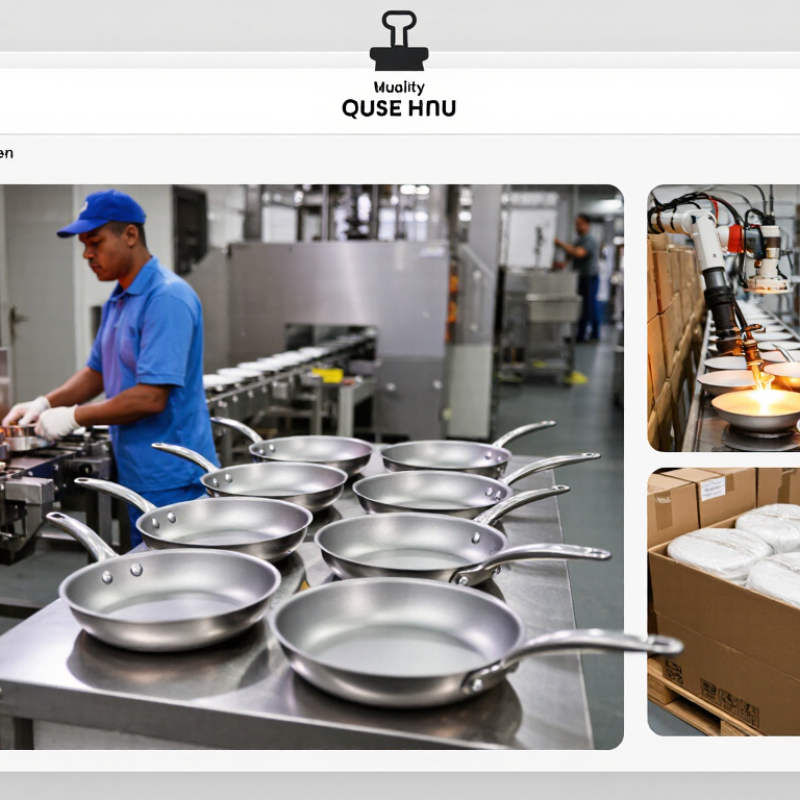
What defines a leading aluminum frying pan manufacturer in China? It is not a large catalog or polished showroom. The real test begins with material control. World Aluminium reported that China produced about 41.5 million tonnes of primary aluminum in 2023. That scale creates strong supply advantages, but volume alone proves little. A dependable factory should identify alloy grades, record batch numbers, and provide traceability from billet to finished pan.
Manufacturing discipline becomes visible on the production floor. Auditors should check wall thickness, base flatness, handle torque, and coating adhesion. A pan that rocks on a glass cooktop has already failed. Reliable producers use documented testing for abrasion, corrosion, thermal cycling, and food-contact safety. They should also explain whether the pan suits gas, ceramic, or induction cooking. Independent laboratory reports matter more than attractive claims. Small details matter.
Market research from Grand View Research indicates continued growth in global cookware demand, increasing pressure on factories to improve consistency. Yet some suppliers still submit perfect samples while producing unstable mass batches. This weakness deserves attention. Buyers should compare pre-production samples, in-line inspection records, and shipment-level quality data. Clear corrective-action reports also reveal professional maturity. The strongest manufacturers combine engineering experience, transparent communication, and repeatable process control, even when admitting an occasional production error.
Thermal conductivity is a practical material benchmark for frying-pan performance because it affects heat distribution and cooking responsiveness. The reference values below are typical room-temperature figures published for commonly used aluminum alloys; actual performance varies with alloy composition, temper, thickness, forming method, and pan design. A leading manufacturer should combine suitable alloy selection with consistent forming, coating, base construction, and food-contact quality control.
Reference unit: W/m·K at approximately 20°C. Values are representative engineering data and may vary by supplier datasheet.
China’s aluminum frying pan industry is concentrated in several practical manufacturing regions. Zhejiang is known for dense cookware clusters, metal forming, polishing, and export-oriented assembly. Factories there often combine stamping, forging, machining, and handle installation under one production system.
Guangdong adds strong capabilities in tooling, surface treatment, packaging, and quality engineering. Its coastal logistics support frequent shipments of customized cookware. Jiangsu and Shandong also contribute through aluminum processing, automated coating lines, and large-scale component supply. These regions can produce lightweight pans, induction-compatible bases, and thicker commercial cookware. Capability varies widely, however. A large factory is not automatically a reliable one.
Experienced buyers should inspect the production route rather than trust catalog images.
Ask how alloy composition is controlled, how base flatness is measured, and how coatings are tested after repeated heating. A professional supplier should provide batch records, dimensional reports, and food-contact documentation.
On-site checks can reveal uneven spray coverage, weak rivets, or warped pan bottoms. Small defects matter. They affect heat distribution and customer complaints.
Some manufacturers promote advanced automation but still depend on manual inspection. That is not necessarily poor practice, yet it requires clear inspection standards. Regional strengths are useful only when matched with transparent processes, stable workers, and verifiable test results.
When comparing China’s top aluminum frying pan manufacturers, materials deserve more attention than polished catalogs. Aluminum heats quickly and keeps the pan light, but it can deform under intense heat. Cast aluminum usually feels sturdier than thin stamped sheet. Weight matters. A thick base improves stability on glass cooktops and reduces hot spots. However, extra thickness can slow response and raise shipping costs. Ask for alloy details, base thickness, flatness tests, and food-contact documentation. Vague specifications should trigger caution.
Coating choice changes both cooking behavior and service life. A quality nonstick coating releases eggs with little oil and cleans easily. It still needs moderate heat, wooden or silicone tools, and careful stacking. Ceramic-style coatings offer a different feel, yet their release performance may decline sooner with poor curing or abrasive cleaning. Uncoated aluminum suits searing only when users understand sticking and seasoning limits. Request test data for abrasion, thermal cycling, adhesion, and coating thickness. One attractive sample proves little. Batch consistency matters more.
Design options should match cooking habits, not merely follow trends. A gently sloped wall helps flipping, while a wide flat base supports larger portions. Stay-cool handles, balanced grips, pouring rims, and compatible lids improve daily use. Riveted handles can be dependable, but exposed fasteners collect residue. Welded designs look cleaner, though their strength requires verification. For supplier review, inspect several production samples, measure wobble, check handle movement, and repeat heating tests. I would also question unclear warranty language. Small omissions often become expensive problems. A thoughtful manufacturer can explain defects, tolerances, and corrective action without hiding behind marketing terms.
| Category | Option | Material or Structure | Key Performance Characteristics | Typical Advantages | Design and Manufacturing Considerations | Common Applications |
|---|---|---|---|---|---|---|
| Pan Body | Cold-Formed Aluminum | Aluminum sheet shaped by stamping or pressing, commonly using cookware-grade aluminum alloys. | Lightweight, fast heat response, and good thermal conductivity. | Cost-efficient, easy to handle, and suitable for high-volume production. | Uniform sheet thickness and controlled forming are important to reduce warping and uneven heating. | Everyday frying pans, sauté pans, and entry-level nonstick cookware. |
| Pan Body | Cast Aluminum | Molten aluminum poured into a mold and then machined or finished. | Typically thicker and more rigid than stamped aluminum, with good heat distribution. | Supports deeper profiles, integrated shapes, and stronger sidewalls. | Manufacturers must control casting porosity, wall thickness, surface finishing, and dimensional accuracy. | Deep frying pans, Dutch-style sauté pans, and premium-looking cookware. |
| Pan Body | Forged Aluminum | Aluminum blank mechanically pressed under high force to create a dense, shaped body. | Good structural strength with relatively low weight and efficient heat transfer. | Allows a thicker base and durable body while remaining easier to lift than many steel pans. | Forging pressure, base thickness, rim design, and post-forging machining affect consistency. | Mid-range and premium frying pans requiring improved rigidity. |
| Surface Treatment | Hard-Anodized Aluminum | Aluminum surface electrochemically converted into a harder, thicker aluminum oxide layer. | Improved scratch resistance compared with untreated aluminum and a stable dark surface. | Durable cooking surface, reduced aluminum reactivity, and good resistance to wear. | Anodizing quality, sealing, color uniformity, and compatibility with any additional coating must be controlled. | Longer-use frying pans and cookware designed for frequent household cooking. |
| Interior Coating | PTFE Nonstick | Fluoropolymer coating applied over a prepared aluminum or hard-anodized substrate. | Very low surface friction and effective release of eggs, fish, pancakes, and other delicate foods. | Easy food release and simple cleanup when used with suitable utensils. | Requires proper pretreatment, controlled spray or roller application, curing, and coating-thickness inspection. | Low-oil cooking, breakfast pans, omelet pans, and general household frying. |
| Interior Coating | Ceramic Sol-Gel | Silica-based sol-gel coating cured on an aluminum substrate; it is different from solid ceramic cookware. | Good initial release performance and high-temperature capability, but release performance can decline with use. | Often selected for a PFAS-free coating system and a smooth, bright appearance. | Surface preparation, curing temperature, coating thickness, and gentle cleaning strongly affect service life. | PFAS-free product lines and cookware marketed for light-oil cooking. |
| Interior Surface | Uncoated Aluminum | Exposed aluminum surface, sometimes brushed, polished, or machined. | Excellent heat response but no built-in nonstick release layer. | Simple construction, high thermal responsiveness, and no coating to peel. | Aluminum can react with strongly acidic or alkaline foods and may discolor or scratch during use. | Commercial kitchens, roasting, searing, and applications where coating-free cookware is preferred. |
| Base Design | Encapsulated Induction Base | A magnetic stainless-steel disk or plate bonded to the aluminum body. | Provides induction compatibility while retaining aluminum's low weight and rapid heat response. | Expands cooktop compatibility beyond gas and conventional electric stoves. | Bond strength, flatness, magnetic response, and thermal expansion matching are critical quality factors. | Multi-cooktop frying pans for households using induction, gas, or radiant electric stoves. |
| Base Design | Thickened Heat-Spreading Base | Additional aluminum thickness or a reinforced base area beneath the cooking surface. | Improves heat stability and reduces hot spots compared with a very thin pan. | Better temperature consistency for frying, sautéing, and browning. | Base flatness, thickness distribution, and resistance to thermal distortion should be tested. | Daily-use frying pans and pans designed for higher burner power. |
| Rim and Wall Design | Rolled or Reinforced Rim | Pan edge shaped with a rolled profile or additional material for increased rigidity. | Improves resistance to deformation and helps maintain a clean pouring edge. | Better durability, safer handling, and improved appearance after repeated use. | Rim geometry should avoid coating cracks, sharp edges, and difficult-to-clean recesses. | Pouring-friendly frying pans, sauté pans, and cookware with integrated spouts. |
| Handle Design | Riveted Aluminum or Stainless-Steel Handle | Handle mechanically attached with rivets; stainless steel is commonly chosen for strength and heat resistance. | Strong attachment and good resistance to repeated lifting loads. | Suitable for frequent use and heavier pan bodies. | Rivet placement, handle balance, grip temperature, and cleanability should be evaluated. | Household and professional frying pans requiring long-term mechanical durability. |
| Handle Design | Detachable Handle | Removable locking handle connected to a reinforced pan bracket. | Improves storage efficiency and may allow the pan to move from stovetop to oven, subject to product limits. | Useful for compact kitchens, stackable cookware, and modular cookware sets. | Locking reliability, heat resistance, accidental-release prevention, and cleaning access are essential. | Space-saving cookware and cookware systems with interchangeable components. |
| Technical note: Actual performance depends on alloy selection, body thickness, coating formulation, application process, curing conditions, base construction, and user care. PTFE and ceramic coating temperature limits should always follow the supplier's tested specifications and care instructions. | ||||||
China’s leading aluminum frying pan manufacturers treat quality as a controlled process, not a marketing phrase. They normally verify aluminum alloy composition before production begins. Spectrometer testing can identify unwanted elements and confirm material consistency.
Pan thickness, weight, flatness, and base alignment also need documented limits.
Small variations matter.
A warped base may heat unevenly on a household stove.
Reliable factories maintain food-contact safety systems and provide test reports for target markets. Depending on the destination, buyers may request FDA, LFGB, or equivalent compliance evidence.
ISO 9001 certification can support consistent quality management, but it does not replace product testing.
Inspectors should review coating adhesion, abrasion resistance, salt-spray performance, and thermal cycling results. Handle strength and rivet security deserve close attention too.
A loose handle is not a minor defect.
Handle strength and rivet security deserve close attention too.
Production usually includes stamping or casting, trimming, polishing, cleaning, coating, curing, assembly, and final inspection.
Coating thickness should be checked at several points, especially around the rim and cooking surface.
Traceable batch records help connect raw materials with finished pans.
Samples should be tested before mass production.
No factory is flawless. Even experienced teams can miss scratches, uneven coating, or packaging damage.
Buyers should compare factory records with independent inspection results and keep clear acceptance standards.
That extra step often reveals problems before a container leaves the facility.
Choosing a Chinese frying-pan manufacturer requires more than comparing catalog prices. China produced about 41.4 million metric tons of primary aluminum in 2023, nearly 59% of global output, according to the International Aluminium Institute. That scale supports strong sourcing options, but it does not prove cookware quality. Ask for alloy certificates, casting or stamping details, wall-thickness tolerances, and batch traceability. Request a sample made on the intended production line. A showroom sample can mislead.
Evaluate the pan through measurable tests. Check base flatness, handle torque, coating adhesion, abrasion resistance, heat distribution, and dishwasher-cycle performance. Require test methods and pass limits, not attractive photographs. For gas, induction, and electric use, verify compatibility separately. Confirm food-contact documentation for the target market. ISO 9001 certification helps, yet an unannounced process audit reveals more. Review incoming inspection records, calibration logs, corrective actions, and worker training. I would also inspect the coating room; dust control is easy to overlook.
Pricing needs context. The World Bank Commodity Markets Outlook lists aluminum at roughly 2,256 US dollars per metric ton on average in 2023. Material changes can quickly alter quotations. Therefore, compare offers using a fixed alloy, thickness, coating system, packaging, tooling, and delivery term. Define acceptable defect rates and independent pre-shipment inspection in the contract. Check capacity during peak months and request two recent export references. A low minimum order may hide weak process control. A higher quote can cost less after returns, delays, and replacement freight.
Plainfield, 60585, 60544, 60586, Naperville, 60564, Bolingbrook, 60490, 60440, Romeoville, 60446, Will, Kendall, DuPage, Counties. Our auto repair shop in Plainfield, IL, has been serving the local area plus all surrounding Chicagoland since 1978.
• Computer Diagnostic • Brake Shop • Engine Replacement • Transmission Rebuild • Clutch Replacement • Differential Rebuild • Suspension Shop • Steering • Shocks & Struts • Heating & Cooling • Electrical • Exhaust Shop • Catalytic Converter Replacement • Alignment • Domestic & Foreign Vehicle Service • Auto Repair In Plainfield, IL • Auto Repair Shops Near Me • Towing Service Near Me