Auto Repair Shop In Plainfield, IL

In 2026, selecting an LNG Refueling Station Product means weighing more than headline capacity. Operators need reliable pumps, cryogenic storage tanks, dispensers, vaporizers, safety systems, and control equipment. The right combination depends on vehicle or vessel demand, site layout, delivery frequency, and operating conditions. A busy highway station has different needs from a port-side facility. Small details matter: hose reach, turnaround time, and maintenance access can shape daily performance.
The market context is significant. The International Gas Union’s World LNG Report 2024 recorded 401.4 million tonnes of global LNG trade in 2023. That figure shows the scale of LNG supply, not the number of refueling stations or product sales. Those measures are not interchangeable. Peter Keller, former chairman of SEA-LNG, described LNG as “the only viable alternative fuel for the shipping industry today.” His statement reflects a shipping-fuel perspective, rather than a universal verdict on every transport sector.
This guide compares leading station products by practical criteria: throughput, safety features, automation, service support, and suitability for different sites. Product claims should be checked against manufacturer specifications and independent assessments. Not every supplier publishes comparable performance data. That makes a clean ranking difficult—and worth questioning. A cheaper dispenser may cost more in downtime; a high-capacity system may be oversized for a quiet route. The strongest choice is the one that fits verified demand, not just a polished brochure.
What Are the Top LNG Refueling Station Products in 2026?
Core Equipment Used in LNG Refueling Stations
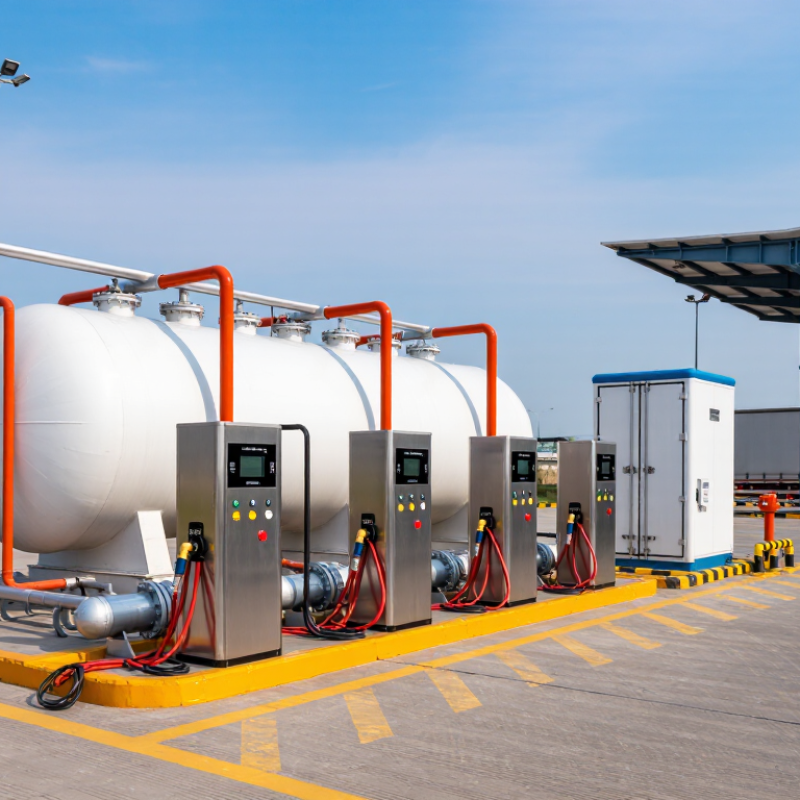
An LNG refueling station relies on equipment designed to store and transfer fuel at cryogenic temperatures. Its insulated storage tank keeps LNG cold, while pressure and temperature instruments help operators monitor changing conditions. During delivery, an unloading connection and transfer lines move fuel into storage. A cryogenic pump then supplies LNG to the dispenser at a controlled rate. The dispenser’s hose, nozzle, and meter support a secure connection and track the amount dispensed. Small details matter. Insulation damage or a poorly maintained seal can affect performance, even when major equipment appears sound.
Tips: Check hoses, seals, and instrument readings during routine inspections. Keep clear access to emergency shutoff controls. A brief walk-around can reveal frost, unusual noise, or visible damage, but it cannot replace qualified maintenance.
Station controls coordinate equipment and provide alarms when readings fall outside expected ranges. Emergency shutdown devices can stop transfer during a fault, while gas detectors help identify a release. Vapor-return piping may also manage displaced gas during refueling, depending on the station design. Equipment selection should match expected vehicle demand, site layout, and operating conditions. A larger pump is not automatically better; poor sizing may add complexity. Real operating records are useful, though no design removes the need for careful procedures.
| Core equipment | Station area | Primary function | Key operating or selection considerations |
|---|---|---|---|
| Vacuum-insulated LNG storage tank | Storage | Stores LNG at cryogenic temperature before dispensing. | Capacity and allowable working pressure are selected for station demand and supply logistics. Insulation limits heat ingress; pressure-relief devices protect against overpressure. |
| LNG unloading and transfer assembly | Delivery connection | Transfers LNG from a delivery vehicle into station storage. | Typically includes compatible cryogenic connections, isolation valves, pressure and temperature instrumentation, and provisions for controlled hose connection and disconnection. |
| Cryogenic LNG pump | Liquid transfer and dispensing line | Raises LNG pressure and moves liquid toward the dispenser when the station layout requires pumped delivery. | Pump type and capacity depend on required flow, pressure, operating cycle, and system configuration. Equipment must be designed for cryogenic service. |
| Pressure-building circuit or vaporizer | Tank pressure management | Uses a controlled portion of LNG, warmed in a vaporizer, to help build storage-tank pressure where required. | May be integrated with the tank or installed as a separate circuit. Its control strategy must match the tank design and station operating procedure. |
| LNG dispenser and fueling hose | Vehicle fueling bay | Connects the station supply to the vehicle and controls the fueling transaction. | Includes cryogenic-rated hoses, couplings, valves, and operator controls. Connection design and fueling procedure must be compatible with the vehicle’s LNG receptacle. |
| Mass-flow measurement and transaction system | Dispenser | Measures dispensed fuel and supports transaction records and dispenser control. | Coriolis mass-flow meters are commonly used for LNG service. Metering equipment must be suitable for the fluid conditions and applicable local measurement requirements. |
| Ambient-air vaporizer | Pressure and gas-handling systems | Transfers heat from ambient air to vaporize LNG in systems that require gaseous natural gas. | Sizing depends on required gas flow, inlet conditions, climate, and duty cycle. Frost formation can reduce heat transfer and should be considered in operating plans. |
| Vapor return and boil-off gas piping | Storage, unloading, and fueling connections | Routes vapor according to the station’s transfer and pressure-management design. | Routing, isolation, and pressure control must be engineered for cryogenic or low-temperature gas service, as applicable to each section of the system. |
| Emergency shutdown (ESD) system | Across the station | Initiates a controlled shutdown and isolates designated equipment during an emergency. | May include manual shutdown stations, automatic inputs, and remotely or automatically operated isolation valves. Design and testing should follow applicable codes and risk assessments. |
| Gas detection, alarms, and fire protection | Fueling and equipment areas | Detects specified hazards and alerts personnel or initiates protective actions. | Detector type, placement, alarm set points, and fire-protection provisions depend on the site hazard assessment, ventilation, layout, and local regulations. |
| Instrumentation and control system | Control and monitoring | Monitors operating conditions and coordinates pumps, valves, alarms, and fueling sequences. | Common measurements include pressure, temperature, level, and flow. Control logic, interlocks, and records should be designed for the station’s operating concept and safety requirements. |
Equipment configuration varies by station capacity, delivery method, site conditions, vehicle interface, and applicable codes. Final selection and installation require project-specific engineering.
