Auto Repair Shop In Plainfield, IL
Temperature Sensors turn heat into information, helping engineers protect equipment, control processes, and maintain consistent products. Their differences matter at the point of use: a probe beside a furnace faces intense heat, while a sensor inside a medical device may need to detect tiny changes quickly. The details matter. Thermocouples cover broad temperature ranges and tolerate rugged conditions; resistance temperature detectors (RTDs) offer stable, precise readings. Thermistors respond sensitively over narrower ranges, while infrared sensors measure surface temperatures without contact.
The market is growing, but market size alone does not prove that one sensor type is best. MarketsandMarkets estimated the global temperature sensor market at about US$6.3 billion in 2023 and projected it to reach US$8.1 billion by 2028. Those figures describe commercial demand, not accuracy or suitability. Selection still depends on temperature range, response time, installation, calibration, and exposure to vibration or moisture. A sensor that works well in a laboratory may drift in a factory.
Lord Kelvin, the physicist whose work shaped thermodynamics and temperature measurement, wrote: “When you can measure what you are speaking about, and express it in numbers, you know something about it.” His point remains useful, though measurement is not the whole story. Sensors can be misread, poorly installed, or chosen for the wrong range. This guide compares the main types of Temperature Sensors, explains how they work, and highlights where their trade-offs become visible in real applications—such as a slow response on a production line or a reading that shifts after repeated thermal cycling.
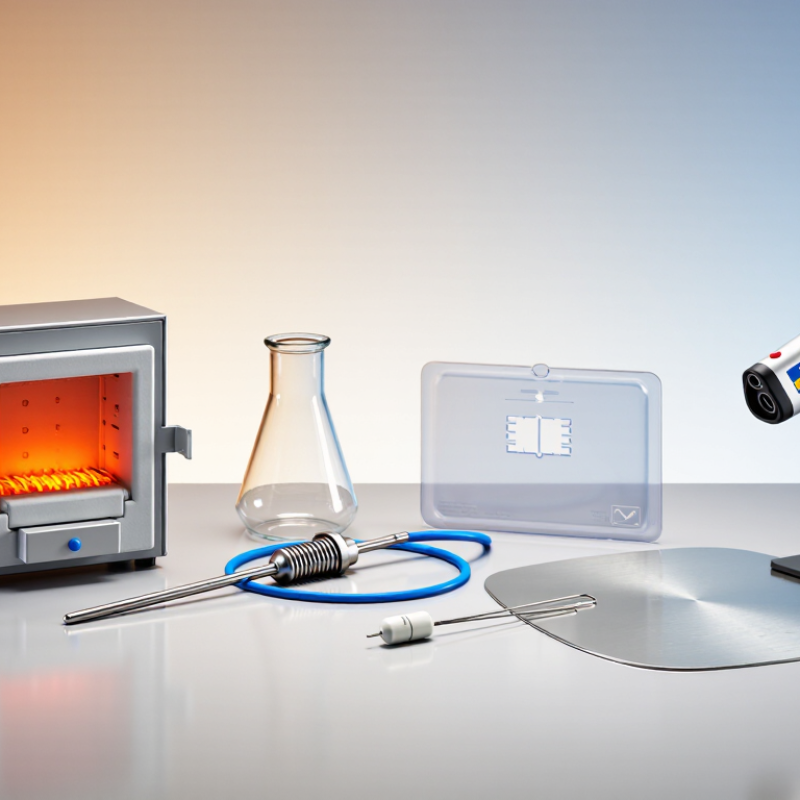
Temperature sensors do not all “read” heat in the same way. A thermocouple converts a temperature difference between two joined metals into a small voltage. The instrument measures that voltage, corrects for the reference junction, then uses a calibrated conversion curve. Small signals matter. NIST Monograph 175 (1993) provides Type K thermocouple reference tables from −270°C to 1,372°C. This range shows why sensor type and calibration data matter: voltage is not a universal temperature scale.
Resistance sensors work differently. Platinum RTDs change resistance predictably as temperature changes. IEC 60751 specifies industrial platinum resistance thermometers, including the common design rated at 100 Ω at 0°C. Thermistors use semiconductor materials and often respond sharply over a narrower range, but their response is nonlinear. Infrared sensors measure radiation from a surface and estimate its temperature using factors such as emissivity. A shiny pipe can mislead an infrared reading. It is an easy detail to overlook.
In practice, mounting can matter as much as the sensing element. A loose probe may measure surrounding air instead of the process. Check calibration records, response time, wiring, and operating range together. No sensor is automatically best; the measurement setup can be the weak link.
Temperature sensors are grouped by how they detect heat and whether they touch the target. Thermocouples use two joined metals to produce a small voltage that changes with temperature. They handle wide temperature ranges and respond quickly, but readings depend on correct wiring and calibration. Resistance temperature detectors measure how a metal element’s resistance changes. They offer stable, repeatable readings, though the probe may respond more slowly than a thermocouple.
Thermistors use temperature-sensitive materials, often providing strong sensitivity over a narrower range. They work well in compact devices and controlled environments. Semiconductor sensors are small electronic components commonly used in appliances and circuit boards. Infrared sensors read emitted radiation without contact, which helps when a surface moves or is difficult to reach. Surface finish and distance can affect their measurements, so non-contact does not mean effortless.
Tips: Choose a sensor based on range, response time, accuracy, and mounting conditions. Check whether the reading must represent air, liquid, or a solid surface. Keep the probe away from nearby heat sources unless they are part of the measurement. In practice, a sensor that looks ideal on paper may be awkward to install; that detail is easy to underestimate. Compare its reading with a trusted reference under actual operating conditions before relying on it.
What Are the Different Types of Temperature Sensors?
Contact sensors must touch the object or medium they measure. Their readings depend on more than the sensing element: probe placement, contact pressure, and insulation all matter. A loose probe may partly measure surrounding air instead. Small gaps matter.
Thermocouples use the voltage produced where two different metals meet. They tolerate broad temperature ranges and respond quickly, making them useful for ovens, pipes, and changing process conditions. Their output is small, so measurement equipment needs suitable reference-junction compensation. RTDs measure temperature through changes in electrical resistance, commonly using platinum elements. They offer stable, repeatable readings, though they can respond more slowly and may need careful wiring to limit lead-resistance errors.
Thermistors are semiconductor sensors whose resistance changes sharply with temperature. That sensitivity can make them useful for precise measurements over a narrower operating range, such as monitoring a compact enclosure. Their response is nonlinear, and measurement current can cause slight self-heating. No sensor wins every comparison. A detail that is easy to overlook is how the probe attaches: a well-chosen sensor can still report an unrepresentative temperature if its contact is poor. Match the sensor to the expected range, response time, and stability needs, then check its readings against a suitable reference.
| Comparison | Thermocouple | RTD | Thermistor |
|---|---|---|---|
| Sensing principle | Two dissimilar conductors generate a small voltage that varies with the temperature difference between the measuring and reference junctions. | A metal element’s electrical resistance changes predictably with temperature; platinum is commonly used. | A semiconductor’s resistance changes substantially with temperature. Most temperature-measuring thermistors are NTC types, whose resistance decreases as temperature rises. |
| Typical temperature range | Varies by thermocouple type and construction. Common types cover approximately −200°C to 1,250°C; some specialized types operate at higher temperatures. | Platinum RTDs commonly cover approximately −200°C to 850°C, depending on the element and probe construction. | Commonly used over approximately −50°C to 150°C; the usable range depends on the thermistor material and assembly. |
| Typical accuracy | Often around ±1°C to ±2.2°C for standard-grade wire, depending on type and temperature. Extension wiring and reference-junction compensation also affect measurement error. | Often around ±0.1°C to ±0.3°C for well-designed platinum probes in suitable ranges; sensor class and instrument accuracy matter. | Can offer roughly ±0.1°C to ±1°C over a limited range when appropriately selected and calibrated; accuracy varies with tolerance and linearization. |
| Sensitivity and output | Produces a low-level voltage, typically in the tens of microvolts per degree Celsius. The signal must be measured and compensated by suitable electronics. | Produces a resistance change. A standard Pt100 element has a nominal resistance of 100 Ω at 0°C and changes by about 0.385 Ω/°C near 0°C. | Produces a comparatively large but nonlinear resistance change. A measurement circuit typically converts resistance into voltage or a digital reading. |
| Response time | Often fast with a small, exposed junction; a heavy protective sheath slows response. | Ranges from fast for small, thin-film elements to slower for larger wire-wound probes or heavy sheaths. | Often fast in small bead or chip formats; encapsulation and probe size can substantially increase response time. |
| Key strengths | Wide temperature coverage, rugged construction options, and suitability for high-temperature measurements. | Good stability, repeatability, and accuracy over a broad operating range. | High sensitivity, compact size, and good resolution over a comparatively narrow temperature range. |
| Common limitations | Low output voltage, need for reference-junction compensation, and possible drift at high temperatures. | Usually costs more than a basic thermocouple; lead-wire resistance can affect readings unless the circuit uses an appropriate wiring arrangement. | Nonlinear response, narrower operating range, and possible self-heating from measurement current. |
| Typical applications | Furnaces, ovens, engines, industrial process equipment, and other high-temperature environments. | Process control, laboratory equipment, environmental monitoring, and applications requiring stable, accurate readings. | Battery packs, HVAC equipment, consumer electronics, and temperature monitoring within a limited range. |
Ranges, accuracy, and response time are representative rather than guaranteed specifications; actual performance depends on sensor type, probe construction, calibration, wiring, and measurement electronics.
Infrared sensors measure temperature without touching the target. They detect infrared energy from a surface and convert it into a temperature estimate. This works well for moving materials, hot pipes, or objects that are difficult to reach. No contact is needed. Accuracy still depends on distance, target size, and surface emissivity. Shiny metal can reflect nearby heat and give a misleading reading. These sensors also measure surface temperature, not the temperature inside an object.
Thermal imaging cameras display temperature patterns across an area, rather than a single spot. They can help reveal uneven heating, cold patches, or changing conditions in equipment. A bright patch is a clue, not a diagnosis. Reflections, airflow, camera angle, and focus can all affect the image. A quick scan may look convincing, yet still miss a small hotspot. For important measurements, compare the image with a suitable contact reading when practical.
Tips: Keep the target within the sensor’s viewing area, and note the distance and conditions. Avoid aiming at reflective surfaces when possible. Small details matter. Recheck readings that seem unusual.
Temperature sensors differ in range, accuracy, response time, and how they contact the target. Thermocouples handle very hot environments and tolerate vibration, so they suit furnaces, engines, and industrial equipment. Their readings can drift, and accurate measurement requires suitable reference-junction compensation. They are tough, but not always precise.
Resistance temperature detectors, or RTDs, offer stable, repeatable readings across many process-control applications. Platinum RTDs are common in laboratories and production systems, though they can cost more and respond more slowly than thermocouples. Thermistors change resistance sharply with temperature, making them sensitive and useful in appliances, battery packs, and HVAC controls. Their useful range is narrower. Semiconductor sensors are compact and easy to connect to electronics, while infrared sensors measure surface temperature without contact. Infrared readings can be misleading when emissivity or the viewing angle is overlooked.
Tips: Match the sensor to the temperature range and required accuracy, then check response time and mounting conditions. A probe pressed firmly against a pipe may read differently from one hanging in moving air. Installation matters. I would verify readings against a reference during setup; choosing the right sensor alone does not guarantee a reliable result.
Plainfield, 60585, 60544, 60586, Naperville, 60564, Bolingbrook, 60490, 60440, Romeoville, 60446, Will, Kendall, DuPage, Counties. Our auto repair shop in Plainfield, IL, has been serving the local area plus all surrounding Chicagoland since 1978.
• Computer Diagnostic • Brake Shop • Engine Replacement • Transmission Rebuild • Clutch Replacement • Differential Rebuild • Suspension Shop • Steering • Shocks & Struts • Heating & Cooling • Electrical • Exhaust Shop • Catalytic Converter Replacement • Alignment • Domestic & Foreign Vehicle Service • Auto Repair In Plainfield, IL • Auto Repair Shops Near Me • Towing Service Near Me