ClickCease

Why Choose a Level 3 EV Charger for Your Business?

A Level 3 Ev Charger can turn a business car park into a practical stop for drivers who need a fast top-up. These DC fast chargers can add substantial range in less time than many AC units, though actual charging speed depends on the vehicle, battery condition, and site capacity. That distinction matters. A charger’s advertised power is not a promise that every car will receive it.

Fatih Birol, Executive Director of the International Energy Agency, has described a wider shift: “The world is entering the Age of Electricity.” For businesses, that shift presents an opportunity, but not an automatic return. A well-placed charger may attract customers, support fleet operations, or create a paid service. Yet installation can require electrical upgrades, careful parking design, and ongoing maintenance. The figures deserve close scrutiny.

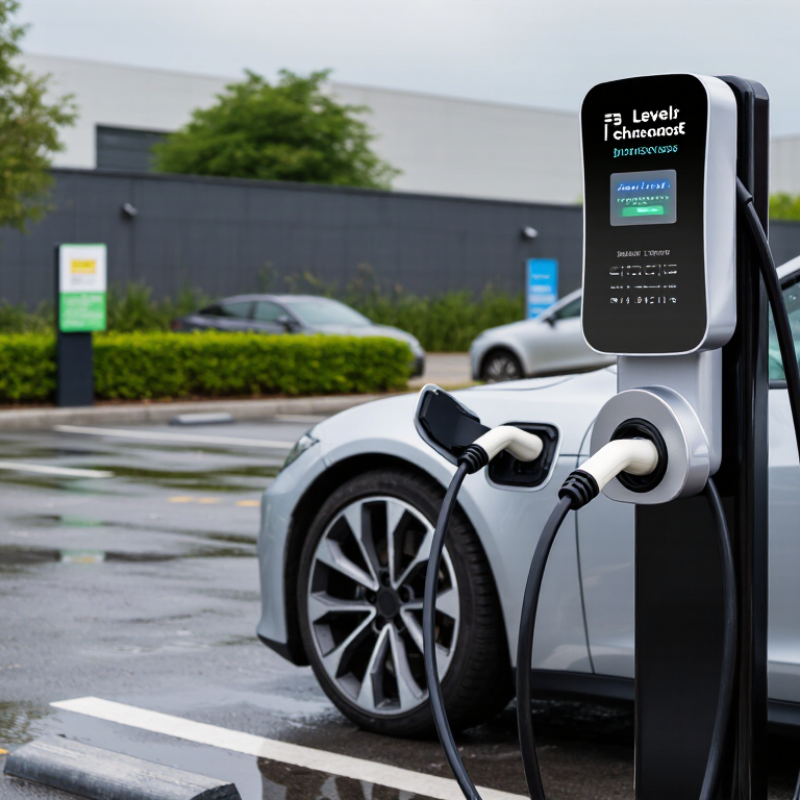
Picture a driver arriving with 20 percent battery, rain on the pavement, and only a short break before the next appointment. Clear signs, reliable payment, and a working connector matter as much as peak output. A Level 3 EV Charger can serve that moment well. Or it can sit underused. That possibility is easy to overlook. The sections ahead examine costs, site readiness, customer experience, and utilization, so business owners can judge whether fast charging fits their actual traffic—not just the promise of a growing market.
Why Choose a Level 3 EV Charger for Your Business?

Level 3 EV Charging Defined: DC Fast Chargers Deliver 50–350 kW

Level 3 charging generally means DC fast charging, with equipment rated from 50 to 350 kW. The U.S. Department of Energy’s Alternative Fuels Data Center classifies DC fast chargers as 50 kW or higher. At a site, that power can turn a brief stop into a useful top-up. Yet the charger’s rating is not the vehicle’s guaranteed charging speed. Battery temperature, state of charge, and the vehicle’s charging limit all affect the result. Not every car.

For a business, this distinction matters when choosing equipment and setting customer expectations. A 350 kW unit cannot deliver 350 kW to every vehicle, and shared power can reduce output when several cars plug in together. The International Energy Agency’s Global EV Outlook 2024 reports that public fast-charging points grew by 55% in 2023, reflecting rising demand for quicker charging. Site planning should also consider electrical capacity, expected dwell time, and local utility tariffs, which may include demand charges. A charger beside a busy café serves a different purpose than one at a workplace where cars remain parked for hours. The numbers help, but real charging sessions can be less predictable than the spec sheet suggests.

Charging Speed in Practice: Reaching 80% Can Take 20–60 Minutes

For a business, a Level 3 charger can make a short stop genuinely useful. The U.S. Department of Energy’s Alternative Fuels Data Center says DC fast charging can typically bring an EV to 80% in 20–60 minutes. That range is not a promise. A vehicle’s battery size, starting charge, temperature, and maximum charging rate all affect the clock. A driver arriving at 10% on a warm day may leave much sooner than one arriving near 60% in cold weather.

The final stretch can be slower. Many vehicles reduce charging power as the battery approaches 80%, helping manage heat and protect battery health. That is why a charger’s advertised power alone cannot predict a customer’s actual wait. Look at the charging curve, not just the peak number. A 30-minute visit may fit a café break or an appointment; it may not suit a quick retail stop.

The IEA’s Global EV Outlook 2024 reports that public fast-charging points increased by 55% worldwide in 2023, showing how quickly access is expanding.

Still, usage patterns vary by site. Track arrival charge levels and session times before deciding how many chargers to install. The estimate is useful, but imperfect.

Market Context: IEA Reports Over 4 Million Public Chargers in 2023

The International Energy Agency reports that the world had more than 4 million public EV charging points in 2023. That matters. The total grew by over 40% in one year, showing that public charging is expanding quickly. But a global figure does not guarantee strong demand on every street or at every business.

For a business, this growth makes a Level 3 charger worth assessing. In North America, the term usually refers to DC fast charging, which can add substantial range during a short stop. That may suit sites where drivers park briefly, such as roadside services or busy retail locations. Still, a statistic is not a site plan. Local traffic, dwell time, grid capacity, and installation costs matter more than the headline number.

A practical assessment starts with the parking area. Note how long visitors stay, when demand peaks, and whether vehicles can reach the charger without blocking other spaces. Ask an electrical professional to check available power and likely upgrade needs. Those details can change the economics. A fast charger may attract drivers, yet remain underused if the site is inconvenient or poorly signed. IEA data offers useful context, not a forecast for one property. And demand can surprise you.

Why Choose a Level 3 EV Charger for Your Business? — Market Context: IEA Reports Over 4 Million Public Chargers in 2023
Dimension Data or Fact Business Relevance Source
Global public charging network More than 4 million public charging points were available worldwide in 2023. The expanding network reflects growing public charging availability and makes fast charging a relevant service to assess for customer-facing sites. International Energy Agency (IEA), Global EV Outlook 2024
Public charger growth The global stock of public charging points grew by about 40% in 2023. Businesses can consider whether adding charging capacity supports changing customer, fleet, or employee needs. IEA, Global EV Outlook 2024
Fast-charger growth The number of publicly accessible fast chargers grew by about 55% in 2023. Fast charging is a rapidly expanding part of public charging infrastructure and may suit sites where vehicles stop for shorter periods. IEA, Global EV Outlook 2024
Charging method Level 3 is commonly used to refer to DC fast charging. Unlike AC charging, DC fast charging supplies direct current to the vehicle. It can support faster charging sessions than typical AC charging, subject to the vehicle’s capabilities and charging conditions. U.S. Department of Energy, Alternative Fuels Data Center (AFDC), “Developing Infrastructure to Charge Electric Vehicles”
Charging time Charging speed depends on charger power, vehicle acceptance rate, battery state of charge, battery temperature, and other conditions. Set customer expectations using vehicle- and site-specific estimates rather than promising a fixed charging time. U.S. Department of Energy, AFDC, “Developing Infrastructure to Charge Electric Vehicles”
Site suitability DC fast charging is generally better suited to locations where drivers need to recharge during shorter stops; AC charging can be suitable for longer stays. Match charger type to dwell time, available electrical capacity, parking turnover, and the needs of the intended users. U.S. Department of Energy, AFDC, “Developing Infrastructure to Charge Electric Vehicles”
Planning considerations Installation planning should account for electrical service capacity, equipment and construction costs, permitting, and ongoing operation. A site assessment can help determine whether DC fast charging is practical and how many charging ports the location can support. U.S. Department of Energy, AFDC, “Developing Infrastructure to Charge Electric Vehicles”

Site Readiness: Evaluate Grid Capacity for 50–350 kW Charging Loads

A Level 3 charger rated between 50 and 350 kW can place a substantial new load on a commercial site. The charger’s rating is not the whole story; several units may draw power at once. Check the utility service, transformer, switchgear, and feeder capacity before choosing equipment. A 150 kW charger may exceed a site’s spare capacity, even when the building appears quiet.

That matters.

Review interval demand data, not just the monthly electricity bill, and note seasonal peaks from heating, cooling, or refrigeration.

Ask a qualified electrical professional to assess the service and model realistic charging schedules. Include likely future chargers, not only the first installation. Managed charging can stagger sessions and reduce simultaneous demand, but it cannot fix an undersized transformer or feeder.

Estimates can miss things. A site walk may reveal long cable routes, limited switchgear space, or paving that makes upgrades costly. Request written capacity guidance from the utility, and confirm expected upgrade timelines before setting an opening date.

Be ready to revise the charger count; that is less painful than discovering the constraint after construction.

Business Fit: Match Charger Throughput to Dwell Time and Operating Costs

Why Choose a Level 3 EV Charger for Your Business?

A Level 3 charger can suit businesses where vehicles stop briefly but need a useful charge. Think of a delivery van returning for a 30-minute turnaround, or a customer topping up during a short appointment. DC fast charging can move more energy in less time than slower charging options. Actual charging speed varies with the vehicle, battery temperature, and charger output. Faster is not always better.

Match throughput to dwell time. A busy roadside site may need several high-output ports, while a workplace with cars parked all day may not. Compare expected sessions per day with the time vehicles typically stay. Then estimate electricity costs, including possible demand charges, which can rise when several chargers draw power together. Installation and grid-upgrade costs also matter. These numbers are easy to underestimate.

Tips: Track arrival times and average parking duration for a few weeks. Ask your utility about demand charges before choosing equipment. Leave room in your plan for quieter months; utilization forecasts can be wrong. If most visitors stay for hours, a Level 3 unit may sit underused, despite its impressive peak speed.

Why Choose a Level 3 EV Charger for Your Business?

Match charging throughput to customer dwell time—and weigh faster service against operating costs.

Estimated energy is calculated as rated charger power multiplied by dwell time: 7.2 kW for Level 2 and 50 kW for Level 3 DC fast charging. These are theoretical upper limits; vehicle charging capability, battery state, and charging-rate taper can reduce actual delivery. Level 3 can suit short-stop, high-turnover locations, while Level 2 may better fit longer stays and lower-power sites. Compare utilization, installation expenses, electricity rates, and demand charges before choosing.