Auto Repair Shop In Plainfield, IL
Choosing among the best places to get cars fixed in 2026 depends on the repair, your vehicle, and the evidence a shop provides. A dealership may suit a newer car or a repair covered by its warranty. An independent garage can offer more personal service, while a tire or brake specialist may be better equipped for a focused job. Mobile mechanics can handle some routine work at home, but not every repair.
Look beyond the sign out front. Ask who will diagnose the problem, what the estimate includes, and whether labor and parts carry a warranty. A trustworthy shop should explain its findings in plain language, show you relevant test results when practical, and get approval before adding work. Check recent reviews, but read the details: a comment about a delayed part may tell you more than a star rating alone. Small details count.
This guide compares the main places that fix cars and explains when each option may make sense. It also offers questions to ask before handing over your keys, from confirming diagnostic fees to checking whether aftermarket parts are being used. No checklist can guarantee a perfect visit. I’d still compare estimates for expensive repairs, and I wouldn’t treat the cheapest quote as the best one automatically. A clear explanation matters. So does a repair order you can keep.
In 2026, the right repair shop depends on what your vehicle is telling you. A steady warning light, a new vibration, or a slow leak can point to very different needs. Note when the problem occurs: during a cold start, while braking, or after a long drive. Small clues matter. Check your owner’s manual for maintenance intervals, but do not treat every dashboard alert as a diagnosis. If the car loses power, overheats, or makes a sharp grinding sound, stop driving when it is safe and seek professional advice.
For routine servicing, compare nearby repair shops by their experience with your vehicle type, written estimates, and willingness to explain the work. For complex electrical or safety-system issues, ask whether technicians have suitable training and diagnostic equipment. Request a clear breakdown of parts, labor, and diagnostic fees before approving repairs. Ask what happens if the first test does not identify the fault. A trustworthy shop should explain uncertainty rather than promise a quick fix. Keep invoices and note recurring symptoms; that record can help the next technician. I might still overlook a small detail, so describe sounds and timing as plainly as possible.

Knowing when routine maintenance is typically due can help you choose the right repair provider and plan ahead.
Bars show the midpoint of common mileage ranges, not a guaranteed service schedule. Actual intervals vary by vehicle, driving conditions, and manufacturer recommendations. Check your owner’s manual for the right schedule for your car.
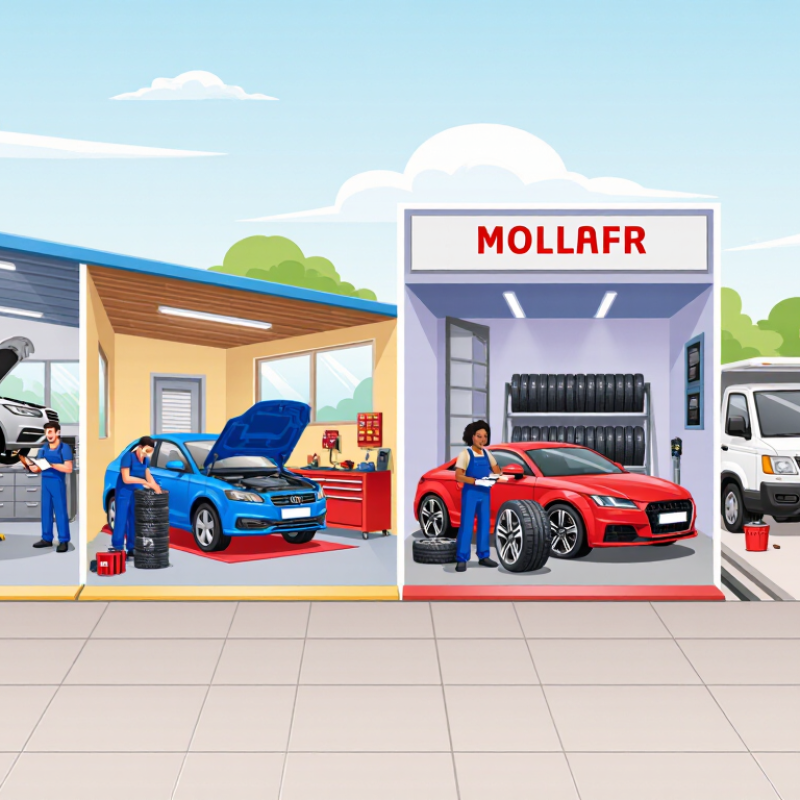
Dealerships, independent garages, and repair chains solve different problems. A dealership may suit newer cars with complex electronics, software updates, or warranty-related paperwork. Technicians can access model-specific procedures, but labor rates and appointment waits may be higher. Ask for a written estimate before authorizing diagnostic work.
Independent garages often offer direct conversations with the mechanic and more flexibility on parts. Quality varies, though; check training, warranties, and whether the shop regularly services your vehicle type. Repair chains can provide predictable processes and convenient locations, but the experience may differ between branches. Small details matter: a clear explanation of a warning light, or a returned call, tells you something about the process. Not everything, of course.
The U.S. Bureau of Labor Statistics projected about 67,700 annual openings for automotive service technicians and mechanics over 2023–2033. That reflects replacement needs as well as job growth, not a ranking of repair providers. For 2026, compare itemized estimates, parts choices, and warranty terms—not just the hourly rate. A lower quote can still leave unanswered questions. Ask what happens if the repair does not fix the symptom.
Mobile mechanics can be a practical choice when a car will not start in the driveway or needs routine maintenance. They may handle battery replacement, brake checks, and oil changes where the vehicle is parked. Before booking, ask what the visit includes, whether diagnostic fees apply, and how the mechanic documents the work. A written estimate and clear explanation of parts make it easier to compare options. Convenience helps, but it does not guarantee a complete repair. That matters.
Specialty service centers may be better suited to complex electrical faults, transmission concerns, or repairs requiring lifts and dedicated diagnostic equipment. Look for technicians with relevant training, itemized estimates, and a process for approving extra work before it begins. Ask whether the center can show test results or explain why a part needs replacement. Still, ask. A confident answer is useful; a specific answer is better. I have found that vague promises can sound reassuring in a waiting room, yet leave important questions unanswered. Compare the expected repair time, warranty terms, and follow-up support, then choose the setting that fits the job—not just the quickest appointment.
| Service Option | Best Suited For | Typical Work | Convenience | Key Considerations |
|---|---|---|---|---|
| Mobile mechanic | Routine maintenance and straightforward repairs when the vehicle can remain parked at home or work. | Battery replacement, basic maintenance, some brake work, and selected diagnostic or component repairs. | High: service may be performed at the vehicle’s location, subject to access, weather, and job requirements. | Not every repair can be completed roadside or in a parking space. Ask whether the mechanic has the tools and facilities for the specific job. |
| General repair shop | Drivers seeking a single location for common maintenance, inspections, and a range of mechanical repairs. | Oil and fluid service, scheduled maintenance, brakes, suspension, and general engine or drivability diagnosis. | Moderate: usually requires an appointment and leaving the vehicle at the shop. | Confirm the shop services the vehicle’s make, model, age, and repair needs; request a written estimate before authorizing work. |
| Tire and wheel service center | Tire replacement, tire-related concerns, and wheel service. | Tire installation, rotation, balancing, puncture assessment, and wheel alignment where offered. | Moderate to high for tire-specific work; availability and appointment requirements vary. | Ask whether the service includes balancing or alignment, and verify that replacement tires meet the vehicle’s required size and specifications. |
| Brake service specialist | Brake noise, reduced braking performance, warning lights, or brake-system inspection and repair. | Brake inspection and service of components such as pads, rotors, calipers, and hydraulic parts, as needed. | Moderate: the vehicle generally needs to be brought to a properly equipped facility. | Brake symptoms can have different causes. Request an inspection and an itemized explanation rather than assuming a particular part needs replacement. |
| Transmission and driveline specialist | Complex transmission, clutch, or driveline symptoms requiring focused diagnosis. | Diagnostic testing and repair of transmission, clutch, and related driveline systems. | Lower for urgent problems if the vehicle cannot be driven safely; towing may be needed. | Ask what diagnostic steps are included, whether repairs are performed in-house, and what written warranty applies to the proposed work. |
| Auto electrical and diagnostic specialist | Intermittent electrical faults, charging or starting problems, and difficult-to-trace warning lights. | Battery and charging-system checks, wiring diagnosis, sensor testing, and electronic-system troubleshooting. | Moderate: specialized test equipment and vehicle access are often needed. | A warning light or diagnostic code alone does not identify a failed part. Ask for the test results and the reasoning behind the recommended repair. |
| Collision and body repair facility | Damage from a collision, dents, body-panel repairs, or refinishing. | Body repair, panel replacement, paint work, and related post-collision assessments. | Lower: repairs generally require the vehicle to remain at the facility. | Request a written scope of work and ask how hidden damage, replacement parts, paint matching, and any required safety-system checks will be handled. |
Practical tip: The best option depends on the repair, the vehicle’s condition, and whether it can be driven safely. Compare written estimates, confirm the scope of work, and review warranty terms before authorizing repairs.
A good repair shop should explain who will work on your car and what each technician is qualified to do. Ask about training for your vehicle’s systems, then check whether the shop can show current credentials.
Get it in writing. The estimate should list parts, labor, diagnostic fees, and possible extra costs. Ask the shop to contact you before exceeding the quoted amount. A low figure can be misleading if key work is missing.
Warranty terms deserve the same attention. Check what is covered, for how long, and whether parts and labor are both included. Keep the estimate and final invoice together.
Reviews can reveal patterns, but read the details: repeated complaints about surprise charges matter more than one angry post.
AAA reported in a 2023 survey that 64 million U.S. drivers could face debt to pay for car repairs, making clear pricing more than a convenience. J.D. Power’s 2024 U.S. Customer Service Index Study rated service experiences on a 1,000-point scale; its scores reflect surveyed dealership service, not every independent shop.
Even careful shoppers can miss fine print. That is worth remembering.
The right repair provider depends on the vehicle, the problem, and your budget. A shop that regularly handles your car’s make and model may diagnose unfamiliar warning lights more efficiently. For routine work, such as brake pads or battery replacement, a nearby general repair shop may be a practical choice. Ask who will inspect the vehicle and what parts the estimate includes. Details matter. Request a written estimate before approving extra work, and check whether diagnostic fees apply if you decline the repair.
Compare more than the lowest price. A very low quote may exclude parts, labor, or follow-up checks. Ask about the parts being used, the repair warranty, and when the car will be ready. If your vehicle is newer or has complex electronics, confirm the technician has relevant training and diagnostic equipment. Check your warranty documents before choosing a provider, since some repairs may have specific requirements. It can feel awkward to ask these questions, but unclear answers are worth noticing.
Tips: Describe the symptoms, not just your guess about the cause. Note when a noise occurs, take a photo of dashboard warnings, and bring recent service records. A short list helps.
Plainfield, 60585, 60544, 60586, Naperville, 60564, Bolingbrook, 60490, 60440, Romeoville, 60446, Will, Kendall, DuPage, Counties. Our auto repair shop in Plainfield, IL, has been serving the local area plus all surrounding Chicagoland since 1978.
• Computer Diagnostic • Brake Shop • Engine Replacement • Transmission Rebuild • Clutch Replacement • Differential Rebuild • Suspension Shop • Steering • Shocks & Struts • Heating & Cooling • Electrical • Exhaust Shop • Catalytic Converter Replacement • Alignment • Domestic & Foreign Vehicle Service • Auto Repair In Plainfield, IL • Auto Repair Shops Near Me • Towing Service Near Me