Auto Repair Shop In Plainfield, IL
Choosing the right heater core in 2026 requires more than matching a part number. It demands careful attention to vehicle age, climate, coolant chemistry, and cabin heating performance. S&P Global Mobility reported that the average U.S. light vehicle age reached about 12.8 years in 2025. Older vehicles often hide restricted coolant passages, brittle hoses, or weakened electrical controls.
Electrification adds another layer. The International Energy Agency reported that global electric car sales exceeded 17 million in 2024. Many newer vehicles use heat pumps, electric coolant heaters, or integrated thermal-management systems. Therefore, a traditional heater core may not suit every modern platform. Check the manufacturer’s service information before choosing one.
Fitment comes first. Always compare core width, height, thickness, inlet diameter, outlet position, and mounting points. A few millimeters can create dashboard interference or hose tension. Material also matters. Aluminum cores reduce weight, while copper-brass designs may offer different repair and heat-transfer characteristics. Coolant compatibility deserves equal attention, especially with mixed metals and extended-life formulations.
Pressure matters too.
A suitable heater core should match the cooling system’s operating pressure and temperature range. Look for documented testing, traceable manufacturing standards, and warranty support. SAE guidance, OEM specifications, and verified supplier data provide stronger evidence than marketplace reviews alone. Still, no report replaces a careful inspection of the original component. That is where my earlier assumption could fail: catalog data may look complete, yet regional variants can change the correct selection. The best choice balances verified fit, dependable heat output, corrosion resistance, service access, and long-term reliability.
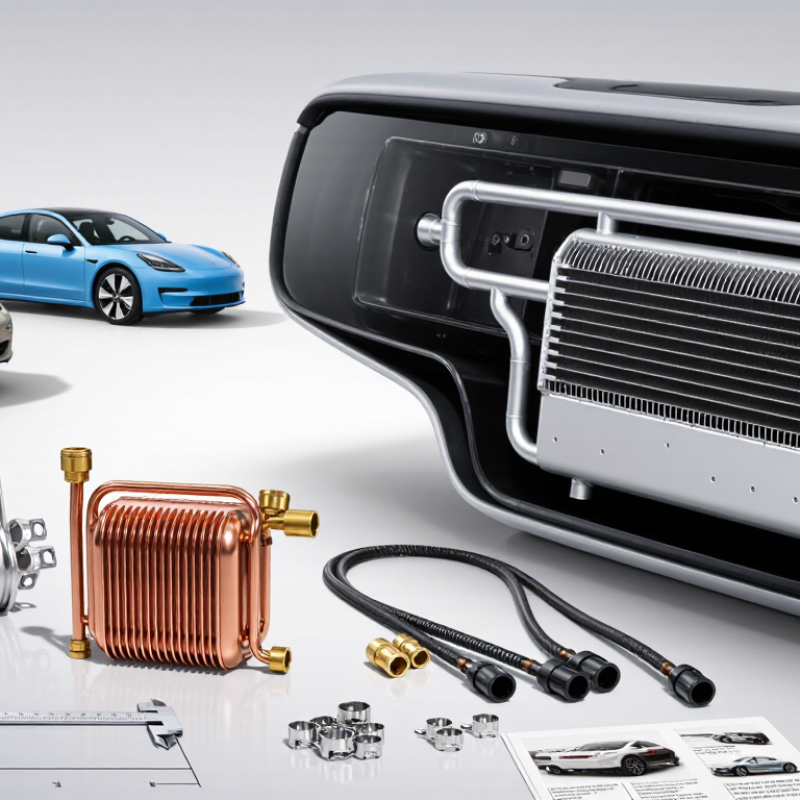
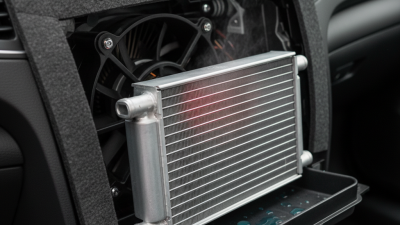
A heater core is a compact heat exchanger inside the cabin. It uses hot engine coolant to warm air pushed through the vents. This process supports windshield clearing and passenger comfort. Common materials include copper-brass and aluminum. Plastic end tanks may connect to an aluminum finned core. Material affects heat transfer, corrosion resistance, weight, and repair options. Fit matters most.
Conventional cores use tube-and-fin construction. Some newer designs use compact parallel-flow passages. Tube-and-fin units are often easier to inspect and may tolerate certain repairs. Parallel-flow cores can provide efficient heat exchange in a smaller space.
Core thickness, fin density, coolant direction, and port position also matter. A thicker core is not automatically better. Restricted airflow can leave one side cold. Measure carefully.
Before selecting a replacement, verify the vehicle year, engine, climate system, and mounting points. Compare inlet and outlet diameters, height, width, and depth. Check the pressure rating and coolant compatibility when available. A quick visual guess can be wrong; two cores may look identical but have different port spacing.
A pressure test can help confirm leakage. However, a failed thermostat or trapped air can imitate poor heater performance. This distinction is easy to miss. Even experienced technicians can misjudge a partially blocked core without checking coolant flow.
Inspect the old unit and service data together.
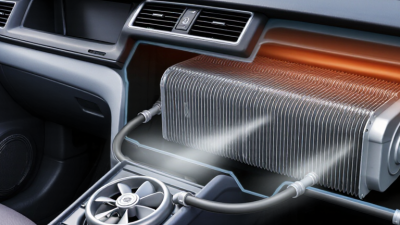
Choosing the right heater core begins with the vehicle, not the online picture. Record the year, model, engine, body style, and climate-control system. The same vehicle may use different cores after a mid-year production change. Verify the VIN and service manual when available. These details narrow the correct application.
Measure the old core before removal, if it is safely accessible. Check its height, width, thickness, tube diameter, outlet positions, and mounting tabs. Compare hose routing and firewall clearance. A core can look identical yet fail because one pipe sits several centimeters higher. Confirm that its material and pressure specifications match the vehicle’s cooling system. Never rely on “fits most models.”
Workshop inspections often reveal a deeper mismatch. A crushed tube, forced hose, or stressed mounting point can cause repeat failure. I once underestimated a small outlet-angle difference. The installation looked acceptable, but the hose kinked after dashboard refitting. That mistake deserved a second inspection. Ask for return coverage, secure packaging, and compatibility confirmation using complete vehicle details. If records conflict, pause and consult a qualified technician. A few minutes of checking costs less than removing the dashboard twice.
Choosing the right heater core in 2026 requires more than matching dimensions. Material affects durability, weight, corrosion resistance, and heat transfer. Aluminum cores are light and shed heat quickly. Copper-brass designs often tolerate repairs better, but they add weight and may respond differently to coolant chemistry. Material alone does not decide performance.
During workshop inspections, I compare tube density, fin spacing, and coolant passage size. Tightly packed fins can increase surface area. They can also trap dust and reduce airflow. Wider passages may resist clogging, yet they can lower contact time between coolant and metal. Fit still matters. A core with brazed joints should show even seams and no discoloration around connection points. Small irregularities matter.
Heat transfer data deserves careful reading. Look for thermal capacity, pressure-drop figures, operating temperature, and test conditions. A high output rating may use unusually strong airflow. Real vehicles face slow traffic, cold starts, and partially blocked vents. That gap is easy to miss. Verify the core’s dimensions, inlet position, and flow direction before installation. I have seen a well-rated unit underperform because one hose created a sharp bend. Manufacturer data is useful, but independent testing is more reassuring when available. Even then, no test perfectly copies every vehicle.
| Heater Core Type | Typical Material | Heat Transfer Performance | Durability and Corrosion Resistance | Design Features | Typical Pressure and Temperature Capability | Weight and Packaging | Best-Fit Applications |
|---|---|---|---|---|---|---|---|
| Copper-Brass Tube-and-Fin | Copper tubes with brass tanks, headers, or side plates; mechanically assembled or soldered joints. | High thermal conductivity and fast heat response. | Good repairability and long service life when coolant chemistry is controlled; more vulnerable to galvanic corrosion and solder-joint leakage than many brazed aluminum designs. | Usually uses round or oval tubes with serpentine or plate fins. The construction can often be repaired or re-cored. | Common automotive cooling-system conditions; exact limits depend on tube thickness, joints, solder quality, and system pressure. | Heavier than an equivalent aluminum core and may require more installation space for the same output. | Restoration vehicles, repairable designs, and applications where serviceability is important. |
| Aluminum Tube-and-Fin | Aluminum tubes, fins, headers, and side plates; commonly furnace-brazed. | Very good heat transfer with a favorable strength-to-weight ratio. | Good resistance to many modern coolant systems, but highly sensitive to incorrect coolant, poor grounding, chloride contamination, and electrolysis. | Compact multi-row construction with louvered fins and brazed joints; commonly available with plastic end tanks in vehicle systems. | Suitable for standard automotive coolant temperatures and pressures when correctly designed and tested. | Lightweight and compact, making it suitable for tight instrument-panel packaging. | Most modern passenger vehicles, light commercial vehicles, and weight-sensitive installations. |
| Aluminum Plate-Fin | Stacked or folded aluminum plates with integrated fins and brazed manifolds. | High surface-area efficiency and strong performance in compact assemblies. | Good when brazing quality and coolant compatibility are controlled; blocked passages can be difficult to clean. | Flat passages, dense fin packs, and efficient headers provide high heat-transfer area in a short depth. | Pressure capability varies significantly with plate thickness, braze design, and testing requirements. | Very light and space-efficient, but dense fin packs can increase airflow resistance and debris sensitivity. | Compact vehicles, auxiliary heating systems, and installations with strict depth limitations. |
| Aluminum Microchannel | Multiport extruded aluminum tubes with high-density fins and brazed headers. | Very high area-to-volume efficiency; performance depends strongly on coolant flow distribution and fin cleanliness. | Good corrosion resistance with compatible coolant and proper manufacturing; small passages are less tolerant of scale, debris, and poor flushing. | Multiple small parallel channels reduce material use and allow a shallow, lightweight core. | Requires careful design validation for pressure drop, fatigue, and blockage; operating limits are application-specific. | Among the lightest and most compact designs, but usually less convenient to repair. | New-generation compact thermal systems where low mass and packaging efficiency are priorities. |
| Copper-Nickel | Copper-nickel alloy tubes with compatible headers and fins, where specified for harsh environments. | Good heat transfer, generally below pure copper but adequate for many heating applications. | Excellent resistance to seawater-related corrosion and demanding environments; material cost is typically higher. | Robust tube construction with good resistance to erosion and corrosion when correctly fabricated. | Can be engineered for demanding pressure and temperature conditions; limits depend on alloy grade and wall thickness. | Heavier and more expensive than aluminum, with fewer compact automotive-style options. | Marine, coastal, industrial, and other corrosive operating environments. |
| Plastic-Tank Aluminum Core | Aluminum heat-transfer core combined with glass-fiber-reinforced polymer tanks and seals. | Good thermal performance with low mass; tank geometry influences coolant distribution. | Aluminum provides good performance, while polymer tanks resist many external corrosion mechanisms but can age from heat, vibration, and coolant exposure. | Crimped tank-to-header joints, molded hose connections, and integrated mounting features reduce part count. | Appropriate for standard vehicle cooling systems when the crimp joint, seal, and tank material are properly rated. | Light and economical, but tank replacement or full-core replacement is often preferred over field repair. | High-volume passenger vehicles and applications requiring low cost and low weight. |
Selection note: Actual heat output depends on coolant inlet temperature, coolant flow rate, air temperature, airflow, fin density, core size, pressure drop, and HVAC housing design. Performance values should be confirmed through application-specific testing rather than material type alone.
Start with the vehicle’s exact model, engine, climate system, and production year. Measure core height, width, thickness, tube diameter, and inlet spacing. A catalog match can still fail when the tube angle differs. Small mismatches matter. Thicker cores may improve heat transfer, but they can restrict airflow or block nearby components. AAA’s 2019 cold-weather study found that electric vehicle range fell by up to 41% at 20°F. Efficient cabin heating therefore matters in modern thermal systems.
Durability depends on material, coolant compatibility, and joint quality.
Aluminum cores are light and common, while copper-brass designs can offer easier repairability. Check pressure ratings and corrosion resistance before purchase. ASTM D1384 is a recognized coolant corrosion test, but laboratory results cannot predict every vehicle environment. Old coolant, trapped air, and mixed metals can still cause early failure. This is where specifications deserve more attention than attractive pricing.
Installation planning prevents many leaks.
Confirm firewall clearance, seal dimensions, hose routing, and access before removing the dashboard. Replace brittle seals and inspect heater hoses during the same service. Flush contamination carefully, then refill with the vehicle’s specified coolant. Bleed the system. A pressure test should follow installation, with the engine cold and warm. Cabin odor, fogging glass, or damp carpet may indicate a leaking core, not simple condensation. Maintenance intervals should follow the service manual, although real driving conditions may require earlier coolant inspection.
Selecting the best heater core starts with your budget and driving conditions. Match the replacement to your vehicle’s exact year, engine, climate system, and connection layout. A small dimensional error can cause leaks, weak cabin heat, or difficult installation. Check the service manual, core measurements, inlet and outlet positions, and pressure specifications before ordering. Copper-brass designs may suit older vehicles and offer repairability, while aluminum cores usually provide lower weight and efficient heat transfer.
Daily city driving, freezing mornings, towing, and dusty roads create different demands. Choose strong corrosion resistance if coolant quality or road salt is a concern. If the dashboard requires removal, installation labor can exceed the core’s price. A cheaper part may look sensible, but poor fit can create repeated costs. That trade-off is easy to underestimate. Use fresh coolant, inspect hoses, and flush contamination before installing the new unit. Never ignore a sweet coolant smell inside the cabin.
Tips: Compare at least two verified specifications. Confirm the warranty terms. Ask a qualified technician to pressure-test the cooling system after installation. Inspect the old core for blockage, corrosion, or internal debris, because the failure pattern may reveal a larger cooling-system problem. If heat output remains weak, check the thermostat, blend door, and coolant flow instead of blaming the new core immediately. Small details matter.
Plainfield, 60585, 60544, 60586, Naperville, 60564, Bolingbrook, 60490, 60440, Romeoville, 60446, Will, Kendall, DuPage, Counties. Our auto repair shop in Plainfield, IL, has been serving the local area plus all surrounding Chicagoland since 1978.
• Computer Diagnostic • Brake Shop • Engine Replacement • Transmission Rebuild • Clutch Replacement • Differential Rebuild • Suspension Shop • Steering • Shocks & Struts • Heating & Cooling • Electrical • Exhaust Shop • Catalytic Converter Replacement • Alignment • Domestic & Foreign Vehicle Service • Auto Repair In Plainfield, IL • Auto Repair Shops Near Me • Towing Service Near Me