Why is the Rear End Differential Important for Vehicle Performance?
The rear end differential plays a vital role in vehicle performance, affecting dynamics and handling. According to industry reports, nearly 70% of vehicle stability relies on effective power distribution, which is largely dependent on this component. Engineers emphasize that a well-designed rear end differential can enhance traction, reduce tire wear, and improve overall driving experience.
For high-performance vehicles, the rear end differential is crucial. Data indicates that it can influence acceleration times by up to 0.3 seconds in competitive racing. This shows that even minor enhancements can lead to significant improvements. However, many drivers overlook its importance, leading to potential handling issues. Regular maintenance and proper tuning of the rear end differential can mitigate these risks, ensuring vehicles perform optimally.
In a world where performance matters, the rear end differential deserves attention. While advancements are constant, common misconceptions remain. Drivers may not realize how crucial this part is for consistency and control. Engaging with experts can bridge this knowledge gap and enhance vehicle reliability on the road.

The Role of Rear End Differential in Vehicle Dynamics
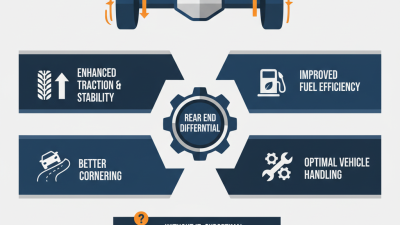
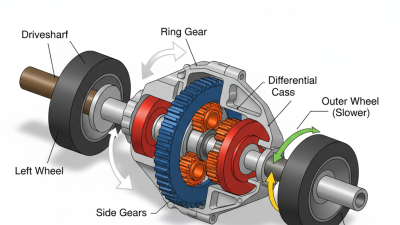
The rear end differential plays a crucial role in vehicle dynamics. It allows the drive wheels to rotate at different speeds while turning. This function is essential for maintaining traction and stability. Without a well-functioning differential, a vehicle may skid or lose control during cornering.
In addition to enhancing safety, the differential impacts overall performance. Improved cornering ability leads to better acceleration and handling. When a vehicle navigates through curves, the inside wheel travels a shorter distance than the outside wheel. The differential accommodates this difference, helping maintain smooth movement. This adaptability can greatly influence the driving experience.
Despite its importance, not all differentials are created equal. Limited-slip and open differentials serve different purposes. Limited-slip differentials provide more grip in slippery conditions, but can be more complex and costly. Open differentials, while simpler, may not provide the same level of control in challenging environments. Drivers should consider their needs when choosing a differential.
Understanding How Differential Affects Traction and Stability
The rear end differential plays a critical role in vehicle dynamics. It allows for smooth power distribution to the wheels. This mechanism is crucial for maintaining traction, especially during sudden acceleration or cornering.
When a vehicle turns, the outside wheels must travel farther than the inside wheels. The differential enables this by allowing wheels to rotate at different speeds. Without it, tires would skid and lose grip. This can compromise stability and safety in challenging driving conditions.
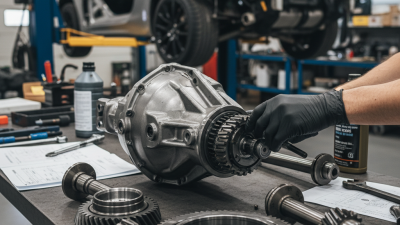
A well-functioning differential contributes to a stable ride. It enhances grip on slippery surfaces, like wet or icy roads. However, if it’s not maintained, issues arise. A worn differential can lead to uneven tire wear and diminished performance. Drivers may not notice small changes but should pay attention to unusual noises or vibrations. These can signal that the differential needs attention. Regular checks can prevent bigger problems later. Ensuring that this critical component works properly is vital for any vehicle's performance.
Impact of Differential Type on Vehicle Handling Performance
The type of rear end differential can significantly impact a vehicle's handling performance. Open differentials are the most common, providing torque equally to both wheels. They work well on dry surfaces. However, they often struggle in slippery conditions. This can lead to loss of traction. In contrast, limited-slip differentials improve traction by allowing some wheel slip. According to a report from SAE International, vehicles with limited-slip differentials have shown up to a 20% improvement in cornering speed under adverse conditions.
Locking differentials take this a step further. They provide maximum torque to both wheels, greatly enhancing off-road performance. A study by the Automotive Engineering Institute noted that vehicles with locking differentials outperform open differentials in off-road scenarios by over 30%. This can create a more stable driving experience on uneven terrain.
However, not all systems offer without drawbacks. Limited-slip differentials can lead to control issues during aggressive cornering. Drivers might notice abrupt steering responses. Locking differentials can be challenging to manage in tight turns. Finding the right balance between traction and handling always requires thoughtful consideration. Each type has its strengths and weaknesses, impacting overall vehicle performance significantly.
Quantifying the Efficiency of Various Rear End Differentials
The rear end differential plays a key role in a vehicle’s performance. It helps distribute power from the engine to the wheels efficiently. Various types of rear end differentials can significantly affect this efficiency. According to a study by the Society of Automotive Engineers, an efficient rear end differential can improve fuel efficiency by 3-5%. This is significant for both performance and economy.
When quantifying the efficiency of differentials, factors such as gear ratios, type of lubricant, and construction materials come into play. For example, a traditional open differential may struggle in adverse conditions, losing power to the wheel with less traction. In contrast, limited-slip differentials can offer better handling and acceleration. The American Journal of Automotive Engineering notes that these differentials can increase traction by as much as 15% on slippery surfaces.
However, not all differentials are created equal. Some advanced systems, like electronic limited-slip differentials, show promise but may add complexity and weight. A report from the Automotive Research Association mentions that while they can improve stability, they often come with higher maintenance costs. This suggests that the choice of differential should be thoughtfully considered based on intended vehicle use, performance goals, and maintenance capabilities.
Importance of Rear End Differentials in Vehicle Performance
This bar chart illustrates the efficiency ratings of different types of rear end differentials commonly used in vehicles. An open differential provides basic functionality, while more advanced options like limited slip differentials, locking differentials, and electronic differentials offer improved performance and handling under various driving conditions.
The Relationship Between Differential Design and Fuel Economy
The rear end differential plays a crucial role in a vehicle's performance. It affects how power is distributed to the wheels, impacting acceleration and handling. A well-designed differential can enhance stability during turns, improving control. However, the design choices can also influence fuel economy.
Differential design is closely linked to fuel efficiency. A more efficient differential reduces drag, allowing for improved power transfer. This means the engine doesn't have to work as hard, consuming less fuel. However, high-performance differentials may prioritize speed over efficiency. This can lead to a trade-off that some drivers might overlook.
When selecting a vehicle, it's essential to consider the balance between performance and fuel economy. Some vehicles have advanced differentials that optimize both aspects. Yet, not all designs provide the same benefits. Evaluating these choices can lead to better fuel savings and driving enjoyment. It is worthwhile to reflect on how different designs impact overall vehicle efficiency.