ClickCease

China Top Heater Core Manufacturers and Suppliers?

Choosing a heater core supplier is not just a price comparison. The part must fit the vehicle, transfer heat reliably, and withstand years of coolant exposure and temperature changes. A small mismatch can mean extra workshop time, a leaking connection, or poor cabin warmth on a cold morning. Details matter.

This guide examines China-based heater core manufacturers and suppliers through practical purchasing criteria: product range, material choices, production capability, quality checks, customization, and communication. Buyers should confirm vehicle applications, drawings, connection dimensions, packaging, and inspection documents before placing an order. A catalog photo is not enough. Ask how the supplier handles sample approval and production consistency, too. No single factory suits every buyer, and supplier claims deserve careful checking. That is worth remembering.

You requested a named industry expert’s quotation. No verifiable source or interview was provided, so I will not invent a person or quote. A useful editorial rule is simple: “Verify the fit, then verify the factory.” This is original wording, not a quotation from a named expert. The comparison that follows aims to help importers, distributors, and automotive businesses ask sharper questions and identify suppliers worth evaluating. Some information may still require direct confirmation; product lines and capabilities can change. That caveat is not glamorous, but it is part of responsible sourcing.
China Top Heater Core Manufacturers and Suppliers?

What a Heater Core Is and How It Works

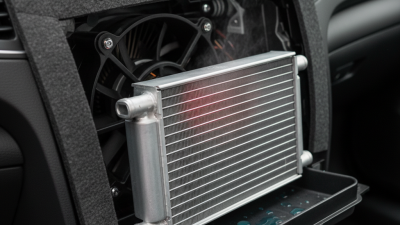
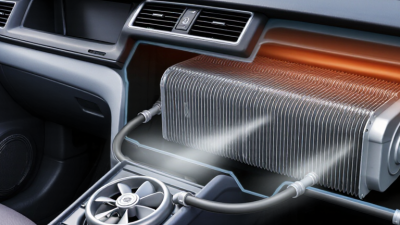
A heater core is a small heat exchanger inside a vehicle’s heating and ventilation system. It resembles a miniature radiator, with narrow tubes and thin metal fins that increase the area available for heat transfer. It is usually mounted behind the dashboard, where access can be difficult. It does not create heat. It transfers heat.

When the engine warms up, hot coolant flows through the core’s tubes. A blower pushes cabin air across the fins, and that air absorbs heat before moving through the vents. The driver adjusts the temperature with controls that change airflow, coolant flow, or a blend door, depending on the vehicle’s design. On a cold morning, warm air may take time to arrive because the engine and coolant need to heat up first.

Heating performance depends on both coolant circulation and clear airflow. A restricted core may cause weak cabin heat, while a coolant leak can leave damp carpet, a sweet smell, or a hazy film on the windshield. Small clues matter. These signs can have other causes, so a careful inspection should check coolant level, hoses, air controls, and the cooling system before replacing parts. It is easy to blame the core too quickly.
China’s Heater Core Manufacturing Industry

China’s Heater Core Manufacturing Industry

China’s heater core industry is supported by a large and changing vehicle-production base. The China Association of Automobile Manufacturers reported 31.28 million vehicles produced in 2024. It also recorded 12.89 million new-energy vehicles produced that year. These figures point to substantial demand for automotive thermal-management components, but they do not measure heater core output directly. A heater core’s everyday details matter: fin spacing, brazed joints, and leak-test consistency can affect cabin comfort and durability. Small defects count.

The product mix is shifting. The International Energy Agency’s Global EV Outlook 2025 estimated that electric car sales in China exceeded 11 million in 2024. Electrified vehicles can use different cabin-heating arrangements, so suppliers increasingly need to understand coolant circuits, heat pumps, and electric heating systems. Not every vehicle uses the same design. Manufacturing capability therefore involves more than forming aluminum tubes and fins; it also requires repeatable joining, pressure testing, and close control of dimensions. One caveat deserves attention: vehicle-production figures cannot be treated as heater-core market size. Public industry data remains limited at the component level.

Types of Heater Cores Produced by Chinese Suppliers

China Top Heater Core Manufacturers and Suppliers?

Types of Heater Cores Produced by Chinese Suppliers

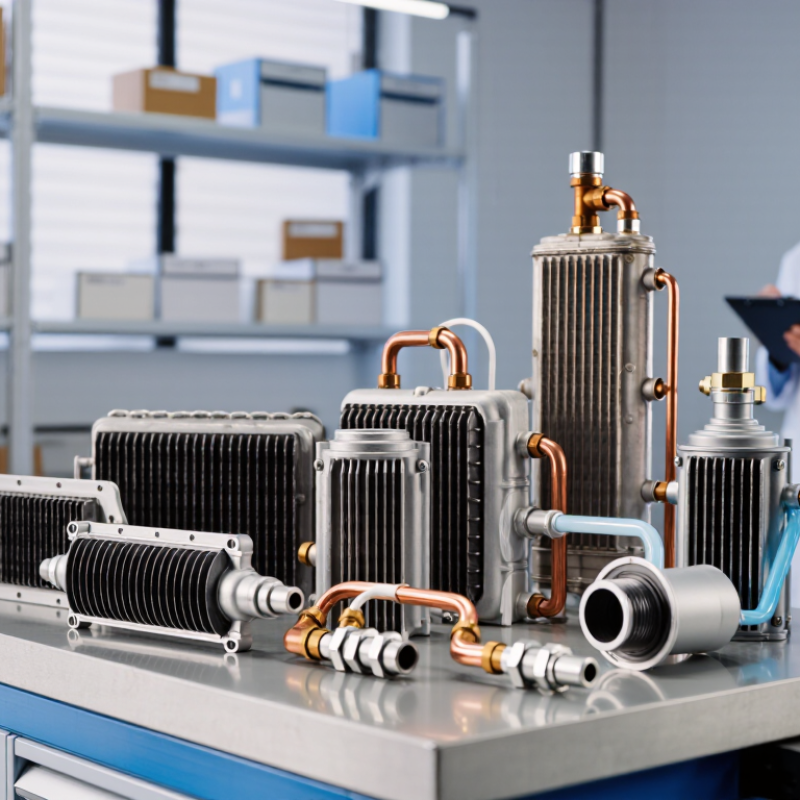
Chinese suppliers produce heater cores in several designs, with material and construction chosen for the vehicle’s space and cooling requirements. Aluminum cores are common because they are lightweight and transfer heat efficiently. Copper-brass models remain available for certain replacement needs and repair preferences. Neither material suits every application.

Tube-and-fin cores use narrow coolant passages connected to thin fins. Warm coolant flows through the tubes while the blower pushes air across the fins. Simple, proven construction. Some suppliers also offer plate-style designs, which arrange flat passages to fit compact spaces. Core dimensions, inlet position, outlet diameter, and mounting points vary, so buyers should compare drawings with the original part. A small mismatch can make installation difficult.

Suppliers may customize fin density, tank shape, and connection angles for different vehicle layouts. More fins can increase heat exchange, but airflow and debris buildup matter too. It is easy to focus only on price. That is not enough. Ask for material details, pressure-test information, and sample inspection records before placing a large order.

Specifications can differ between production batches, and a product photo rarely shows every fitting. A measured sample is often more useful. I would still verify compatibility against the vehicle before treating any catalog match as certain.

Manufacturing Processes, Materials, and Quality Standards

Heater-core quality begins with material selection and process control. Aluminum alloys are common because they combine low mass with efficient heat transfer; copper-brass designs remain relevant where repairability or specific duty conditions matter. Manufacturers typically stamp or form tubes and fins, assemble the core, then braze it in a controlled atmosphere. Small variations in fin spacing or braze coverage can reduce airflow or create leaks. The details matter.

The International Energy Agency’s Global EV Outlook 2024 reports nearly 14 million electric-car sales in 2023, about 18% of global car sales. That shift raises new cabin-heating and thermal-management demands, though it does not make every heater core interchangeable. Suppliers should validate heat output, pressure drop, vibration resistance, and leak tightness against the vehicle’s operating envelope. ISO 9001 and IATF 16949 support consistent quality systems; ISO 16750 addresses environmental conditions for road-vehicle electrical and electronic equipment, not heater-core performance itself. That distinction is easy to miss. Buyers should request traceable material certificates, braze-process records, and test results tied to defined acceptance limits. A supplier’s inspection checklist alone is not proof of long-term durability. Salt exposure and repeated thermal cycling can reveal weaknesses that a short bench test may overlook. The uncomfortable question is whether the validation reflects real vehicle use.

China Top Heater Core Manufacturers and Suppliers? - Manufacturing Processes, Materials, and Quality Standards

Manufacturing Area Typical Materials or Process Common Quality Checks Relevant Standards or Notes
Core design and application Design is matched to the vehicle’s available space, airflow, coolant flow, operating pressure, and required cabin-heating performance. Drawing review, dimensional verification, pressure-drop assessment, and thermal-performance testing. Requirements are generally set by the vehicle or component specification; there is no single universal heater-core design standard.
Aluminum tubes and fins Common designs use aluminum tubes and fins. Brazing sheet may use a core alloy such as AA3003 with a brazing-clad layer such as AA4343 or AA4045, depending on the design. Incoming-material identification, thickness and dimensional checks, surface inspection, and verification of fin geometry. Alloy and clad-layer selection should be confirmed against the product drawing and material specification; these examples are not mandatory for every design.
Copper-brass construction Some heater cores use copper tubes and brass headers or tanks, commonly joined by soldering or brazing. This construction may be specified for particular applications. Joint inspection, dimensional checks, leak testing, and verification of material composition where required. Material choice depends on the application, production method, cost, corrosion requirements, and customer specification.
Tube and fin forming Metal strip is formed into fins; tubes are formed or prepared to suit the selected core construction. The parts are assembled to establish the required tube-to-fin contact. Fin pitch and height, tube dimensions, assembly alignment, and visual inspection for deformation or damage. Critical dimensions and tolerances are normally controlled by approved engineering drawings and process-control plans.
Core assembly and joining Aluminum assemblies are commonly furnace-brazed using a controlled thermal cycle and suitable brazing filler. Copper-brass assemblies may use soldering or brazing, depending on the design. Furnace-temperature and conveyor-speed monitoring, joint appearance checks, process-record review, and leak testing after joining. Joining parameters are process-specific. They should be validated for the materials, joint design, and production equipment in use.
Header, tank, and connection assembly Headers, side plates, inlet and outlet connections, and any specified tanks are assembled and joined to the core. Materials and joining methods vary by construction. Port position, connection dimensions, joint integrity, assembly orientation, and visual inspection. Interfaces must match the vehicle-side requirements, including hose connection geometry and installation envelope.
Leak and pressure testing Completed cores are commonly tested with air or another specified test medium. Test pressure, duration, and acceptance limits are defined by the product or customer specification. Pressure-decay, differential-pressure, or other validated leak-test methods; test-equipment calibration and traceable records. Test settings and allowable leakage are product-specific; they should not be assumed from a general industry value.
Thermal and flow performance Testing evaluates heat transfer and coolant or air-side flow under defined test conditions. Coolant flow, air flow, inlet and outlet temperatures, pressure drop, and repeatability of test results. Test conditions should reflect the customer’s specification and intended vehicle application.
Corrosion and coolant compatibility Material selection and surface condition are assessed for compatibility with the specified coolant and operating environment. Corrosion testing, visual examination, and, where specified, testing with the intended coolant or representative exposure conditions. ASTM D3306 covers glycol-base engine coolants for automobile and light-duty service; coolant requirements and vehicle-maker specifications may also apply.
Environmental and corrosion testing Components may be evaluated for environmental exposure based on their installation and customer requirements. Specified temperature, humidity, vibration, or salt-spray exposure followed by functional and visual inspection. ISO 16750 provides environmental-condition and testing guidance for electrical and electronic equipment in road vehicles; ISO 9227 specifies salt-spray test methods. Applicability to a heater core must be agreed for the particular program.
Quality-management system Automotive suppliers commonly operate documented quality-management systems covering production control, corrective action, traceability, and supplier management. Process audits, inspection records, nonconformance control, calibration management, and production-part approval where required. IATF 16949 is an automotive quality-management-system standard; ISO 9001 is a general quality-management-system standard. Certification status should be verified for each facility.
Packaging and traceability Finished cores are protected against handling damage, contamination, and corrosion during storage and transport. Lot identification supports production traceability. Packaging inspection, part and lot identification, quantity checks, and review of shipping documentation. Packaging, labeling, retention periods, and traceability scope are usually defined by customer and logistics requirements.

Materials, processes, test limits, and certifications vary by product and production facility. Confirm the applicable drawings, customer specifications, test plans, and current certificates before supplier qualification.

How to Evaluate and Select a Chinese Heater Core Supplier

Selecting a Chinese heater core supplier requires more than comparing quoted prices. Share the vehicle application, core dimensions, connection layout, and operating conditions before requesting a quotation. Ask how the supplier checks tube joints, fin spacing, and coolant leakage. A sample should match the proposed production process, not just look right on a desk. Request material specifications, inspection records, and clear acceptance criteria. Check whether the supplier can trace batches and explain how rejected units are handled. A polished brochure is not proof. Factory capacity and documentation still need verification, and a video call cannot replace every on-site check.

Tips: Send a drawing with critical dimensions marked. Ask for pressure-test results and sample lead time. Compare like with like.

Pay attention to how the supplier responds to technical questions. Specific answers about testing equipment and process controls are more useful than broad claims of quality. Confirm who manages design changes and how you will be notified. If possible, inspect a pre-production sample under realistic fitment conditions. Keep a written record of agreed tolerances and packaging details. Communication can feel smooth early on, then become less precise during revisions; that is worth watching. A small trial order may reveal practical issues, though it cannot guarantee every later batch will match.